Resources for electricians.

Field-tested guides on triage, intake, and running a shop that never misses the call.

  • Operations
  • Business
  • Guide
  • Safety
  • Cities
  • Comparisons
Business

The transformer shortage is real. It only hits the jobs where the service size changes.

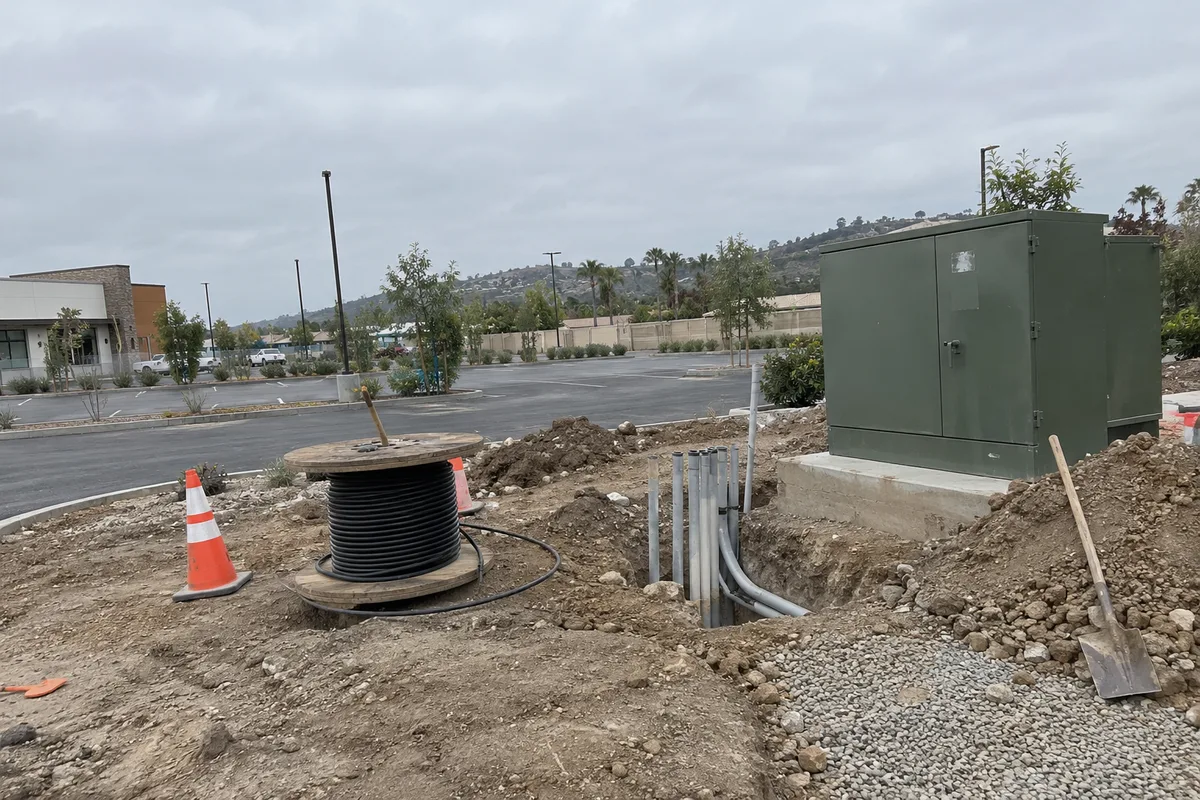
NREL and Wood Mackenzie documented the transformer and switchgear shortage, and PG&E's own numbers show a service extension averaging about 307 days against 61 for a panel upgrade. Sort each quote into one of three buckets and date only the work you control.
Operations

Copper thieves are cutting wire across California. Treat the theft call as a hazard first.

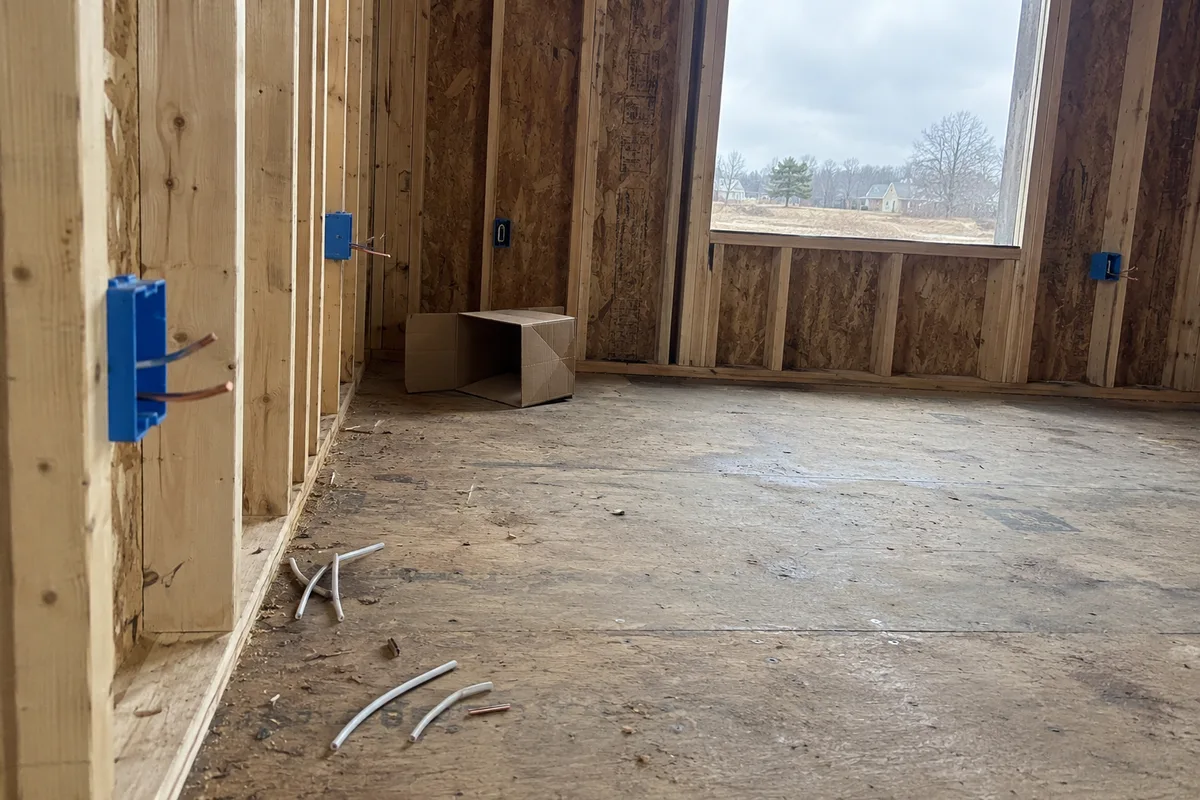
Copper theft has hit LA streetlights, EV chargers, and job sites. How to take the cut-wire call safely, book the repair right, and keep your own rough-in from walking off overnight.

Operations

Holiday lighting calls: book the outdoor outlets in October, sort the tripping ones by danger

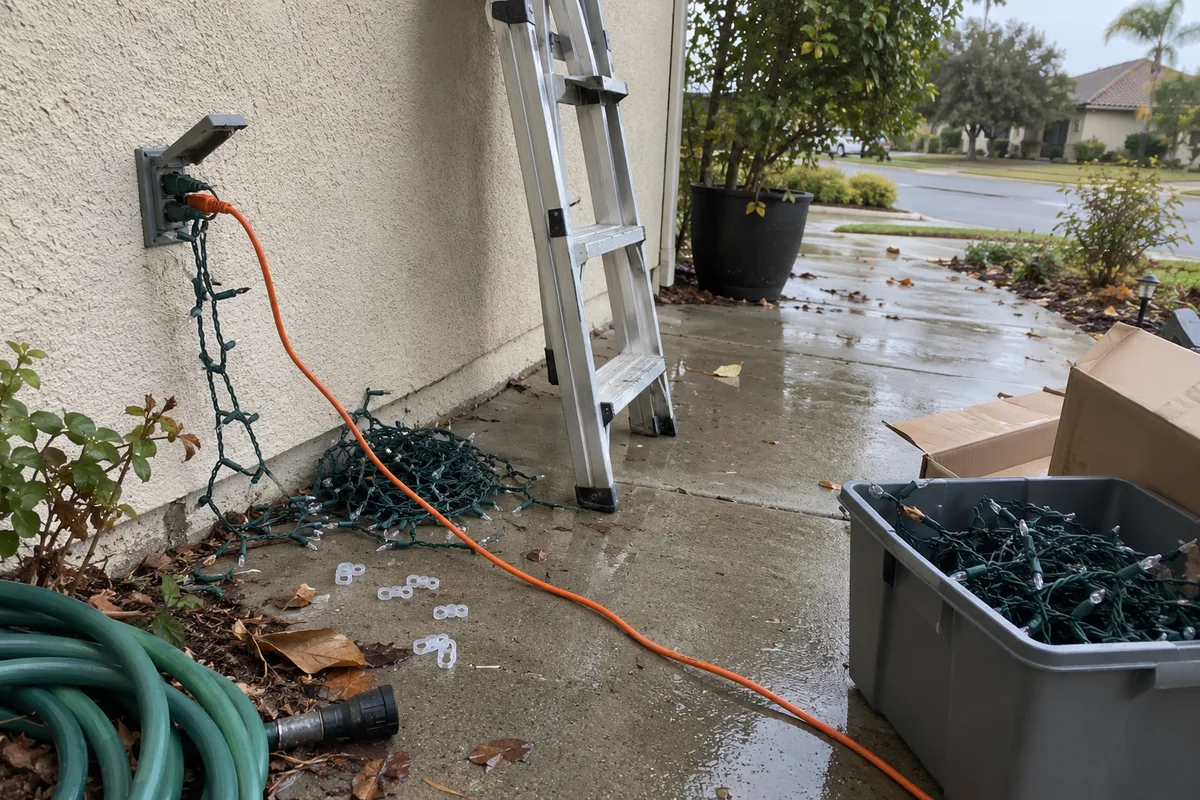
Holiday lighting brings install requests and GFCI trip calls. How to tell urgent from routine on the phone, what to ask, and why October and November are the install window.

Guide

Write the estimate so the change order is a signature, not an argument

California section 7159 says a home improvement change order counts only if it is written and signed before the changed work starts. How to word the estimate, carry the form, and stop at the finding so the price can move without a fight.

Operations

During a PSPS shutoff, "no power" stops meaning call the electrician. Ask one question first.

California utilities tell customers 24 to 48 hours before a Public Safety Power Shutoff, whenever possible. How to sort shutoff-week calls on the phone: the utility outage, the backfed generator, and the real work that arrives after power comes back.

Operations

A customer calls about a panel recall notice: sort it on the phone before you roll a truck

Recall news sends homeowners to the phone. Six fixed intake questions, one escalation rule for warning signs, and why you should not quote a replacement the manufacturer may cover for free.

Operations

When a customer says your work failed, ask when it started before you ask whose fault it is

A callback is safety triage plus a fast booking, not a fault debate on the phone. The intake questions that sort it, and why a stalled callback is how a fixable job becomes a CSLB complaint.

Guide

AB 2313 will pay customers to go electric instead of getting a new gas line. Not until 2028, and nobody knows the amount yet.

Signed September 30, 2026 as Chapter 934, AB 2313, the Home Energy Choice Act, requires CPUC-regulated gas utilities to offer an incentive to customers who give up gas instead of getting a planned service line replacement, by January 1, 2028. Emergency replacements are exempt and the CPUC has not set the dollar amount, so do not quote one.

Guide

The utility won't take your solar interconnection without a typed CSLB disclosure. The savings line on it is a 12-month number now.

Under CPUC Resolution E-5364, PG&E, SCE, SDG&E and three smaller utilities have required the updated CSLB Solar Energy System Disclosure Document since November 1, 2025. It must be typewritten, and the bill savings estimate covers 12 months with zero rate escalation, built from the customer's own hourly usage data.

Guide

AB 1684 stops condo HOAs from blocking a heat pump or AC in 2027. The permit, including yours, is now the gate.

Signed September 30, 2026 as Chapter 887, AB 1684 adds Civil Code 4738 and voids HOA rules that block a code-compliant cooling system starting January 1, 2027. The board can no longer charge a fee or pick the contractor, but an electrical or building permit that is not granted still lets it say no.

Business

SB 1365 rewrites California's price gouging law. The 10 percent cap on your disaster repair work stays, but the cost exception is now yours to prove.

Signed September 30, 2026 as Chapter 1028, SB 1365 takes effect January 1, 2027. For electrical contractors, Penal Code 396 still caps repair pricing at 10 percent over your own pre-emergency price for 180 days after a declaration. What changes is that the higher-cost exception becomes an affirmative defense.

Safety

AB 2321 sends serious Cal/OSHA injury cases to the district attorney sooner. Here's what changes for your shop on January 1, 2027.

Signed September 30, 2026 as Chapter 936, AB 2321 extends the willful-violation crime in Labor Code 6425 to serious injuries and serious exposures, makes interfering with a Cal/OSHA inspector a misdemeanor, and has fire and police notify the county DA directly. Your 8-hour reporting rule stays the same.

Guide

SB 913 and SB 905 won't pay your customer's battery yet: the virtual power plant rules are due June 30, 2028

Signed September 30, 2026, SB 913 (Chapter 987) orders the CPUC to let aggregated home batteries count as resource adequacy by June 30, 2028, not 2027, and SB 905 (Chapter 986) makes big utilities publish constrained-grid data. Neither is a VPP check for the homeowner today.

Business

California's new AI chatbot law, AB 1609, almost certainly doesn't cover your shop. Here's what it does say.

Signed September 28, 2026 as Chapter 733, AB 1609 makes businesses with more than $500 million in national revenue disclose AI, offer a human, and connect callers within 15 minutes or book a callback within a business day. A typical electrical shop is far below that line, but the law spells out what a fair AI phone call looks like.

Business

SB 342 eases California's license-lapse payment rule for commercial jobs. A single-family house still gets the old one.

Signed September 30, 2026 as Chapter 967, SB 342 lets a contractor whose license lapsed mid-job still collect for the licensed portion of public, commercial, institutional, and 4+ unit multifamily work. Single-family homes, duplexes, and triplexes stay under Business and Professions Code 7031's licensed-at-all-times rule, so a lapse can still cost you the whole job.

Guide

SB 1196 puts a clock on the utility's paperwork for small hookups. The one way you can still lose the application is not answering.

Signed September 27, 2026 as Chapter 684, SB 1196 orders the CPUC to set completeness, deficiency, and notification timelines for PG&E, SCE, and SDG&E on small energization projects by September 30, 2027. Utilities must accept the application with the building permit, give a full cost estimate, and cannot cancel without consent unless the applicant stops responding.

Guide

SB 222 caps the heat pump permit at $200. The panel replacement behind it can still be its own permit.

Signed September 28, 2026 as Chapter 738, SB 222 caps residential heat pump water heater permits at $150 and heat pump HVAC permits at $200, requires asynchronous inspections from July 1, 2027, and real-time online permits by July 1, 2028. A panel replacement can still be a separate, uncapped permit, and a job that needs a new panel is out of the instant-permit lane.

Business

AB 1707 cuts the electrician exam retest wait, and certification may move to CSLB

Signed September 27, 2026, AB 1707 lets a failed electrician certification candidate reapply immediately and retest 21 days after approval starting January 1, 2027. It also moves certification from DLSE to CSLB, but only if the Legislature funds it, no earlier than July 1, 2028.

Guide

Best AI receptionist for electricians: what to actually check

Not every AI receptionist knows a breaker from a burnt outlet. Here's what to check before you pick one, and where Wirewoman lands on each.

Guide

California's kitchen GFCI rule now reaches the range, the wall oven, and the dryer

Since January 1, 2026, the 2025 California Electrical Code requires GFCI on every kitchen receptacle, not just countertop ones, and 210.8(D) now names electric ranges, wall ovens, cooktops, microwaves, and clothes dryers. Here is what that changes on your quotes and your phone calls.

Business

California's new flat utility charge lowered the per-kWh price. Here's how it changes your electrification quotes.

SDG&E, SCE, and now PG&E all bill a roughly $24 monthly Base Services Charge and cut the per-kWh price to match. What that means when you quote EV chargers, heat pump circuits, panel upgrades, and solar-only jobs.

Business

SGIP still pays for the battery. Getting paid for it now takes more than an approved claim.

CPUC added four rulings to SGIP's RSSE budget in 2026 that changed how and when a battery incentive actually gets paid. Here's the cost verification paper trail a California electrical contractor needs before booking the job.

Business

Specialty trade contractors cleared 6.9% net income before taxes in fiscal 2023. If your electrical shop thinks it runs a 30% margin, it is quoting markup.

What a normal profit margin actually looks like for a small electrical contractor, using published construction benchmarks: the gap between markup, gross margin, and net margin, why overhead eats most of the difference, and the two levers that actually move the number.

Guide

SB 868 exempts plug-in solar from your utility, not from your building department. The bill never uses the word permit.

California's plug-in solar bill is on the Governor's desk with a September 30 deadline. Nearly every writeup calls it a no-permit installation. The operative text never uses the word. Here is what Public Utilities Code 8530 and 8531 would actually do, the six conditions a device has to clear before any of it applies, and the two-code requirement nobody has resolved.

Business

Four separate agencies bill you to start an electrical business in California. The $800 first-year LLC waiver everyone still cites expired in 2024.

What it actually costs to start a C-10 electrical contracting business in California, itemized from the published fee schedules: CSLB's $450 application, the DIR certification that is a separate agency entirely, the veteran discount most startup guides omit, and the bond figure that is not a payment.

Guide

California is still on the 2023 NEC. The 2026 edition does not reach your residential work until the 2030s.

Every NEC 2026 change list you have read describes a code California has not adopted. The state enforces the 2025 California Electrical Code, based on the 2023 NEC, effective January 1, 2026. Here is the actual adoption math, the 2028 cycle the pattern points to, and why AB 130's moratorium leaves residential and commercial work on two different editions.

Safety

NFPA 70E is not the rule Cal/OSHA cites you under. Title 8 Article 3 is, and it uses 2.0 cal/cm².

California's enforceable electrical work-practice rules live in Title 8, Article 3, sections 2320.1 through 2320.11: the three conditions before energized work, the narrow under-50-volt provision, who may pull a lock off a disconnect, and the arc flash clothing threshold written into California's own regulation.

Business

A free estimate books worse than a one-cent estimate. California also caps you at one service charge.

What electricians charge for an estimate or a quote, what the booking-rate data actually shows, and the four conditions in California's service and repair contract statute that decide whether your diagnostic fee is legal or hands the customer a three-day cancellation right.

Guide

AB 1738 lets the battery inspection go remote. The main service upgrade still gets a truck roll.
Signed September 18, 2026 as Chapter 271, AB 1738 adds Health and Safety Code Section 17970.9 and puts residential solar, energy storage, heat pumps, reroofs, and detectors on a remote inspection path. New or upgraded main electrical services are carved out of the heat pump categories, EV charging equipment is not on the list at all, and nothing is required of any jurisdiction until 2028.
Business

Electricians charge $60 to $100 an hour. At 60 percent billable, that loses money.

The hourly ranges, the day rate, and the call-out fee, checked against BLS wage data and the pricing formula Housecall Pro publishes. The published rate is not the useful part. The denominator is.

Business

Free electrical estimating software gives you the takeoff and gates the export

STACK runs a genuine free tier, and its own two pages describe it differently. Vision InfoSoft posts a real trial download. Togal and Beam have no free tier at all. Here's what the word free actually buys a small electrical shop.
Guide

SB 1283 puts the trench, the pad, and the battery inside the EV charger permit

Signed September 20, 2026 as Chapter 347, SB 1283 writes paving, concrete pad, utility trench, canopy, and onsite storage into California's expedited EV charging permit statute. The amendments are operative January 1, 2027, but cities have until December 31, 2027 to update their checklists. Here is what fills that gap, plus the AB 1820 fee cap and the SB 969 72-hour report.

Business

One electrical estimating vendor puts a price on the page, and it's under $1,000 a year

Trimble Accubid, ConEst IntelliBid, McCormick, Procore Estimating, and Countfire all route you to a demo before naming a number. Vision InfoSoft answers the question in public: less than $1,000 a year. Here's how a small electrical shop should actually pick.

Guide

The battery code section moved. If your plan set still says R328, you are citing fall prevention.

Energy Storage Systems is R330 in the 2025 California Residential Code, not R328. R328 is now Aging-in-Place Design and Fall Prevention. The kWh ceilings most electricians quote are also out of date, and AB 130 means this numbering stands for years.

Guide

Everyone heard the residential code froze. The commercial kitchen you are bidding just got an 800-amp spec.

Section 120.6(k) of the 2025 California Energy Code took effect January 1, 2026. New quick-service and institutional kitchens need a 50-amp circuit at the cookline and a panel with 800 connected amps. It names two kitchen types, and full-service is not one of them.

Business

The Housecall Pro alternative comparison misses the line item that actually answers your phone

QuickBooks Online sync runs from $0 to $149 across ServiceM8, Kickserv, Jobber, and Housecall Pro, and each vendor meters seats or jobs differently. None of them charge you for who answers the phone, because none of them do it. That's a separate cost, and for most shops it's the bigger one.

Business

The unlicensed small-job exemption is $1,000 now. For electrical work, the permit condition still decides it.

California's contractor license exemption went from $500 to $1,000, but the same amendment added a condition that the work must not require a building permit. Here is what Business and Professions Code 7048 actually says, the short list of electrical work that is permit exempt under the 2025 code, and why the dollar figure rarely matters on a real electrical job.

Business

Housecall Pro's $59 plan is a one-seat price, and the phone answering it isn't in the box

Housecall Pro lists Basic at $59/mo annually, Essentials at $149, and Max at $299, but only Max publishes a per-additional-user rate, and card processing runs 2.59% to 3.49% per transaction. None of that includes who actually answers your phone, which is its own line item.

Safety

Your shop is probably exempt from the workplace violence plan. The occupied storefront you are wiring is not.

Labor Code 6401.9 has been enforceable since July 1, 2024, and the small-shop exemption is a three-part test: less than 10 employees at the place at any given time, not accessible to the public, and a compliant IIPP. It applies per place of employment, so your job sites are scored separately from your yard. Cal/OSHA's draft standard must be adopted by December 31, 2026 and replaces the headcount snapshot with a 365-day lookback.

Business

California's electrician certification exam changed hands, and your code book stays in the truck

As of June 1, 2026, DLSE schedules the electrician certification exam through CPS HR Consulting and delivers it at Pearson VUE. You cannot bring your own reference materials, the NEC on the screen is the 2023 edition, and an ID name mismatch voids your fee at the door. Here is the current process.

Business

AB 1002 can cost you your license in a civil case, with no CSLB hearing required

AB 1002 took effect January 1, 2026 and added Business and Professions Code 7036. Most coverage stops at the Attorney General being able to sue over unpaid wages. The line being missed is subdivision (e), which says the board is not required to give you the administrative hearing contractor discipline normally runs through.

Business

SB 440 puts a clock on private change orders, but not on the typical house

SB 440, the Private Works Change Order Fair Payment Act, took effect for contracts entered into on or after January 1, 2026. Most summaries call it a private works law and stop there. The residential exclusion is a two-part test, and it leaves ordinary house work out. Here is what it covers, and why an email does not start any of the deadlines.

Business

Your solar customer stopped being the awarding body on January 1. For one filing, you became one.

AB 1104 took effect January 1, 2026 and rewrote Public Utilities Code 769.2. The building owner is out of the public works paperwork, the PWC-100 notice is now the contractor's filing, and its deadline can expire before the 30 days do. Here is what changed, the cure that now saves the customer's tariff after a wage violation, and why the 15 kW number everyone quotes is written as a residential exemption.

Business

SB 517 put the subcontractor disclaimer on every change order, not just the contract

SB 517 took effect January 1, 2026 and amended Business and Professions Code 7159. Most coverage stops at the new Yes or No subcontractor checkbox. The line being missed says the same disclaimer has to appear on each change order, which for an electrician is the normal case, not the exception.

Guide

The rule that lets you skip the service upgrade has three names in three code editions. California enforces the middle one.

705.13 was Power Control Systems in the 2020 NEC, Energy Management Systems in the 2023 NEC, and Power Control Systems again in the 2026 NEC, which moved the requirements into a new Article 130 and the load calc into Article 120. California is on the 2023-based 2025 CEC. Here is the path that actually works on a California permit, the label that fails inspection, and the 80 percent rule that does not apply here yet.

Business

California capped private construction retention at 5 percent. The carve-out covers most of the houses you wire.

SB 61 added Civil Code 8811 effective January 1, 2026: retention on private work of improvement is capped at 5 percent at every tier. It does not apply to non-mixed-use residential projects of four stories or less, it only reaches contracts entered into on or after January 1, 2026, and the 10 percent figure being quoted for the bond exception is not in the statute. Here is where the cap actually bites on electrical work and what did not change.

Business

The battery licensing rule you will find online is not in effect. A court froze it before it ever started.

CSLB's rule reserving battery energy storage work to C-10 holders was approved June 5, 2024 and never took effect. It is stayed by court order, a February 2026 settlement would replace it with an 80 kWh tier, and the legal databases are still publishing the amended text as if it were live. Here is what actually governs a battery job today.

Guide

Your EV charger permit runs on a legal clock. If the city misses it, the application is approved by law.

Government Code 65850.71 gives a California building department five business days to deem your EV charging station application complete and twenty business days to act on it. Miss either and the statute deems it complete or approved. Here is the exact text, why a use permit is almost never lawful on a compliant install, what deemed approved does and does not let you do, and why the compliance numbers you find online are not reliable.

Guide

California froze the residential building code until 2031. The 2025 edition is the one you wire to for six years.

AB 130 put a moratorium on state and local building standards affecting residential units from October 1, 2025 to June 1, 2031. There is no 2028 residential code cycle. Here is what the Building Standards Commission actually said, the five exceptions, the model home rule that can put an older edition on a tract, and why the 2025 Energy Code's heat pump water heater ready circuit does not attach to a water heater swap.

Safety

Your confined space program is probably written against the wrong section now. Construction came out of 5158 on January 1.

Cal/OSHA's Confined Spaces in Construction clean-up took effect January 1, 2026. It deleted construction from section 5156(b)(2), so Article 37 is now the whole rulebook, and it rewrote 'entry employer' so the duty follows what your crew actually does instead of what you decided. Here is the adopted text, the arc-and-spark prohibition nobody is quoting, and why the state's own website still shows the old version.

Safety

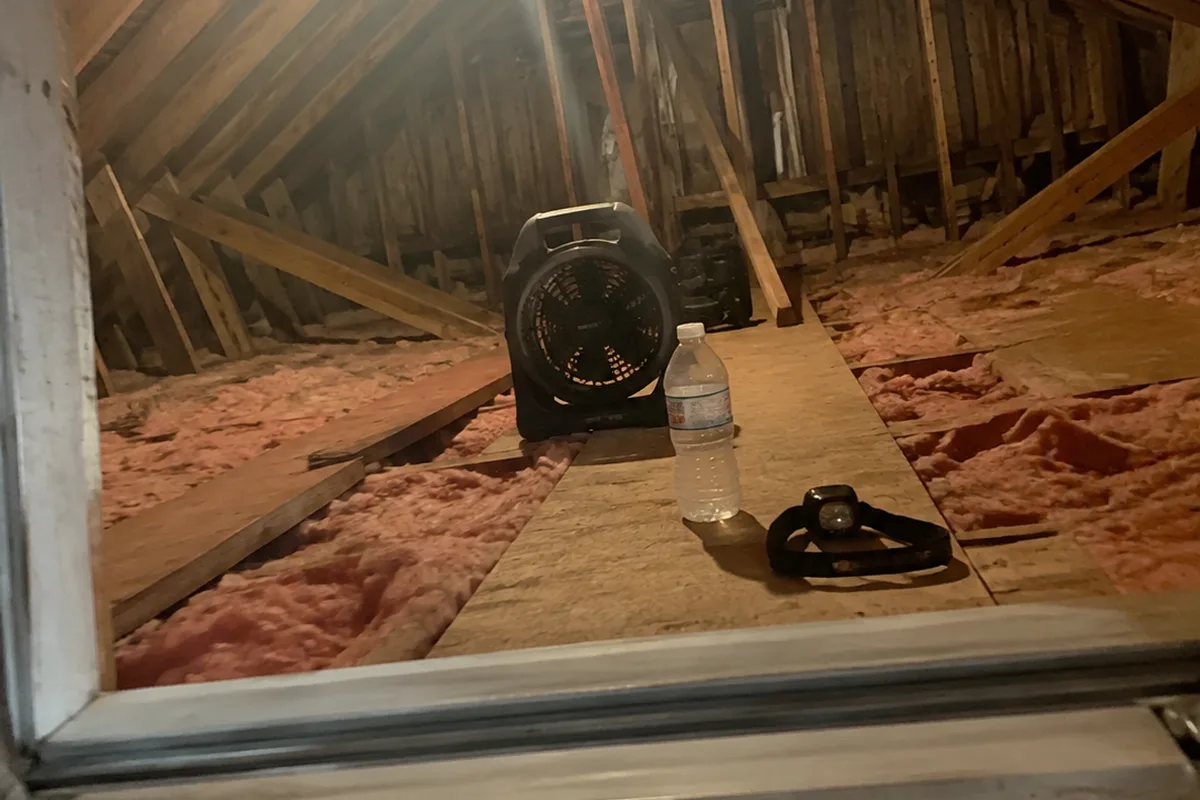
An attic is an indoor workplace. California's heat rule stops giving you a 15-minute pass at 95 degrees.

Title 8 section 3396 has covered indoor work since July 23, 2024, and most electricians filed it under 'warehouse problem.' Attics, crawlspaces, unconditioned garages and a van with dead AC all sit inside it. Here is the actual text, the exception that runs out at 95 degrees, and the August 2026 draft whose comment window closes September 21.

Safety

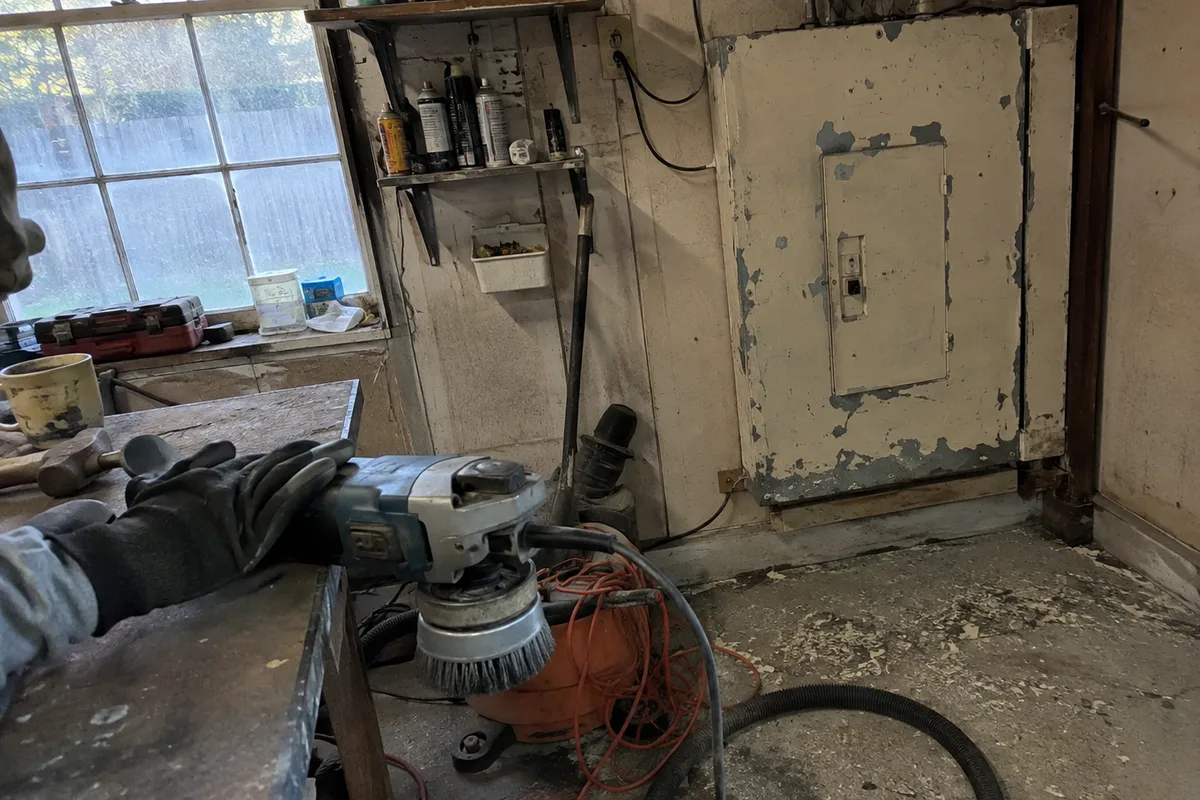
Wire-wheeling paint off an old panel is a Level 3 lead task in California. The limit is 10 micrograms now.

Cal/OSHA's revised construction lead standard, Title 8 section 1532.1, took effect January 1, 2025. It cut the action level to 2 micrograms and the PEL to 10, and it built a presumption into the rule: for listed trigger tasks you are treated as overexposed until you prove otherwise with air sampling. Here is the actual text, which of your tasks are on the list, and the one number that gets you out.

Business

A homeowner can cancel your job by email now. The inbox they send it to is the one printed on your contract.

AB 1327 took effect January 1, 2026. Your home improvement contract's first page now has to carry an email address for the Notice of Cancellation and a phone number to help the buyer fill it out. Here is the statutory text, the phone-cancellation claim that is wrong, and why an unwatched inbox is now a real exposure.

Guide

Your customer's panel upgrade is stuck behind a grid upgrade. PG&E and SCE now have to offer a way around the wait.

The CPUC ordered PG&E and Southern California Edison to create a standard, tariffed Flexible Service Connection so customers blocked by distribution capacity can energize now under a load cap. Here is the decision text, the UL 3141 power control system safe harbor that changes what you install, and the four things it does not do.

Business

The 30 percent credit is gone from every job you sell. 30C was the last one and it died on June 30.

Three separate federal credits paid for panel upgrades, solar, batteries, and EV chargers. All three are now expired, on three different dates, and one of them never covered a standalone panel swap in the first place. Here is the statute text, the dates that actually control, and what your 2025 jobs are still worth to a customer who has not filed yet.

Business

CSLB fines went up on July 1. The cheapest citation now starts at $500.

SB 779 put a floor under CSLB civil penalties as of July 1, 2026. Unlicensed activity starts at $1,500, ordinary citations start at $500, and three specific violations a legitimate electrician can trip over carry a $1,500 minimum and a $30,000 ceiling.

Guide

Surge protection follows the feeder now. Your subpanel and ADU jobs just changed.

California picked up NEC 215.18 and 225.42 on January 1, 2026. The service-panel surge rule everyone quotes has been in force since 2023, so that is not the news. The new part reaches feeders, subpanels, detached structures, and every unit in a multifamily building. Here is the code text, the 10 kA trap, and how to bid it.

Safety

The NEC 210.8(F) HVAC GFCI Exception Just Expired

NEC 210.8(F) Exception No. 2 exempted listed HVAC equipment from GFCI protection. It expired September 1, 2026. Here is what the rule actually covers, why hardwired condensers count, what the pending TIA does not change yet, and how to quote around it in California.

Guide

NEC 2026 Load Calculations: What Changed for Electricians

The 2026 NEC moved load calculations from Article 220 to Article 120, cut the dwelling unit lighting load, and rewrote the rules for EV chargers and existing services. Here is what to check before you quote.

Safety

California now requires an outdoor emergency disconnect on most houses

Starting January 1, 2026, the 2025 California Electrical Code requires an accessible outdoor emergency disconnect for one- and two-family dwellings. Here is what triggers it, what the label has to look like, and how to account for it on panel upgrade and new-construction bids.

Guide

Electrical Termination Torque: NEC 110.14(D) Guide

The 2020 NEC broadened 110.14(D) beyond a torque wrench, and NEMA advises against routine re-torqueing. What that changes on the truck.

Guide

How to Verify Listed Electrical Equipment

A mark on the box is a claim, not proof. Put verification in purchasing by checking the certifying body's own database.

Safety

Aluminum Branch Wiring: The Three CPSC Repairs

CPSC recognizes only three permanent repairs for aluminum branch wiring, and replacing the one receptacle that failed is not remediation.

Safety

Cal/OSHA Penalties for Electrical Contractors

Federal OSHA's penalty figures do not govern a California electrical contractor. Cal/OSHA's schedule does, and its serious-violation maximum is higher.

Business

Contractor Workers' Comp: The 2026 Deadline Moved to 2028

A no-employee C-10 can still claim the CSLB exemption today. Here's the real timeline: what SB 1455 and SB 291 changed, and what happens in 2027 and 2028.

Business

California Electrician Certification Renewal: Two Deadlines

The DIR electrician certification and the CSLB C-10 license renew on separate clocks with separate rules. Let the certification lapse and you retake the exam.

Safety

NEC 2026 just expanded who needs an arc-flash label, here's what changed

The 1000-amp threshold that used to limit arc-flash marking to big service equipment is gone in the 2026 NEC. A lot more of what you already service now needs a compliant label. Here's what changed and what to check before your next panel job.

Business

Title 24 EV-Ready Wiring Requirements 2026: What to Bid

California's 2026 CALGreen rule requires an EV-ready circuit on new single-family homes. What changed under Title 24, and what to check before you bid.

Business

NEM 3.0 made batteries much more important in California solar sales

The Net Billing Tariff changed how exported solar is valued in California. It doesn't make every job a battery job, but it changes the math enough that you need to understand it before you quote. Here's what changed, and what SGIP actually offers.

Business

Why electrical calls spike in winter, and how to be ready for it

Space heaters, holiday lighting, and storm outages don't just create fire risk, they predictably drive call volume. Here's the sourced data and what it means for staffing, inventory, and messaging.

Business

How to price electrical jobs without underbidding yourself

Most electricians don't lose money on bad work. They lose it on bad math: undercounting overhead, guessing at labor time, and forgetting the truck has a cost too. Here's a pricing method that actually holds up.

Business

Five signs your electrical business needs front-office help

If you're the one doing the wiring and the scheduling and the invoicing and the phone, here's how to tell the phone is the thing that has to go first.

Operations

How to handle price-shopper calls without losing the job

"How much do you charge?" is the most common first question and the worst one to answer cold. Here's how to turn it into a booked estimate instead of a hang-up.

Guide

Standby generator calls: what to ask before you book

Standby generator jobs are high-value and easy to misquote over the phone. Ask these six questions on the intake call and skip the wasted trip.

Guide

Panel upgrade calls: what to ask before you book

Panel upgrades are the job every homeowner underestimates and every electrician has to re-scope on site. Ask these six questions on the phone and quote it right the first time.

Operations

The after-hours call policy every electrical shop needs

Most electricians run after-hours calls on gut feel, which means the rules change depending on who's tired. Here's how to write a policy once and have it actually followed every time.

Business

How much does an answering service cost for a California electrician?

A real breakdown of what your three options actually cost (hiring, a live-agent answering service, and an AI answering service) before you pick one.

Guide

Solar and battery backup calls: what to ask before you book

Solar and battery backup calls are some of the most profitable (and most misquoted) jobs on the board. Ask these questions on the phone and skip the wasted first trip.

Cities

AI answering service for electricians in Concord

Concord's older East Bay housing stock, commute-heavy schedule, and a service radius reaching Clayton and Pleasant Hill keep the phone full. Here's how an AI answering service catches every call.

Cities

AI answering service for electricians in Salinas

Salinas Valley's ag-processing plants, coastal fog belt, and a wide rural service radius keep electricians moving all day. Here's how an AI answering service catches every call in between.

Cities

AI answering service for electricians in Ontario

Ontario's warehouse boom along the I-10/I-15 corridor and a fast-growing residential base mean electricians field commercial and residential calls around the clock. Here's how an AI answering service keeps up.

Cities

AI answering service for electricians in Oxnard

Oxnard's coastal salt air, ag-processing plants, and a service area running from the harbor to Camarillo keep electricians on the move. Here's how an AI answering service catches every call.

Cities

AI answering service for electricians in Santa Ana

Santa Ana's dense older neighborhoods, mixed residential-commercial blocks, and nonstop call volume make every missed ring expensive. Here's how an AI answering service keeps you covered.

Cities

AI answering service for electricians in Modesto

Modesto's older neighborhoods, ag-adjacent industrial work, and a service radius reaching Ceres and Riverbank keep the phone busy. Here's how an AI answering service catches every call.

Comparisons

Wirewoman vs. Sameday: which AI receptionist fits a small electrical shop?

Sameday is a proven AI phone platform for home-services trades, priced for multi-tech dispatch operations. Here's how it compares to a flat, low-cost tool built for a solo or small electrician.

Guide

EV charger installs: what to ask before you book the job

EV charger calls are high-value and rising fast in California. Ask these five questions on the phone and you'll quote accurately and show up with the right gear the first time.

Comparisons

Wirewoman vs. Avoca: which AI phone tool fits a small electrical shop?

Avoca is a well-funded enterprise AI workforce platform for home-services call centers. Here's why it's built for a 20-CSR operation, not a solo or small electrician crew.

Cities

AI voice receptionist for electricians in Los Angeles

LA electricians miss calls stuck on the 405, up a ladder in a 1920s Craftsman, or mid-EV-install. Here's how an AI voice agent catches every one of those jobs.

Comparisons

Wirewoman vs. Dialzara: which AI answering service fits an electrician?

Dialzara's entry price looks cheap until the minute caps and overage rates kick in. Here's the real math, and why an electrician-specific tool skips the meter entirely.

Cities

AI voice receptionist for electricians in San Diego

From coastal corrosion in La Jolla to new-build warranty calls in Chula Vista, San Diego electricians can't answer every call. An AI voice agent can.

Comparisons

Wirewoman vs. Goodcall: which AI phone agent fits an electrician?

Goodcall is a solid generalist AI phone agent billed per caller. Here's how that pricing model works against you as a busy shop, and where an electrician-specific tool fits instead.

Business

What a missed call really costs a California electrician

Most electricians don't lose jobs because they do bad work. They lose them because they miss the call. Here's the math, with sourced numbers, not marketing folklore.

Comparisons

Wirewoman vs. Rosie: which AI answering service fits an electrician?

Rosie is a solid generalist AI receptionist. Here's where it fits, where the tiers get tight, and why an electrician-specific tool handles the calls Rosie wasn't built for.

Cities

AI answering service for electricians in Santa Rosa

Santa Rosa's wine-country properties, wildfire-season power shutoffs, and a service area reaching into rural Sonoma County keep electricians running. Here's how an AI answering service keeps every call live.

Cities

AI voice receptionist for electricians in San Francisco

Victorian knob-and-tube, tight parking, and premium remodels: SF electricians are slammed. An AI voice agent answers every call so no job slips away.

Cities

AI answering service for electricians in San Bernardino

San Bernardino's summer heat, warehouse boom, and a service area that runs from the mountains to the valley floor keep the phone ringing nonstop. Here's how an AI answering service keeps up.

Cities

AI answering service for electricians in Fremont

Fremont's tech-worker density, EV adoption, and Bay Area price-per-hour mean electricians here field a nonstop stream of calls. Here's how an AI answering service keeps up.

Cities

AI voice receptionist for electricians in Sacramento

Sacramento electricians lose calls to 105° heat waves, Land Park bungalow rewires, and jobs spread from Elk Grove to Roseville. Here's how an AI voice agent catches them.

Cities

AI answering service for electricians in Chula Vista

Chula Vista's sprawl from the bay to Otay Ranch, plus a fast-growing new-build market, means calls come from every direction. Here's how an AI answering service catches all of them.

Operations

The intake questions an electrician's receptionist should ask on every call

A booked job is only useful if you show up ready. These are the exact questions that turn a vague voicemail into a job you can price and schedule the first time.

Cities

AI answering service for electricians in Irvine

Irvine's master-planned HOAs, new-construction volume, and a client base that expects a callback fast make missed calls costly. Here's how an AI answering service keeps you covered.

Cities

AI answering service for electricians in Stockton

Stockton's Delta heat, older housing stock, and a service radius that reaches Lodi and Manteca all conspire to fill your voicemail. Here's how an AI answering service keeps every call live.

Cities

AI voice receptionist for electricians in San Jose

San Jose electricians juggle the highest EV-charger demand in the country, Eichler-era wiring, and an ADU boom. An AI voice agent makes sure none of those calls slip away.

Safety

What counts as an electrical emergency? A 3-level triage guide

Not every after-hours call is an emergency. Here's how a trained dispatcher sorts a life-threatening fault from a job that can just be booked: the exact framework Wirewoman uses.

Cities

AI answering service for electricians in Long Beach

Long Beach electricians juggle salt-air corrosion, 1920s bungalow rewires, and port-adjacent commercial work. An AI answering service makes sure none of those calls slip away.

Cities

AI answering service for electricians in Anaheim

Anaheim electricians serve dense OC neighborhoods, tourism-corridor commercial work, and a steady EV-and-panel-upgrade load. An AI answering service catches the calls you miss.

Cities

AI answering service for electricians in Riverside

Riverside and Inland Empire electricians cover huge distances, extreme summer heat, and fast-growing new-build demand. An AI answering service catches every call you can't.

Cities

AI answering service for electricians in Oakland

Oakland electricians face steep-hill Craftsmans, knob-and-tube rewires, and an EV-and-solar boom across the East Bay. An AI answering service catches the calls you can't.

Cities

AI answering service for electricians in Fresno

Fresno electricians lose calls to Central Valley heat, ag-and-industrial demand, and a service area that runs from Clovis to Selma. Here's how an AI answering service catches every one.

Cities

AI answering service for electricians in Bakersfield

Bakersfield electricians handle oilfield-adjacent industrial work, brutal Central Valley heat, and sprawl from Oildale to Delano. An AI answering service catches every missed call.

Reading about missed calls? Stop having them.

Call the demo line, pretend you've got a dead panel, and hear Wirewoman book the job.

(669) 281-0646Live 24/7, no card to try.