Short answer: the residential energy storage section moved from R328 to R330 on January 1, 2026. R328 is now Aging-in-Place Design and Fall Prevention. And the kWh ceiling you are probably quoting is wrong in the other direction, because California does not use a flat 20, 40, or 80 kWh limit for a house. The table runs through location-based tiers that reach 600 kWh.
R328 now covers aging in place, not batteries
The 2025 California Residential Code, Title 24, Part 2.5, took effect January 1, 2026. It is based on the 2024 International Residential Code.
Chapter 3 now runs in this order:
- R327 Toilet, Bath and Shower Spaces
- R328 Aging-in-Place Design and Fall Prevention
- R329 Solar Energy Systems
- R330 Energy Storage Systems
- R331 Stationary Engine Generators
- R332 Stationary Fuel Cell Power Systems
Energy Storage Systems was R328 in the 2022 California Residential Code and in the 2021 IRC. The 2024 IRC renumbered it to R330 as part of a Chapter 3 reorganization meant to make the code easier to use. The renumbering carried no technical change to the text of the section itself.
The citation still matters. If your battery plan set says R328 today, you are pointing the plan checker at aging-in-place and fall prevention. Nothing in that section is about batteries.
This is a separate problem from the C-10 battery licensing rule that never took effect, which is about who is allowed to do the work. This one is about the section number and the siting limits you put on the job.
R330 sets the unit rating, the property cap, and the conditions
R330.2 requires the ESS to be listed and labeled in accordance with UL 9540.
R330.5 gives you three numbers to check. Each individual ESS unit has a maximum rating of 20 kWh. The ESS ratings in each location cannot exceed Table R330.5. The total aggregate rating of all energy storage systems on the property cannot exceed 600 kWh.
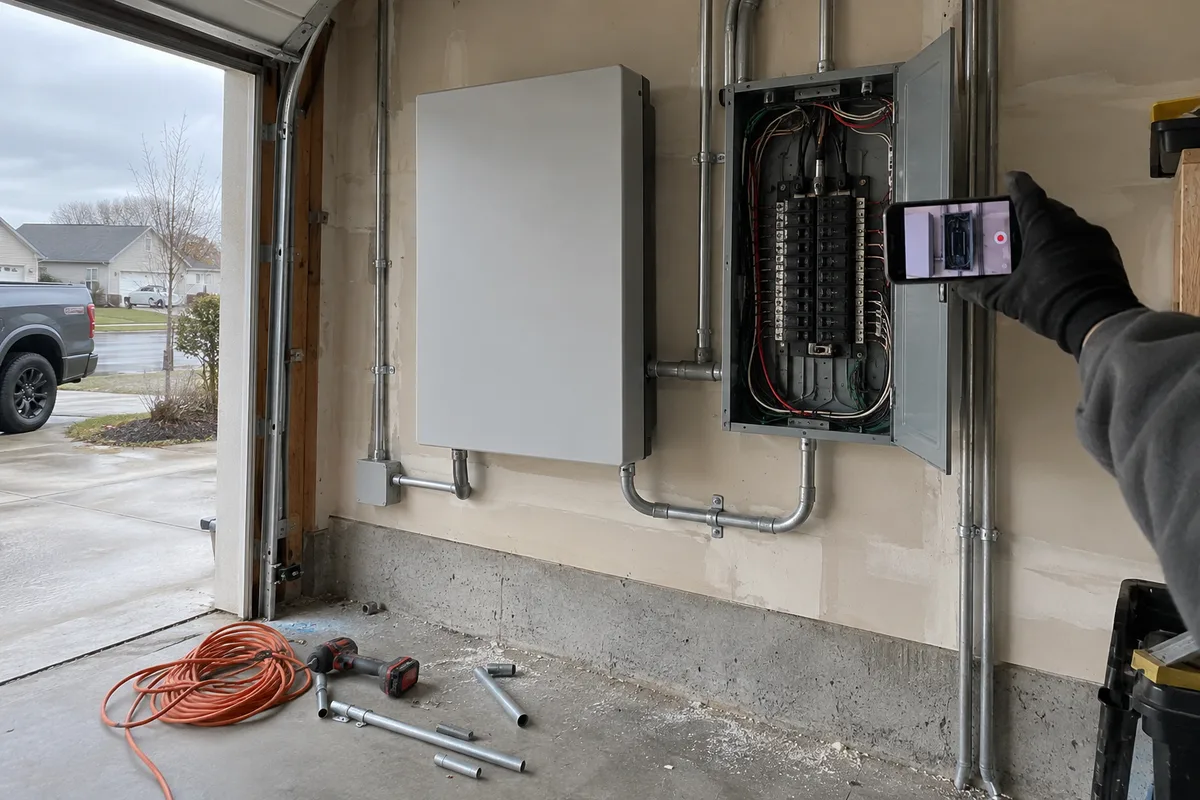
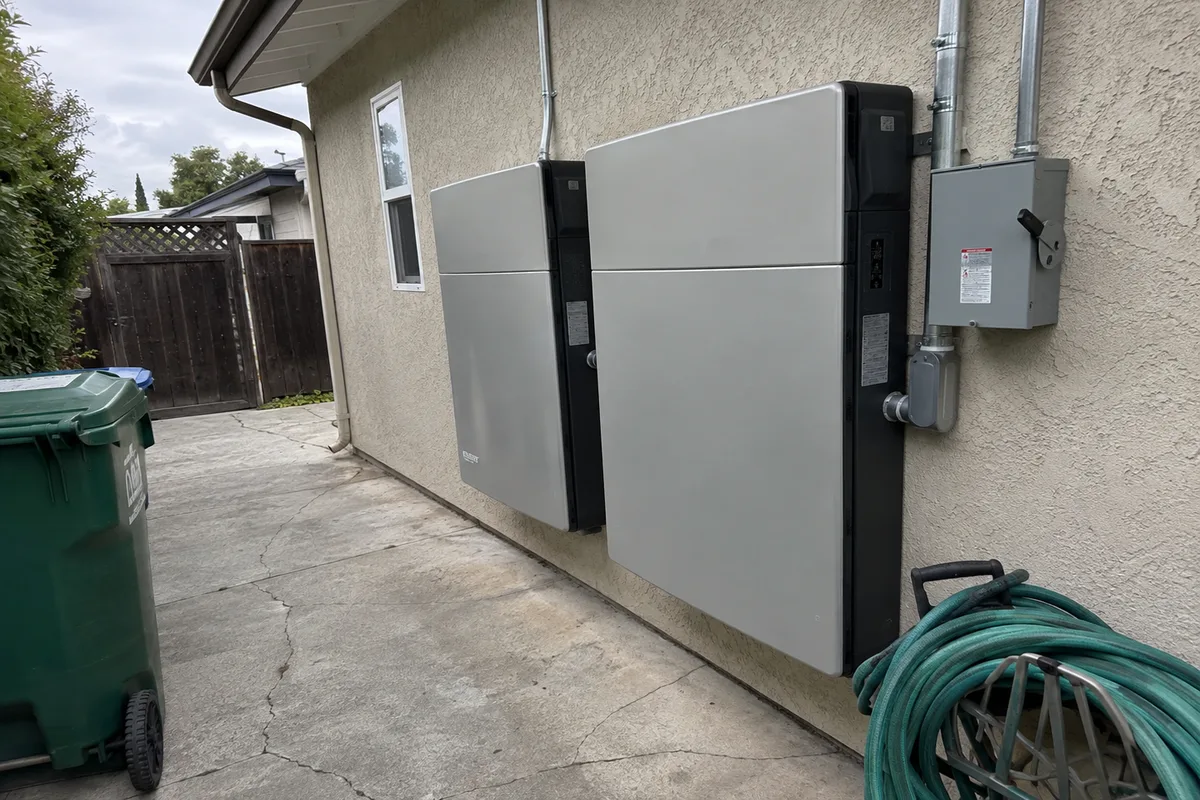
R330.4 lists the permitted locations. Detached garages and detached accessory structures. Attached garages separated from the dwelling in accordance with R302.6. Outdoors on exterior walls located at least 3 feet from doors and windows. Enclosed utility closets, basements, and storage or utility spaces inside the dwelling, where those spaces have finished or noncombustible walls and ceilings.
ESS are not permitted in sleeping rooms, or in closets or spaces that open directly into sleeping rooms.
R330.8 requires protection from vehicle impact where the ESS is subject to it, with R330.8.3 covering other locations subject to vehicle impact.
Fire detection is part of the installation. Smoke alarms are required in the rooms and areas where the ESS is installed, with interconnected heat detection where applicable. Systems that produce hydrogen or other flammable gases during charging require mechanical ventilation for indoor installation.
None of this is the same conversation as sizing the service, which is where NEC 705.13 power control systems comes in. A power control system can solve a busbar problem. It does not move a battery off a wall it is not allowed to sit on.
Table R330.5 sets a different ceiling for every location
Table R330.5 in the California Residential Code and California Fire Code Table 1207.11.4 carry the same maximum aggregate ratings:
- Within utility closets, basements, and storage or utility spaces inside the dwelling: 40 kWh
- In attached garages: 80 kWh
- On or within 3 feet of exterior walls: 100 kWh
- On or within 3 feet of exterior walls, on a noncombustible surface: 200 kWh
- In detached garages and detached accessory structures: 200 kWh
- In detached garages and detached accessory structures at least 10 feet from property lines and from dwellings: 600 kWh
- Outdoors on the ground, at least 3 feet from property lines: 200 kWh
- Outdoors on the ground, at least 10 feet from property lines: 600 kWh
Those expanded tiers did not arrive with the 2026 code. They came in through the 2022 California Fire Code supplement, Section 1207.11, effective July 1, 2024. A flat 80 kWh ceiling for a house has been out of date since the middle of 2024.
The San Francisco Fire Department’s guidance on energy storage systems in R-3 occupancies spells out a noncombustible surface as extending 5 feet horizontally, 1 foot below, and 8 feet above the ESS. That is San Francisco’s spelled-out version, not a state code measurement, so confirm it with your own jurisdiction before you lean on it.
The same guidance cites a minimum of 3 feet from property lines, from a 36 inch means of egress pathway, and from a public way, plus 3 feet of spacing between individual ESS units. For fire detection it references UL 539 listed interconnected heat alarms and UL 864 listed fire alarm control units.
AB 130 makes R330 the number you live with
The 2025 California Building Standards Code was published July 1, 2025 and took effect January 1, 2026.
AB 130, the budget trailer bill signed June 30, 2025, created a moratorium on state and local building standards affecting residential units, running from October 1, 2025 to June 1, 2031. There is no 2028 residential cycle.
That is why the residential building code freeze until 2031 turns this from a scheduling detail into a standing fact. R330 is not a number you can wait out. Update your plan templates, your correction responses, and whatever your office keeps pinned to the wall. A city handout that still says R328 does not make the old citation correct.
Battery placement belongs in the first phone call
The kWh ceiling is a feasibility question and a pricing question at the same time. A utility closet caps the aggregate at 40 kWh. An attached garage caps it at 80. An exterior wall on a noncombustible surface caps it at 200. Same hardware, different wall, different legal answer.
Placement changes labor too. A battery next to the main panel is not the same pull as a battery on the far side of the structure. You need that answer before you price conduit and a visit, not after.
Wirewoman’s solar and battery intake already asks where the battery will sit relative to the panel. That question was written for routing and labor cost. It happens to be the same question Table R330.5 answers. The answer that tells you how far you are pulling conduit is the answer that tells you whether a three-unit stack is legal on that wall.
Wirewoman is an AI phone answering service built specifically for electricians. She answers 24/7, in about two seconds. On a solar and battery call she asks whether the customer already has solar or wants battery only, the main panel’s amp rating, whether there is room for a backup subpanel, what they want running in an outage, where the panel sits relative to the battery, and whether a permit or HOA placement rule is in play.
She texts a job summary to your phone about 30 seconds after the call: who called, what they need, where to go, whether it is urgent. She logs every call to a dashboard and routes the urgent ones by your shop’s own escalation rules. Pricing is flat at $95, $295, or $495 a month, with no per-minute meter and no per-caller overage.
The homeowner who calls asking about what NEM 3.0 and SGIP actually pay is usually the same homeowner who has not thought about where the box goes. You want both answers captured on the first call.
Check these before you quote the battery job
Write the citation as R330, not R328. Confirm the individual unit rating, the total property rating, and the exact battery location, then match that location to its ceiling: 40, 80, 100, 200, or 600 kWh.
Check the exterior clearances, vehicle impact exposure, the sleeping room restriction, fire detection, and ventilation where it applies.
Then ask where the main panel sits relative to the battery, whether there is room for a backup subpanel, what the customer wants powered during an outage, and whether a permit or HOA rule is involved. Those are the questions to ask on a solar and battery backup call, and they belong before the first trip, not after the second one.