TL;DR: For a California home improvement contract over $500, a change order must be written and signed before the changed work starts. Your form must state the changed scope, the price added or subtracted, and the effect on progress payments or the completion date.
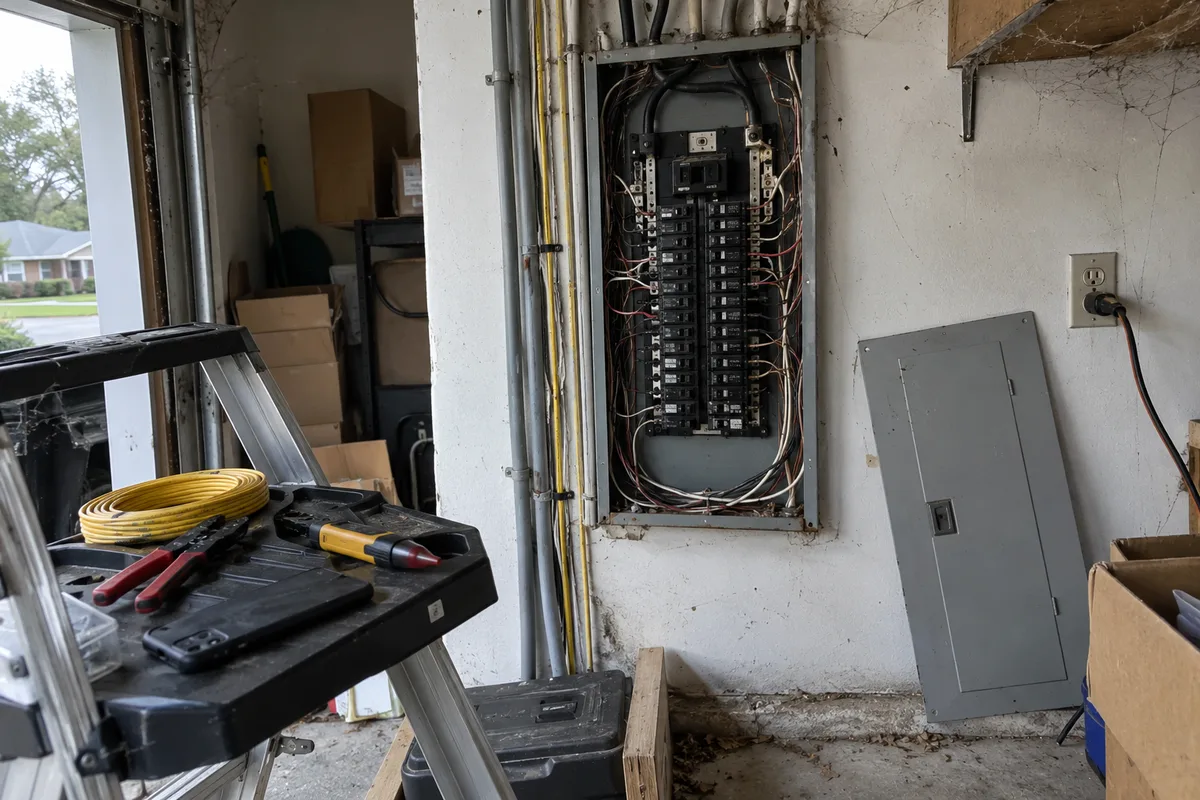
The panel is open. You find a double-tapped breaker, a bonding problem, or an undersized service conductor. The customer is standing beside you and says, “Go ahead.”
Do not start the extra work yet.
For covered residential contracts, section 7159 requires the change order to be in writing and signed by the parties before work covered by that change order begins. The customer’s verbal approval at the panel is not the signature you need. Stop, write the order, get it signed, then start the changed work.
A verbal go-ahead does not add work to the contract
Section 7159 applies to home improvement contracts where the aggregate contract price exceeds $500. It says:
“A change-order form for changes or extra work shall be incorporated into the contract and shall become part of the contract only if it is in writing and signed by the parties prior to the commencement of any work covered by a change order.”
That timing controls the field decision. The issue is not whether the customer seemed agreeable. The issue is whether the changed work had already started before the written order was signed.
If you open the ceiling and repair a buried junction box before getting the signature, you have started work covered by the change order. If the customer later disputes the added charge, “they told me to fix it” is a poor substitute for the required written order.
The same problem comes up when a technician makes a quick repair while already at the panel. The work may feel small. The contract rule does not turn on how easy the repair was.
The change order needs three facts before work starts
Your change order must identify, in writing, three things before the new work begins:
- The scope of work covered by the order.
- The amount added to or subtracted from the contract.
- The effect on progress payments or the completion date.
Write the scope so another person can tell what is included. “Fix panel issue” is not enough for a clean customer conversation. “Remove double-tapped breaker, install approved replacement arrangement, terminate conductors, label panel, and test affected circuits” gives the order a usable boundary.
State the price plainly. Use the same rate sheet you use for the original estimate. Do not set the number from memory of what the last similar job cost.
Then state what changes for payments or timing. If the added work changes the completion date, write the new date or the added time. If it changes a progress payment, state that effect. Do not leave the third item for a later conversation.
The contract must also carry this statement:
“Extra Work and Change Orders become part of the contract once the order is prepared in writing and signed by the parties prior to the commencement of work covered by the new change order. The order must describe the scope of the extra work or change, the cost to be added or subtracted from the contract, and the effect the order will have on the schedule of progress payments.”
For the related subcontractor disclosure requirement, see SB 517 and the disclaimer that has to appear on each change order.
Your estimate should show where the unknown work begins
The estimate should say what you will do and what you will not touch. That gives the customer a clear starting point before the wall or panel is opened.
For example, an estimate for work at an existing service might state that the existing service conductors and panel bus are reused and assumed sound. That assumption matters. If you find an undersized service conductor or a damaged panel bus, the condition is visibly outside the stated starting point.
Name the likely unknowns on the estimate itself. Depending on the job, that can include:
- Concealed wiring condition
- Bonding
- Box fill
- Access
- Existing service conductors
- Existing panel bus
Then state the rule for those findings. A condition in one of those areas will be priced by written change order before that part of the work starts.
This is not a promise that every unknown will occur. It is a plain description of what the original price assumes and what happens if the assumption is wrong. The customer can see the boundary before the technician is standing at the open panel.
A service or repair contract under section 7159.10 is a lighter form for small jobs. See Should you charge for an electrical estimate?. Do not treat every project form as interchangeable. The contract type and price matter.
Keep a three-line change order in the truck
Carry a short change order form in every service vehicle. It should already have space for the three items section 7159 requires:
- Changed scope
- Amount added or subtracted
- Effect on progress payments or completion date
The form should also identify the original job, the customer, and the date so you can connect it to the estimate. The statutory three items are the part that cannot be missing.
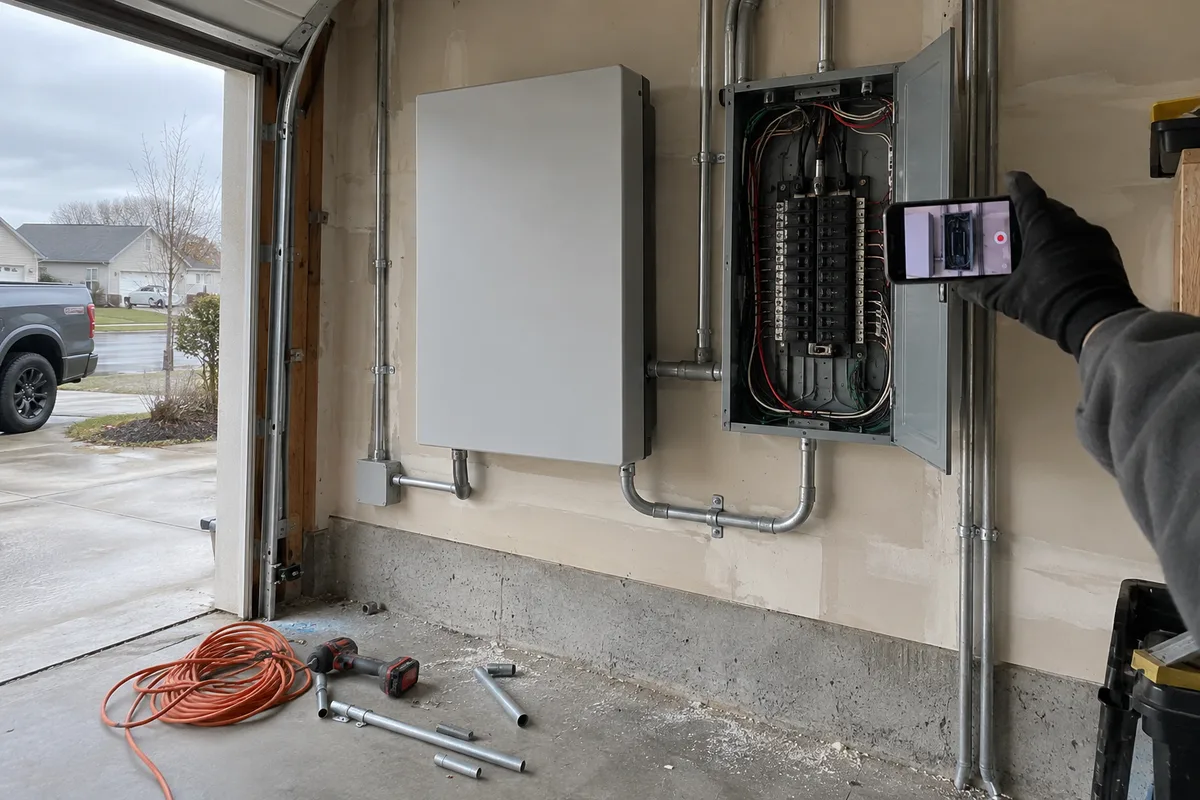
Photo the finding before work begins. A picture of the double-tapped breaker, concealed box, bonding condition, or conductor marking gives the customer something concrete to review. Photo the completed condition after the work. Attach both to the change order.
The photos do not replace the written, signed order. They support the record of what you found and what you changed.
The subcontractor disclaimer discussed in the SB 517 article is required on each change order, so include it on the form.
Stop work at the finding, even when the customer agrees
The clean field sequence is simple.
You find the condition. You stop the affected work. You photograph it. You explain what the original estimate assumed and what the finding changes. You prepare the order. The customer signs. Then you begin the changed work.
Do not “just fix it” because the customer is present and agreeable. The signature comes first.
If the customer declines, the original scope still stands. Document what you found and what you did not do. Do not perform the declined extra work and then bill for it as if the discussion settled the contract.
The original estimate should remain usable. A declined change order does not automatically erase the work the customer already approved. It means the added or changed work was not authorized under the written change order.
For pricing discipline, use the same rate sheet for the estimate and the change order. The guide to pricing electrical jobs without underbidding covers that part of the shop process. Commercial and large-project change-order deadlines are a different subject. SB 440 mostly does not reach ordinary houses. Emergency pricing has its own rules discussed in SB 1365 and price gouging for emergency electrical repairs.
The first phone call sets the first scope record
The change-order fight often starts before the estimate. Nobody wrote down what the customer said the job was.
When Wirewoman answers, she asks your shop’s intake questions in order. The call summary records what the caller described in their own words, including what they think the problem is, what equipment is involved, and what they asked for.
That summary is a dated record of what was said on the call. It is not the contract and it is not proof of anything legal. It gives you something to read next to the estimate when the customer later says, “I thought that was included.”
Wirewoman answers 24/7, sends the job summary to the shop by SMS within 30 seconds, and logs every call to a dashboard. The scope the caller described is in your phone within 30 seconds of hanging up and remains in the dashboard instead of living in a technician’s memory or on a sticky note.
She does not quote prices, write estimates, or sign anything. She captures intake and books the visit.
Use this sequence on the next disputed finding
Before the next residential job starts, do these five things:
- Write the original scope and the conditions it assumes.
- List likely unknowns such as concealed wiring, bonding, box fill, and access.
- Carry a form with scope, price, and payment or completion-date effects.
- Stop at the finding, photograph it, and obtain the signature before changed work starts.
- If the customer declines, document the finding and the work you did not perform.
That turns the change order into a short written decision instead of a panel-side argument.