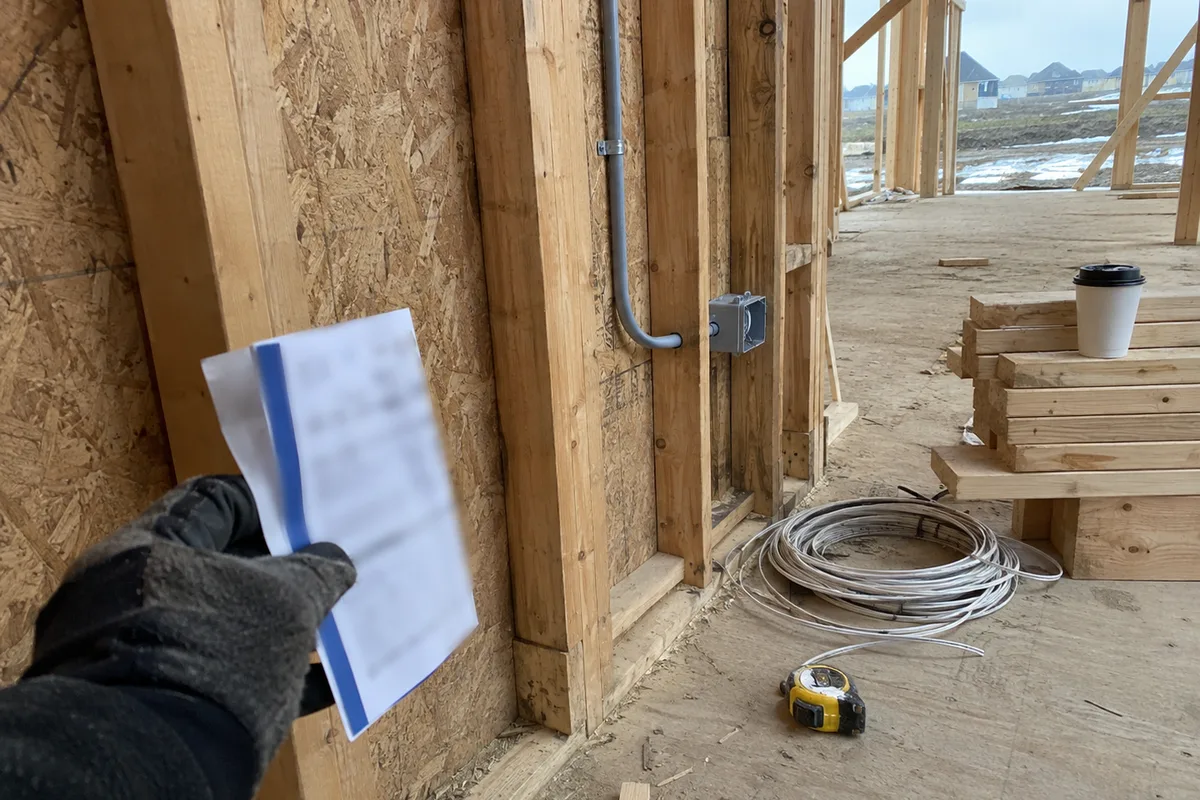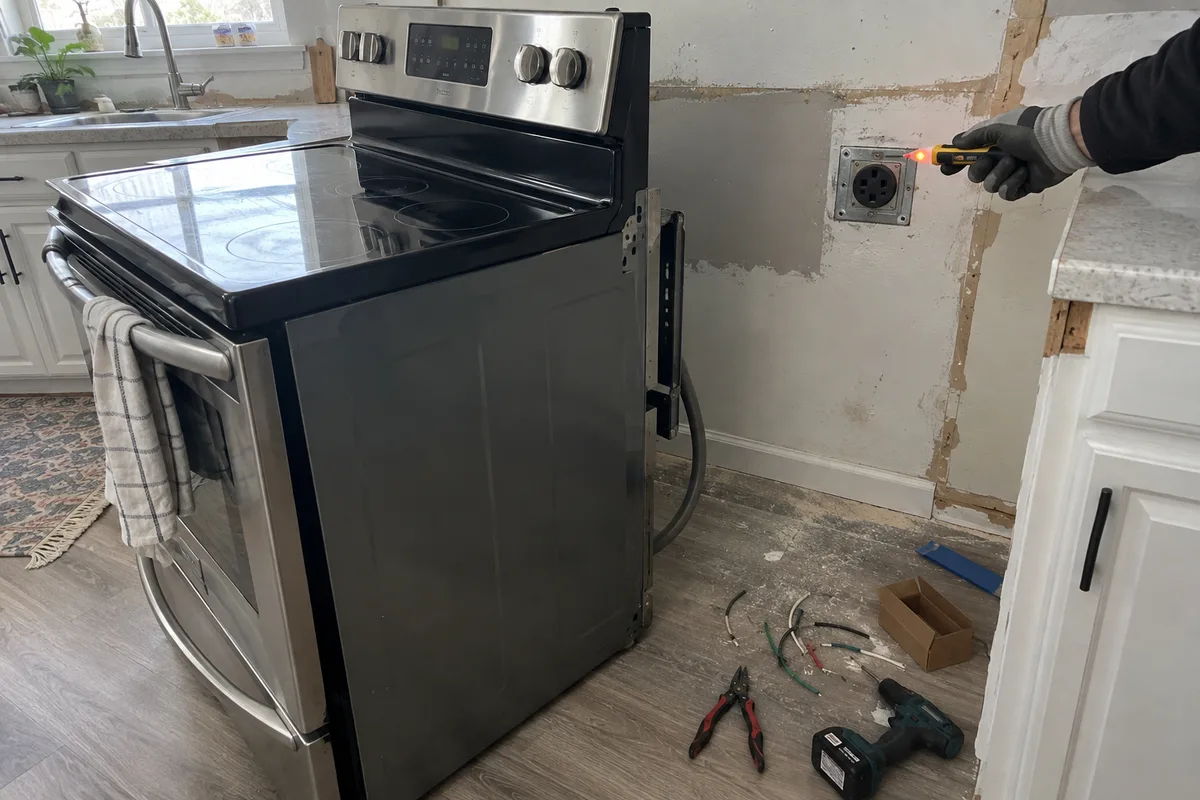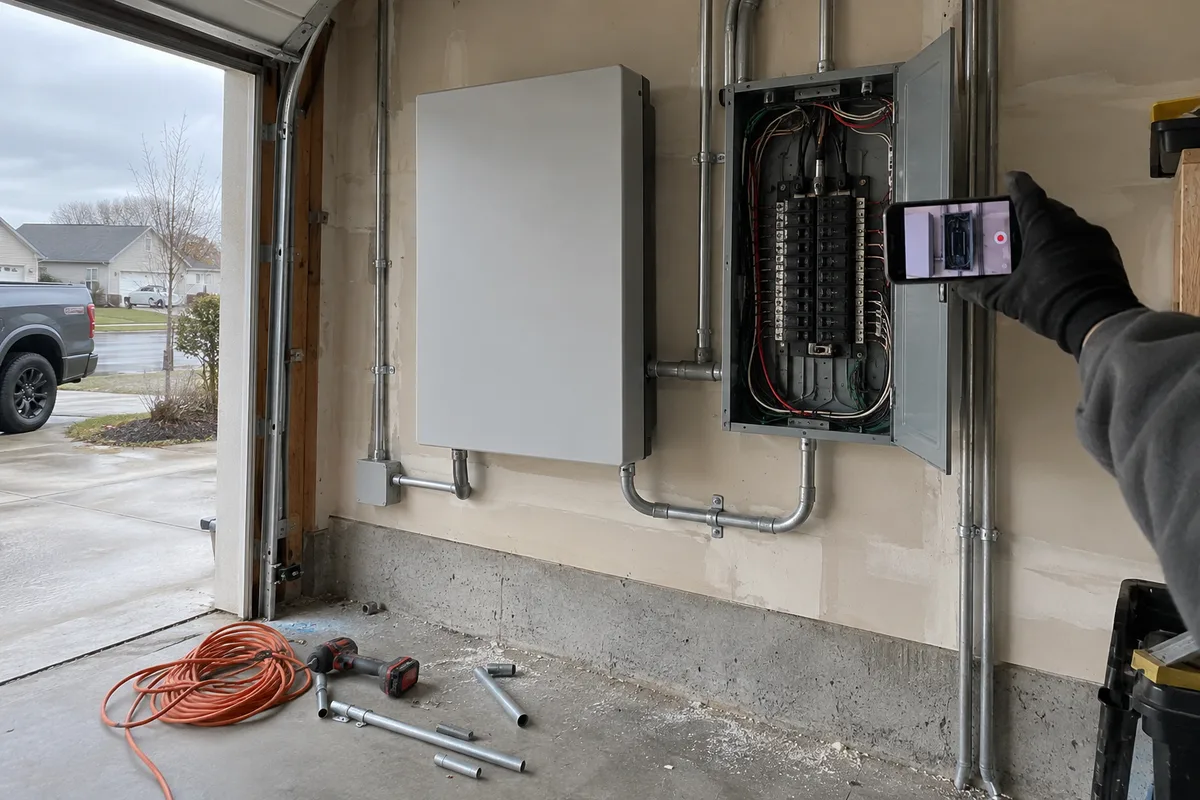
A battery storage inspection may be remote while the new or upgraded main electrical service still requires an inspector on site. That is the electrician-specific result of AB 1738.
The statute lists energy storage systems as eligible for remote inspection. It separately says a local agency is not required to allow remote inspection of new or upgraded main electrical services when that service work is part of a residential heat pump water heater or heat pump HVAC project.
On a battery-plus-service-upgrade job, plan for a split inspection unless the local agency chooses to allow more. The storage portion may be handled remotely. The service portion may still produce a truck roll.
AB 1738 was authored by Assemblymember Carrillo. The Governor approved it on September 18, 2026. The Secretary of State chaptered it as Chapter 271, Statutes of 2026. It adds Section 17970.9 to the Health and Safety Code. Advocates call it the Remote Virtual Inspection Act. The official topic line is “State Housing Law: remote inspections.” This is signed law, not a pending bill.
A remote inspection also does not shorten the other clock on that job. The utility side of a new or upgraded service runs on its own schedule, and the energization delays at PG&E and SCE do not move because the storage inspection happened over video.
The eligible list does not include EV charging equipment
Section 17970.9 covers specified work in single-family and two-family dwelling units. The list includes residential heat pump water heaters, residential heat pump HVAC systems, residential reroofs, photovoltaic systems with an alternating current nameplate rating of 15 kilowatts or less, energy storage systems, and smoke and carbon monoxide detectors.
EV charging equipment is not on that list.
That does not mean every jurisdiction must reject remote inspection for an EV charger. Subdivision (i) allows a local agency to adopt a more permissive remote inspection program or allow additional types of building permits to be inspected remotely. The jurisdiction has to make that choice.
Do not treat the EV charger permit as an extension of the battery list. An EV permit has its own path, including the deemed-approved shot clock. Ask the local agency what it allows. Do not promise a remote inspection based only on AB 1738.
The same caution applies to service upgrades on solar and battery work. The express main-service carve-out appears under the two heat pump categories. It does not appear under the photovoltaic and energy storage language. But the statute does not guarantee a remote service inspection on a solar or battery job either. The local agency can adopt inspection protocols, and the inspector can require an in-person inspection when remote verification does not work. The residential battery storage code questions arrive on that same job regardless of how the inspection is conducted.
The contractor needs written homeowner consent to request it
Under subdivision (a)(1), the local agency shall offer the homeowner, or a contractor who provides the city or county written consent by the homeowner, the option of requesting a remote inspection for all or a subset of inspections required by the building permit.
The consent requirement applies when you make the request on the homeowner’s behalf. Put that consent into your permit process before you ask the agency for anything.
The option is per inspection. You are not choosing remote or in person for the entire permit as one package. You can request remote inspection for some inspections and take an in-person inspection for others.
That is what makes the split inspection workable. The storage inspection and the service inspection can be handled differently, subject to the local agency’s authority and the inspector’s decision.
Heat pump water heaters include the alteration, extension, or replacement of components of an existing electrical system to support the installation. Heat pump HVAC systems include similar electrical work. But the heat pump HVAC category opens with “Subject to the discretion of the inspector,” and the heat pump water heater category does not. Read that as a weaker entitlement on the HVAC side.
For both heat pump categories, the statute says the local agency is not required to allow remote inspections of new or upgraded main electrical services as part of the included scope. It may at its discretion elect to remotely inspect new electrical service installations supporting that equipment.
The inspector chooses live video or recorded media
A remote inspection is conducted offsite through videoconferencing or recorded photos and videos, “at the discretion of the local construction inspector.”
That choice is not yours. You cannot assume a recorded walkthrough will satisfy the inspection. The inspector may require a live videoconference at a scheduled time.
The appointment now has a field component. Someone with a phone has to stand at the right panel, the right equipment, or the right detector at the right minute. Depending on how the inspection is arranged, that person is the homeowner, you, or a crew member.
This is a dispatch problem before it is a code problem. A live inspection slot lands while the crew is in an attic or between calls, and the office has to capture the appointment, the address, the inspection type, and who needs to be standing there.
Wirewoman answers 24/7 in about two seconds. She runs the electrical intake herself, asking panel size, single phase or three phase, and where the work sits, rather than taking a message. About 30 seconds after the call she texts your phone who called, what they need, where to go, and whether it is urgent. She books to the calendar, logs every call to a dashboard, and routes urgent calls by your shop’s escalation rules.
Separating the service scope from the qualifying equipment starts on that first call, which is what the panel upgrade intake questions are for. The same split shows up on solar and battery backup calls.
Start the recording at the street
A local agency may adopt reasonable protocols governing the technical conduct of a remote inspection. Those protocols can require that the field of view, image quality, or camera coverage is sufficient to verify compliance with applicable building standards.
The agency can also require proof that the work shown is the actual work performed under the building permit, at the permitted location, and that the video or photo inspection begins at the street, clearly showing the property address at the front of the building or proof of location.
Start at the street. Put the house number in frame. Then walk in.
Starting at the panel can waste the inspection if the agency cannot confirm the location. Whoever is holding the phone also needs enough coverage to show the work in context. A tight shot that hides the surrounding installation may not let the inspector verify anything.
Connectivity is part of the risk now. The technology and broadband connection used during the inspection must be sufficient for the inspector to reliably observe and verify the work. A garage or a side yard with weak service can turn a scheduled remote inspection into an in-person one.
The local agency may keep a digital record of the remote inspection for later review, training, or compliance. Treat the video as an agency record, not a disposable clip made for one appointment.
One failed remote inspection can change the rest of the permit
If the homeowner or contractor fails a remote inspection required by a building permit, the construction inspector may, at their discretion, conduct future inspections required by that permit remotely or in person.
The inspector can also terminate a remote inspection, after attempting to verify compliance that way, and require the inspection be conducted in person if compliance cannot be verified remotely. That authority survives the project being eligible in the first place.
So one bad appointment can convert the remaining inspections on that permit. The cost is not limited to the slot you lost.
Willful misrepresentation carries a separate penalty. If a homeowner or contractor is found to have willfully misrepresented the work that is the subject of a remote inspection, a city or county may temporarily ban them from using remote inspection, not to exceed 6 months for a first offense and 12 months for offenses thereafter.
A local agency may also enter into agreements with other local agencies to enforce each other’s temporary bans. For a shop working several jurisdictions, that ban can follow you across city lines.
This is the provision that addresses filming the neighbor’s already-passed panel instead of the one you just wired. Remote inspection is not a shortcut around identifying the location or presenting the work honestly.
Most jurisdictions do not have to offer this until 2028
AB 1738 does not make remote inspection available statewide today.
A city with a population of fewer than 5,000 is outside the section. So is a county with a population of fewer than 150,000, including each city within that county. That county threshold sweeps in every city inside a small county regardless of the city’s own size.
A local agency that is not a qualifying city or county has to satisfy subdivision (a) by January 1, 2028. A qualifying city or county has until July 1, 2028. The statute defines a qualifying city or county as a city with a population of 50,000 or fewer that is not already exempt under subdivision (b)(1).
The grouping is simple. Larger jurisdictions, January 1, 2028. Small cities of 50,000 or fewer that are not exempt, July 1, 2028. Very small cities and small counties, never required by this section at all.
“Local agency” means a city, including a charter city, county, or city and county. There is no charter city exemption here.
Some agencies will move sooner, and subdivision (i) lets them. Check the jurisdiction before you quote a remote inspection to a homeowner.
Remote cannot cost more or take longer
When a local agency offers a remote inspection under this section, it has to offer it at no greater cost and with no greater delay than an in-person inspection.
No surcharge, and the remote option cannot sit in a slower queue than the in-person one.
That does not remove the work on your side. You still need written homeowner consent when you request the inspection for them. You still have to identify which inspections are going remote, confirm which method the inspector wants, and hold the appointment. And if the agency is the one requiring a remote inspection, subdivision (a)(3) puts a disclosure duty on you instead: tell the homeowner the agency requires it.
Change the intake before 2028 rather than after. Ask whether the job includes a new or upgraded main service, scope that separately from the qualifying equipment, get written homeowner consent in the file before you request anything, and confirm whether the jurisdiction has a program running yet. Schedule the storage or equipment inspection separately from the service inspection when the scope calls for it.
Then make sure the office actually catches the live appointment. Wirewoman answers the call, collects panel size, phase, location, and scope, texts the job summary in about 30 seconds, and books the calendar while the crew is still working. Pricing is flat at $95, $295, or $495 a month, with no per-minute meter and no per-caller overage.