TL;DR: SB 913 does not create a battery payment program today. The CPUC must enhance the market rules by June 30, 2028, and SB 905 requires new utility grid capacity data, but neither bill promises a homeowner a VPP check.
SB 913 sets a June 30, 2028 CPUC deadline
California approved SB 913 on September 30, 2026. Chapter 987 adds Public Utilities Code Section 380.1 and directs the California Public Utilities Commission to enhance existing market pathways for aggregated distributed energy resources by June 30, 2028.
The signed text says:
“On or before June 30, 2028, the commission, in coordination with the Energy Commission and the Independent System Operator, shall enhance existing market-integrated pathways for aggregated distributed energy resources to qualify as resource adequacy capacity, including by ensuring all of the following:”
That is a rulemaking directive. It is not a new payment program.
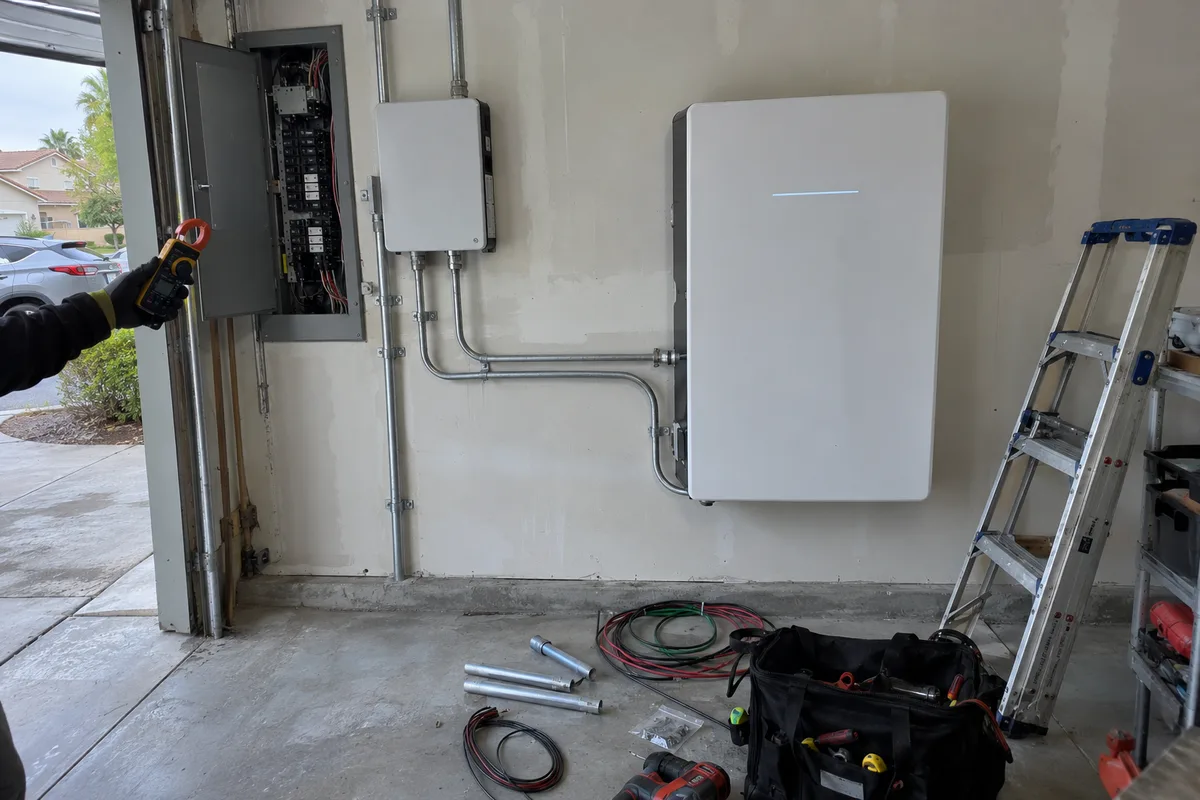
On battery calls, Wirewoman’s intake already asks whether the customer wants outage backup, including protection during PSPS shutoffs, or day-to-day bill savings. Customers in the savings group are the ones who ask whether the battery can sell power back or “join a virtual power plant.” That question appears in the job summary in the caller’s own words.
Treat that question as a cue. On the callback, tell the customer the honest timeline. SB 913 does not mean the battery earns VPP money this year or next. The CPUC rules are due by June 30, 2028. Programs then have to be built around those rules.
Resource adequacy credit is not the same as a homeowner payment
SB 913 concerns resource adequacy. In plain English, that is the capacity utilities and other load serving entities must show they have lined up to keep the grid reliable.
The law allows aggregated home batteries, EVs, and smart thermostats to count toward that capacity. Load serving entities may include those resources in resource adequacy filings and procurement.
Section 380.1(a)(2) states:
“Aggregated distributed energy resources are eligible to receive resource adequacy credit for their qualifying capacity value, including energy exported past the utility meter to the extent authorized pursuant to subdivision (b).”
The credit goes into the resource adequacy structure. That sentence does not promise a direct check to the battery owner. It also does not set a customer payment amount, enrollment process, or launch date for a new VPP program.
The statute defines an aggregated distributed energy resource as:
“an aggregation of more than one distributed resource that is capable of supplying electricity to, or reducing electricity demand on, the electrical distribution system when called upon to do so.”
That means one installed battery is not automatically a qualifying aggregation. The resource must participate as part of an arrangement that can supply electricity or reduce demand when called upon.
Customers cannot collect twice for the same exported energy
Section 380.1(b) requires the CPUC to set conditions for customer sited resources that receive capacity credit for energy exported past the meter.
The rule has a direct limit for NEM and net billing customers. A customer cannot receive payment through aggregation and retail bill credits for the same exported energy dispatched through the aggregation. The statute identifies Public Utilities Code sections 2827, 2827.1, and 2827.10.
Say this plainly when a customer asks whether SB 913 adds another payment on top of existing export treatment. It does not authorize double payment for the same energy.
For current incentive questions, keep the discussion separate from the VPP promise. The NEM 3.0 and SGIP battery incentive guide covers the existing incentive discussion, while SGIP cost verification addresses a separate compliance issue. Neither bill changes SGIP on its own.
Telemetry and measured performance will shape participation
SB 913 directs the CPUC to decide whether device level telemetry can provide accurate net load measurements. The resulting standardized requirements may address metering accuracy, data integrity, telemetry resolution and latency, settlement verification, interoperability across devices and aggregators, and fraud or tamper prevention.
The statute also says capacity determinations should be technology neutral, based on measured performance, and weather normalized.
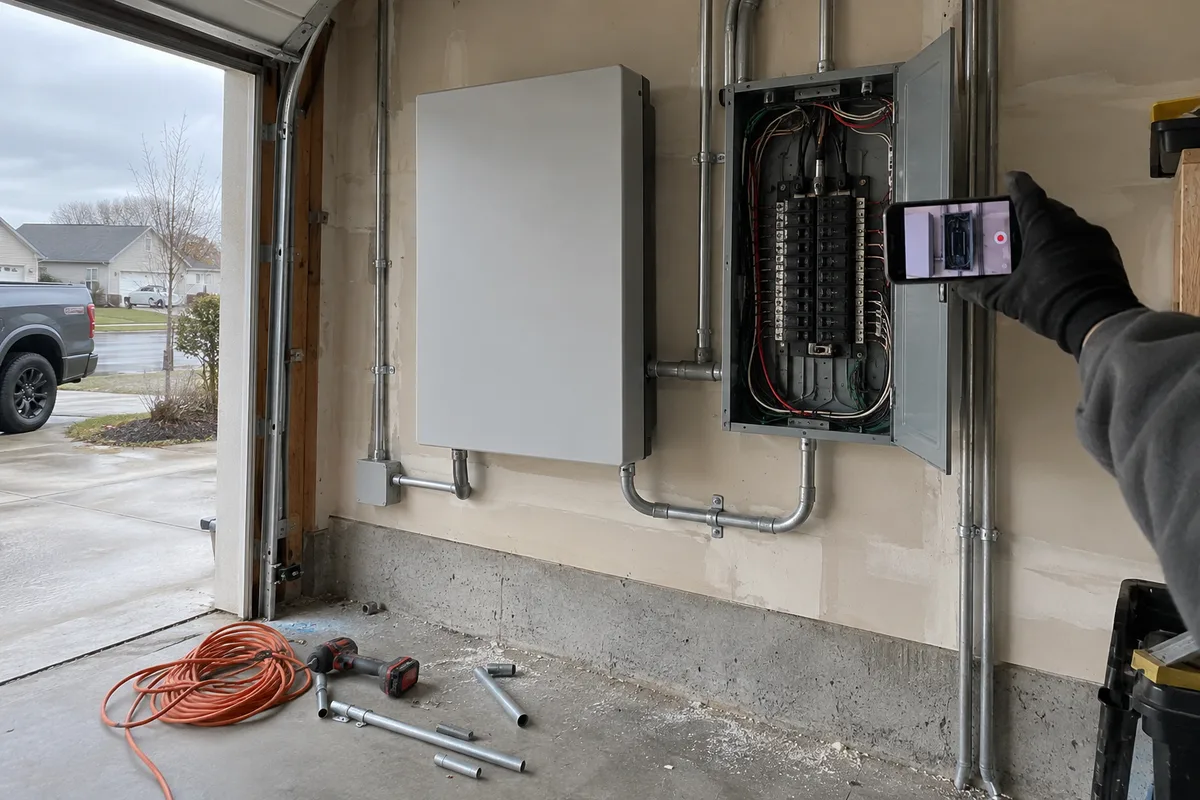
There is no new installation requirement in the bill for you to apply today. The practical point is narrower. When you specify a battery or inverter, keep its monitoring and communications working. Document that condition at commissioning. A future aggregation program may depend on data quality and communication between devices and aggregators.
That is good commissioning practice, not a new SB 913 legal duty. If the project also involves a power control system, keep that issue separate and use the California NEC 705.13 power control systems guide.
SB 913 also authorizes multiple enrollment. Multiple devices may participate behind the same utility point of interconnection, including in separate programs, if there is no double counting or duplicate compensation for the same load reduction or energy export.
The law does not order the California Independent System Operator to adopt a new model. By June 30, 2028, the CPUC must develop recommendations for changes to the ISO proxy demand resource and distributed energy resource aggregation participation models and send them to the ISO “for consideration in a new or existing initiative.” Those are recommendations, not a mandate on the ISO.
SB 905 will show where the distribution grid is constrained
SB 905 is Chapter 986, approved and filed on September 30, 2026. For electricians, Section 769.1 is the part to watch.
It requires each large electrical corporation to publish data showing how much more its distribution grid could be used. The data includes average capacity utilization, peak utilization, off peak load hosting capacity, and:
“The location of constrained distribution areas with sufficient detail to allow third parties to identify locations where distributed resources could benefit the constrained distribution area.”
A constrained distribution area is a grid segment where capacity limits are already delaying, or are expected to delay, energization of new loads or load growth from existing customers. The CPUC determines that status using low load hosting capacity, locational net benefits analysis, or a similar successor metric.
This connects directly to service energization work. The PG&E and SCE flexible service connection guide covers the existing delay problem. SB 905’s public data could later help you identify neighborhoods where service upgrades are tight and where storage or load management may be a lower cost fix.
Section 769.1(c) says that when a utility finds a distribution need that may require new investment, it must assess whether load flexibility and distribution connected energy storage could solve the need at lower cost to ratepayers than traditional upgrades.
Do not describe SB 905 as an annual improvement mandate. Section 769.1(b) says:
“the commission shall consider establishing a target and timeline for each large electrical corporation to increase average distribution grid capacity utilization in accordance with the approved metric.”
“Shall consider” is not “shall mandate.” Solar Power World reported the deadline for SB 913 as June 30, 2027 and described SB 905 as allowing the CPUC to mandate annual utilization improvements. The chaptered text says June 30, 2028 and says the CPUC shall consider establishing a target and timeline.
Change the battery conversation on your next callback
Tell customers that SB 913 orders CPUC rulemaking. It does not create a VPP payment today. Do not sell a battery on a promise that it will earn money under SB 913.
Keep today’s discussion focused on the customer’s actual purpose, including backup, PSPS protection, bill savings, existing solar, panel capacity, and current incentive questions. Wirewoman’s battery intake questions are built for that conversation. Wirewoman answers the shop line 24/7, captures the question, and texts the job summary within 30 seconds of hang up. It does not give legal or incentive advice.
For your part, document monitoring and communications at commissioning. Watch the CPUC work leading to June 30, 2028. Check the SB 905 grid data when it becomes available. Until then, describe these bills as future rulemaking and grid data requirements, not as a payment program already available to your customer.