SB 222 caps the heat pump permit, not the panel permit
SB 222 caps a residential heat pump water heater permit at $150 and a residential heat pump HVAC permit at $200. It does not cap a separate permit for replacing the electrical panel.
That is the part California C-10 contractors need to price correctly.
SB 222, authored by Senator Scott Wiener, was approved by the Governor on September 28, 2026. It is Chapter 738, Statutes of 2026, not a pending bill. It adds Government Code Chapter 7.5, Sections 51297.50 through 51297.59, and Civil Code Section 4737. The law takes effect January 1, 2027.
The chapter applies to residential retrofit and replacement work. Section 51297.59 excludes new residential construction. Section 51297.50 declares heat pump permitting a matter of statewide concern, so the rules apply to charter cities too.
The capped permit covers one residential heat pump water heater or one residential heat pump HVAC system serving one dwelling unit. The fee also cannot exceed the estimated reasonable cost of the service.
A city or county can charge more only after adopting a resolution or ordinance with a written finding and substantial evidence of the reasonable cost. That higher fee must be a regular fixed amount per appliance type and must be listed publicly. The jurisdiction cannot add charges above the publicly listed fee.
The caps do not apply to technology fees charged by third-party permit vendors. They also do not apply in a city under 5,000 people or a county under 150,000 people, including each city within that county.
The panel question decides whether the job gets the fast path
On a heat pump call, the homeowner almost always leads with the equipment. “We want a heat pump water heater.” Then the caller says nothing about the panel.
The question that sorts the job under SB 222 is the electrical one: What size is the panel in amps? Is there open breaker space? Was the old unit gas?
A caller who answers, “100 amp, full,” is describing a two-permit job before anyone rolls a truck.
Section 51297.53 allows up to one nondiscretionary permit for the heat pump installation. The statute states:
“On or before January 1, 2028, a city, county, or city and county may require up to one nondiscretionary permit per installation of a residential heat pump water heater or heat pump HVAC system in which the city, county, or city and county administratively approves an application to install the residential heat pump water heater or heat pump HVAC system.”
Then subdivision (b) creates the carve-out:
“This section shall not be construed to prevent a city, county, or city and county from issuing separate permits for a panel replacement or structural work conducted as part of the residential heat pump installation.”
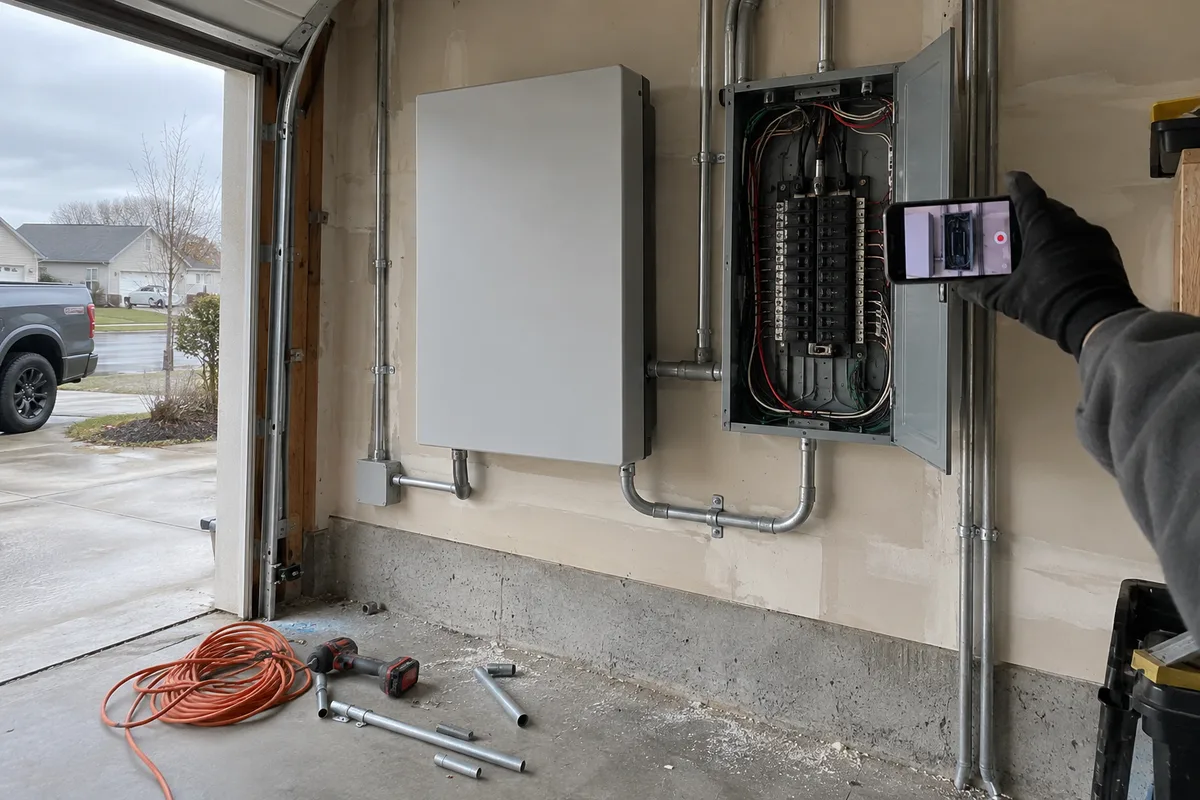
That means the $150 or $200 cap applies to the heat pump permit. A panel replacement can remain a separate permit. Section 51297.53 does not put a fee cap on that separate panel permit.
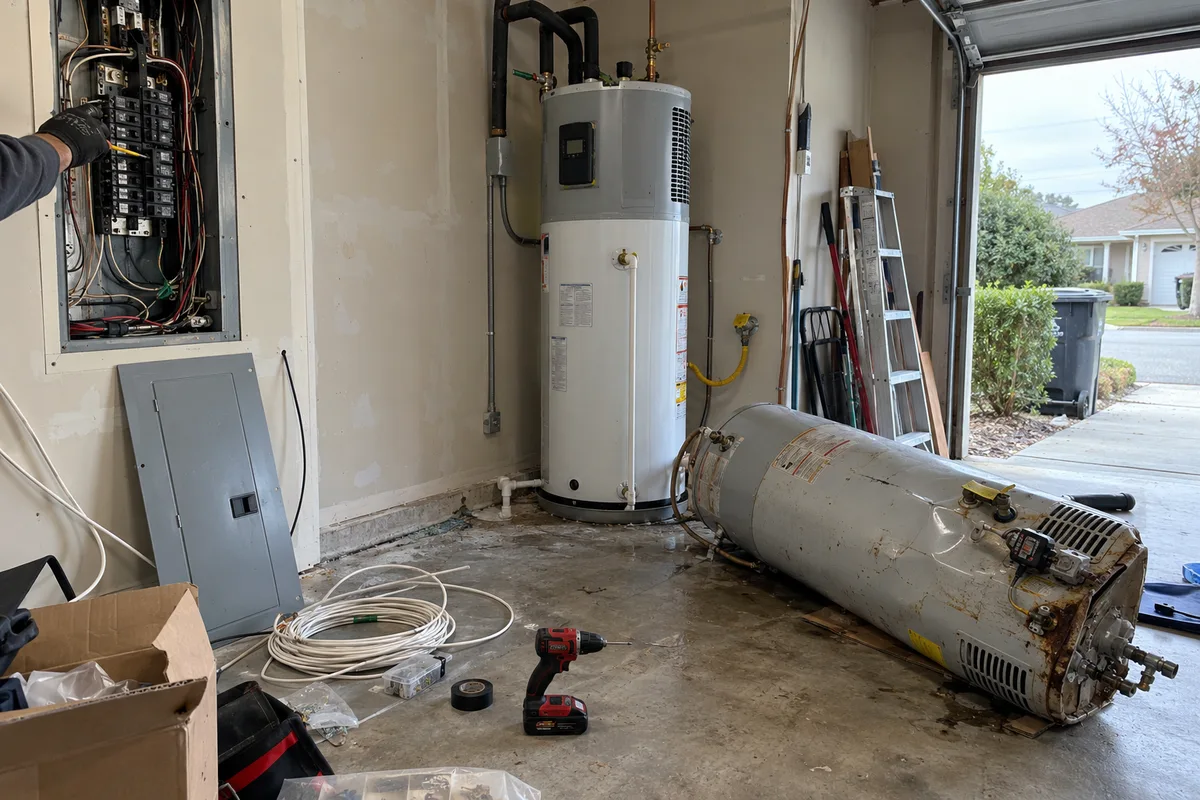
A gas-to-heat-pump conversion can therefore be one capped heat pump permit when the existing electrical system works for the installation. If the panel must be replaced, the job can become a heat pump permit plus a separate panel permit. The panel permit does not receive a statutory price cap, and a job that needs a new panel is outside the real-time permit lane described in Section 51297.55.
Your quote should show that panel permit as its own line when the job needs one. Homeowners will hear “heat pump permits are capped at $150 or $200” and may apply that number to the whole job. The statute does not.
Real-time online permits exclude a new electrical panel
By July 1, 2028, cities and counties covered by the law must run an online, automated process that issues qualifying permits in real time to a licensed contractor.
The installation must meet every condition in Section 51297.55. It must be a residential heat pump water heater or HVAC system that does not require installation of a new electrical panel or structural work. It must be a swapout. For HVAC work, the licensed contractor must certify under penalty of perjury that the equipment was sized using a load calculation under ACCA Manual J, the SMACNA Residential Comfort Systems Installation Standards Manual, or the California Mechanical Code. The contractor must provide that calculation to the building department on request.
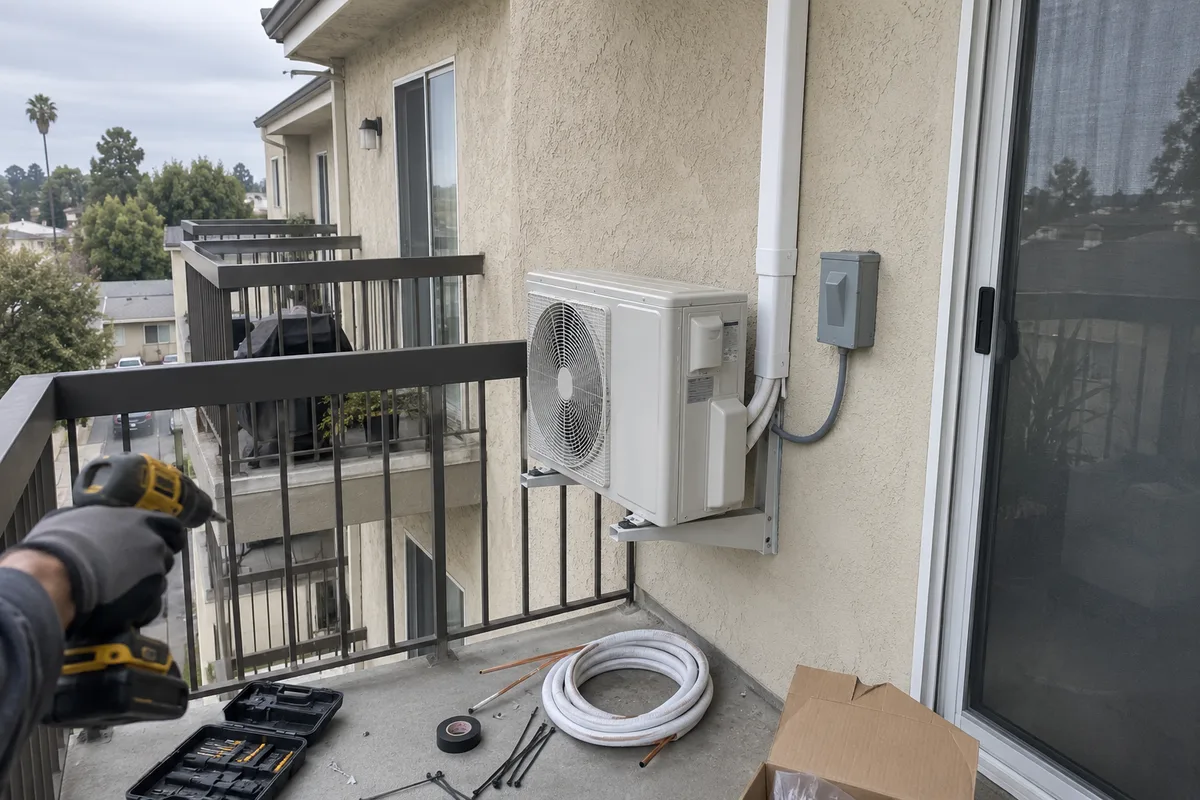
A swapout means the new heat pump water heater, or the new HVAC air handler and outdoor coil, goes in the same location as the equipment it replaces. More than 25 linear feet of new, modified, or replaced ductwork is not a swapout. Neither is replacing a package unit with a split system or replacing a split system with a package unit.
The statute says “new electrical panel.” It does not say that a new branch circuit disqualifies the job. Do not tell customers that every electrical change removes the job from the online lane. The panel language is specific.
If a jurisdiction requires a CF1R form with the application, it cannot ask for information that duplicates the CF1R, except for the applicant name and project address.
Asynchronous inspections start July 1, 2027
Beginning July 1, 2027, every city and county must adopt and offer asynchronous inspections for qualifying residential heat pump installations. The contractor and inspector do not have to be present at the same time.
The inspector may call or video-call you during the inspection. If an issue requires you to be present to test or fix it, or if the inspector needs you there to get access, the inspector can require a second inspection with both of you present.
A city may still offer the old same-time inspection. It may also offer remote inspections instead of asynchronous inspections.
That is different from AB 1738. AB 1738 created a remote video inspection path for heat pumps, batteries, and solar, while stating that a local agency is not required to remotely inspect new or upgraded main electrical services on heat pump jobs. See AB 1738 and remote inspection for electrical service upgrades. SB 222’s asynchronous inspection is a separate mechanism.
Window units lose the exemption when the electrical work changes
Section 51297.54 prohibits a city or county from requiring a permit or inspection for a plug-in window air conditioner or window heat pump only when all five conditions are met.
The appliance must be rated at 120 volts or less. It must be self-contained. The installation cannot require a dedicated circuit, an electrical panel upgrade, drainage work, or structural modifications.
The moment the window unit needs a dedicated circuit or a panel upgrade, the exemption is gone. The electrical side is the test.
Cities can still impose limited local standards. These include side and back yard setbacks of no more than 3 feet, front yard setbacks of no more than 10 feet, reach codes encouraging zero-emission equipment, standards supported by substantial evidence of a specific adverse health or safety impact, and noise limits for inverter heat pumps that are at least 15 decibels higher than the statutory maximum for non-inverter equipment. Workforce labor standards, including prevailing wage and state-approved apprentices, are also allowed.
A site plan cannot be required for a swapout.
Your intake has to capture the panel before you price the job
Wirewoman answers 24/7 and runs the electrical intake herself. She asks for panel size, single phase or three phase, and where the work sits instead of just taking a message.
Within 30 seconds of hang-up, Wirewoman texts your phone the caller’s name, address, the problem in the caller’s words, urgency, and booked time. She logs every call to a dashboard.
So “100 amp, full panel, replacing a gas water heater” is in your text before you write the quote. You can price the separate panel permit from the start. For panel-call intake questions, see what to ask before booking a panel call.
The same quote may need to account for other electrical facts outside SB 222. Review the California base services charge for electrification quotes and the HVAC GFCI exception deadline when those issues apply to the work.
The key dates are January 1, 2027, July 1, 2027, and July 1, 2028
SB 222 takes effect January 1, 2027. The $150 and $200 fee caps have no later effective date in the bill.
Asynchronous inspections must be offered beginning July 1, 2027. Section 51297.53 references January 1, 2028 for the one-permit language. Real-time online permits must be available by July 1, 2028.
Before you quote a heat pump job, ask the panel size, available breaker space, whether the old equipment was gas, and whether the installation needs a new panel. Separate the panel permit on the quote. Check the city’s posted fee list. Know which inspection option the jurisdiction offers. Keep the January 1, 2027, July 1, 2027, January 1, 2028, and July 1, 2028 dates in your intake and estimating process.