TL;DR: Distribution transformer supply has improved, but three-phase pad-mount transformers and switchgear are still tight, with switchgear lead times averaging 44 weeks in the second quarter of 2025. Same-size residential panel replacements usually do not wait on that equipment. Service size changes, new services, and commercial jobs can.
Distribution transformer lead times once stretched to roughly two years, about four times longer than before 2022. Costs rose roughly five to six times over two years. The shortage has improved from its worst point, but prices remain far above 2019 levels, and some equipment is still hard to schedule.
That is the documented market. Your estimating problem is narrower.
A same-size panel swap is not the same job as taking a house from 100 to 200 amps. A utility reconnect is not the same as a service extension. A residential replacement is not the same as a commercial project waiting on customer-owned switchgear.
Sort the job before you promise the date.
The transformer shortage improved, but the worst gear is still tight
The National Renewable Energy Laboratory reported the long lead times and cost increases in its February 2024 technical report, Major Drivers of Long-Term Distribution Transformer Demand. NREL identified post-pandemic demand buildup, labor shortages, supply chain disruptions, and scarce materials such as grain-oriented electrical steel, aluminum, and copper.
Wood Mackenzie reported a projected U.S. supply deficit in 2025 of 30% for power transformers and 10% for distribution transformers. Since 2019, demand had risen 116% for power transformers and 41% for distribution transformers. Imports supplied an estimated 80% of U.S. power transformers and 50% of distribution transformers in 2025.
New tariffs added pressure, including a 50% tariff on copper. That belongs in the same conversation as copper prices and copper theft, especially when you are pricing material that may move before the job starts.
A January 2, 2026 report in POWER magazine by Sonal C. Patel, citing Wood Mackenzie survey data, said distribution transformer availability had improved. Large power transformers still had lead times above two years. Switchgear lead times averaged 44 weeks in the second quarter of 2025, and pad-mount transformer lead times increased during the quarter.
Wood Mackenzie expects the three-phase pad-mount shortage to worsen because of demand from data centers, manufacturing facilities, and EV charging infrastructure. Some distribution transformer classes had risen in price as much as 95% since 2019. Circuit breakers were up 47% since 2021. Medium-voltage switchgear was up 50%.
There is also an aging-equipment problem. More than half of U.S. distribution transformers, roughly 40 million units, are beyond their expected service life.
That does not mean every residential panel call is a transformer call.
PG&E’s numbers show why a panel upgrade is not a service extension
PG&E’s first Biannual Energization Report to the California Public Utilities Commission gives you a useful comparison.
For applications submitted from January 31, 2023 through December 31, 2024 and completed by March 20, 2025, PG&E reported 21,632 completed main panel upgrades. They averaged about 61 calendar days from start to finish.
Electric Rule 16 service extension projects were different. PG&E reported 5,882 completed projects, averaging about 307 calendar days end to end.
The report does not say the transformer shortage caused that gap. The numbers show the operational difference between a main panel upgrade and a project that requires the utility to extend or rebuild service.
Only about 41% of applications submitted in that window had been completed by March 20, 2025. Those averages leave out the jobs still waiting. Treat them as a floor, not a promise.
For your quote, the distinction is simple. Your crew can control the date for your installation. The utility controls the date for utility work and energization.
Put every quote in one of three buckets
Bucket 1: The utility only disconnects and reconnects
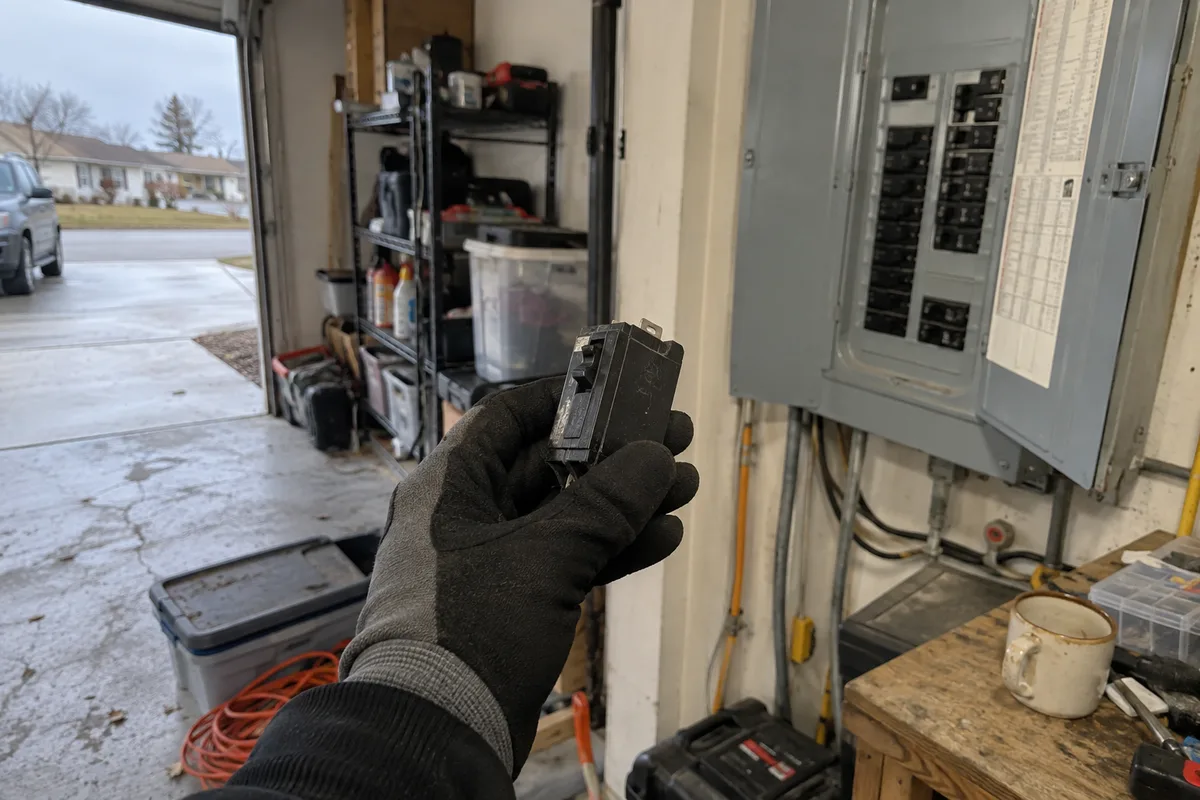
This is a same-size panel replacement or repair. The service size does not change. The utility disconnects the existing service and reconnects it after your work.
The transformer shortage is mostly not your schedule problem on this job. Quote it normally. Give the customer your installation date and the work included in your scope.
Do not turn a routine same-size replacement into a transformer warning just because transformer supply is in the news. The equipment question is whether the service size or utility equipment changes.
Bucket 2: The service size or utility service changes
This includes a 100 to 200 amp upgrade, a 200 to 400 amp upgrade, an ADU on its own meter, or a second EV charger that pushes the load up.
The utility may need to replace or add a transformer. It may need to extend the service. Get the utility application in as early as the customer agrees. SB 1196’s clock on utility paperwork for small hookups is relevant to that early application step.
Your quote should show two dates or two schedule lines:
- The date your work is scheduled to be complete.
- The date the utility energizes the service.
State plainly that the utility sets the second date. Do not combine the dates into one promise.
If a customer is blocked by a grid capacity constraint, the Flexible Service Connection decision for PG&E and SCE describes a way to energize at a capped level while the upgrade proceeds. That is a separate option for the customer and utility to consider. It does not turn the utility date into your date.
Bucket 3: Commercial, three-phase, and customer-owned gear
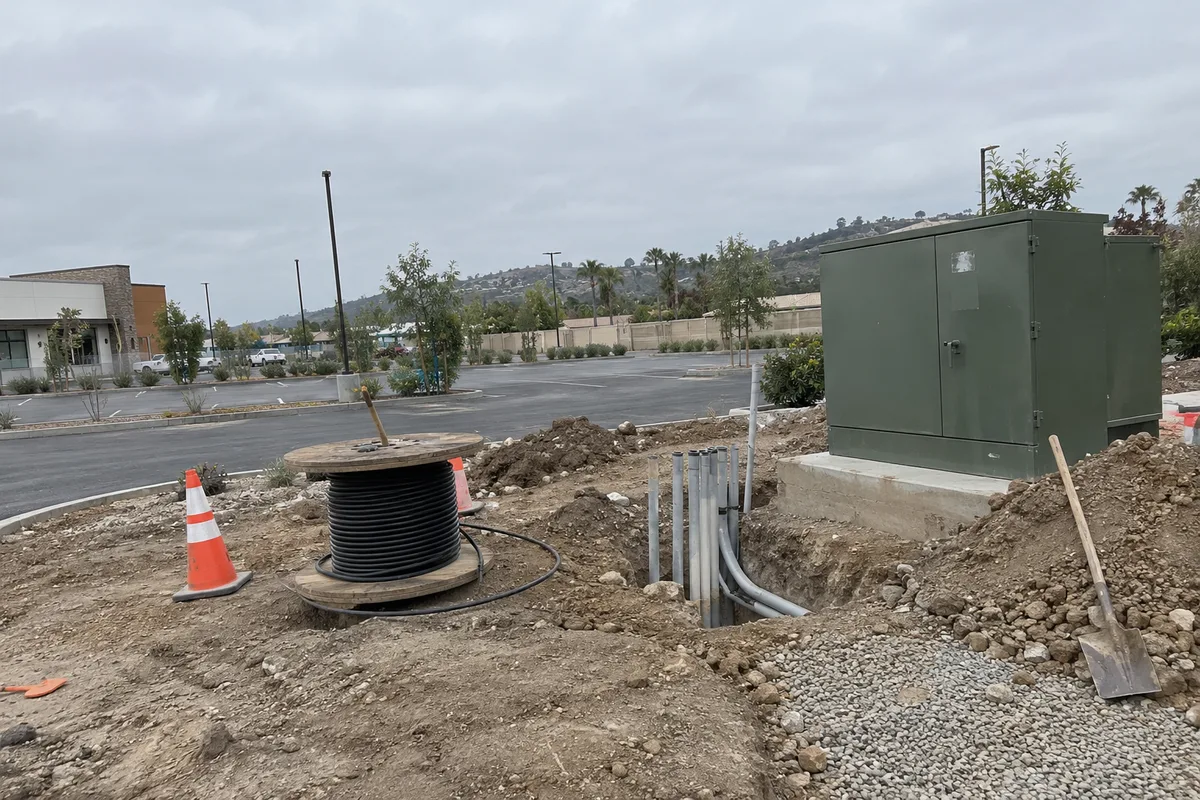
This bucket includes commercial and three-phase work with customer-owned switchgear, dry-type transformers, larger panelboards, or a utility pad-mount transformer.
Check supplier lead time before you put a date on the quote. Do not write a firm installation date first and ask about the gear later. Ask the supplier first.
Put a short price validity window on gear pricing. Order long-lead equipment once the contract is signed, not at rough-in. For bucket 2 and bucket 3, if the price moves after the quote, handle it in a written change order. It should not become an argument at the end. Writing the estimate so the change order is a signature covers the estimating side of that problem.
Your quote also needs to separate equipment availability from your labor schedule. You control when your crew can install the equipment. You do not control a supplier’s lead time or the utility’s energization date.
Ask one service-size question before you book the call
On a residential call, the caller almost never says “transformer.” They say, “I need more amps,” “going from 100 to 200,” or “I’m adding an EV charger and an ADU.”
Reading real intake calls, the question that sorts the job into bucket 1 or bucket 2 is whether the service size is changing. It is not what equipment the caller names.
Ask: “Is the service staying the same size, or are you changing the service size?”
Then ask what is being added or changed. A panel repair with the same service size points toward bucket 1. A larger service, a new meter, an ADU meter, or added EV load points toward bucket 2.
Use the rest of the intake to capture the address, the problem in the caller’s own words, how urgent it is, and the requested appointment time. What to ask on a panel upgrade call belongs in that process.
Wirewoman answers 24/7. Her intake questions are tuned by hand to each shop’s services, so you can have her ask whether the job changes the service size.
Within 30 seconds of hang-up, you get a text with the caller’s name, address, the problem in the caller’s own words, how urgent it is, and the booked time. Every call is logged to a dashboard.
So “wants to go from 100 to 200 amps for an EV charger” is in your pocket before the callback. You know the quote needs a utility line before you write it. Wirewoman does not check utility status, order equipment, or know supplier lead times. It gives you the intake detail early enough to ask those questions yourself.
Quote the date you control and name the date you do not
For a same-size panel replacement, quote your work normally.
For a service size change or new service, submit the utility application early and separate your completion date from the utility energization date.
For commercial and three-phase work, check gear availability before promising a date, limit the price window, and order long-lead equipment after contract signing.
Your crew date is yours. The utility energization date is the utility’s. Write both that way.