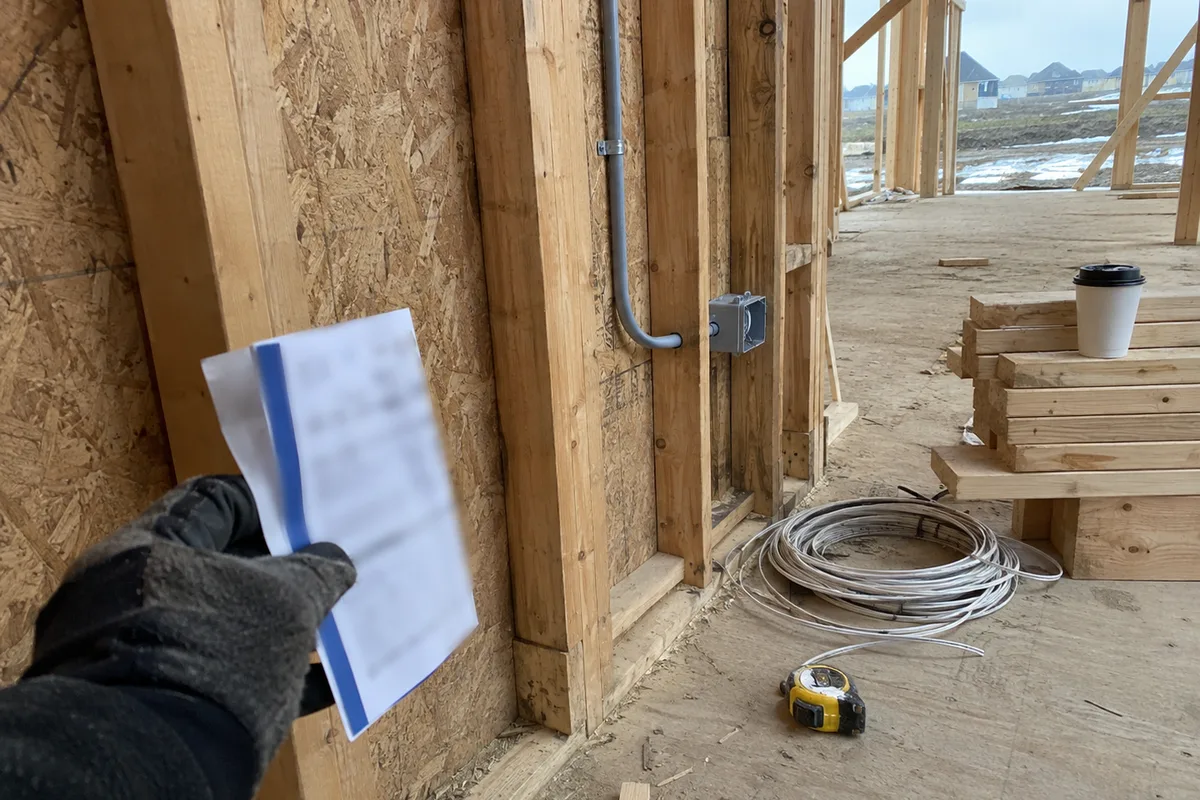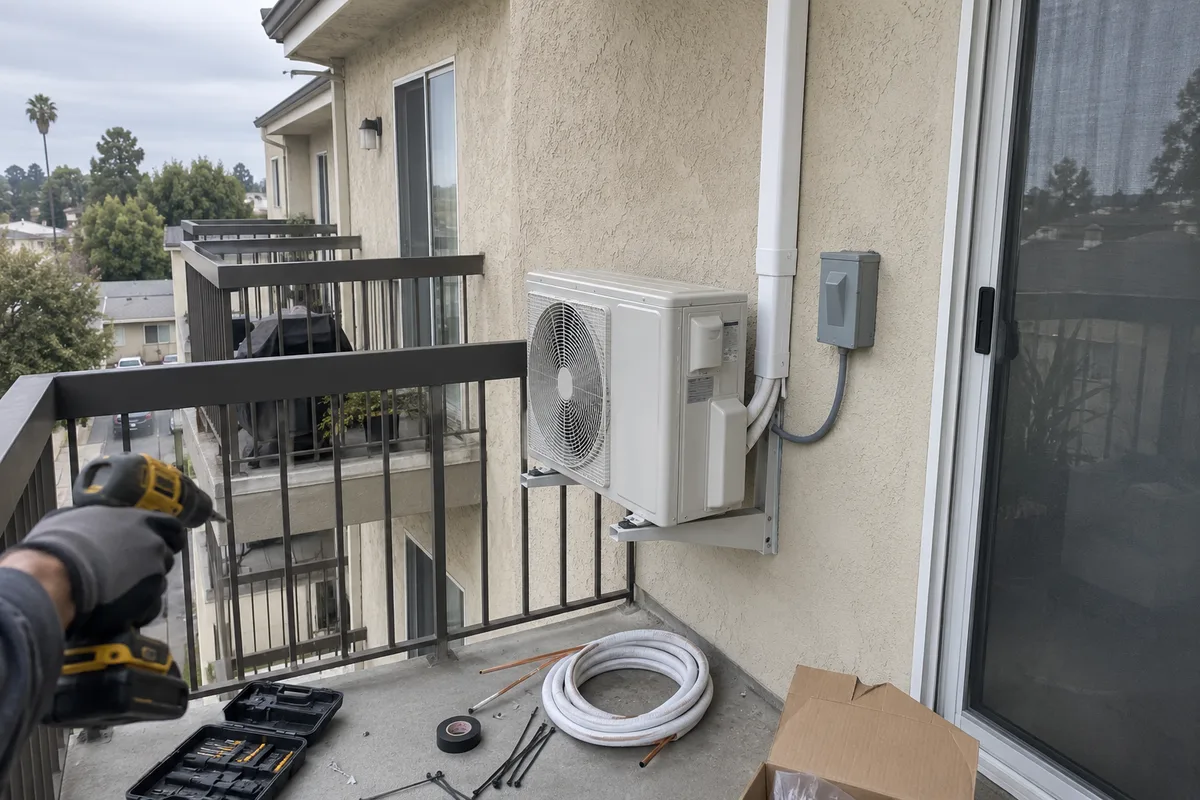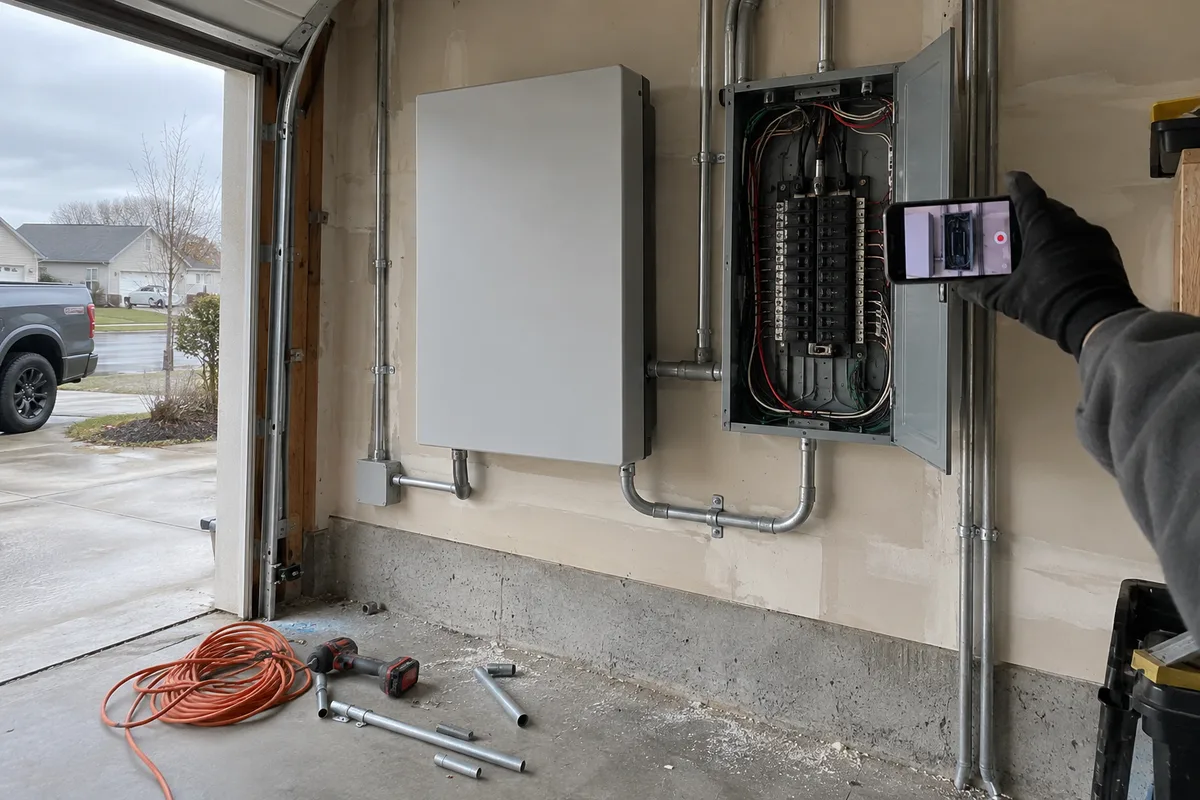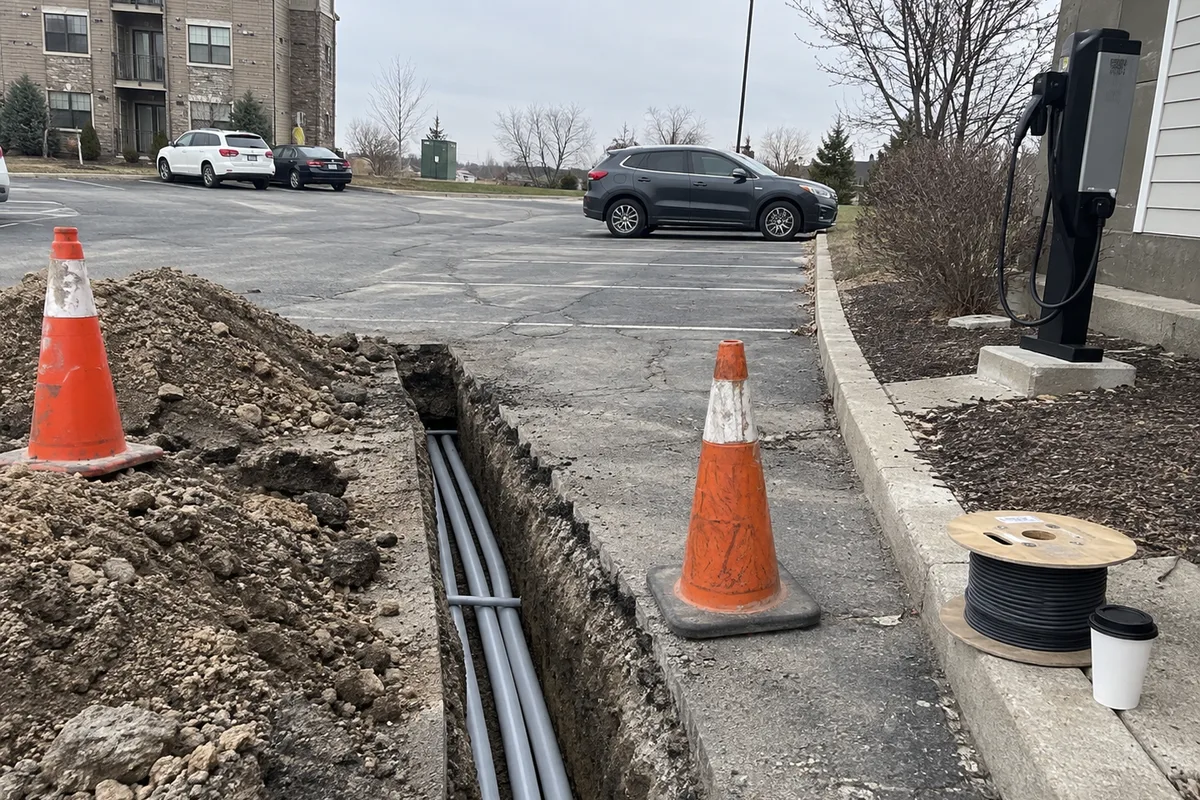
The charger had a ministerial permit path. The trench and concrete pad were less certain.
That was the scoping problem. A charging station application could fit California’s expedited process while the work that made the station usable sat in a grey zone. A utility trench across a parking lot, a new concrete pad, a canopy, or onsite battery storage could give a plan checker an argument for pulling part of your scope into ordinary review.
On September 20, 2026, Governor Newsom signed SB 1283, authored by Senator Ashby. It is Chapter 347, Statutes of 2026. The bill amends Government Code Sections 65850.7 and 65850.71. It is not operative yet. The amendments become operative January 1, 2027.
That date matters to your bids now.
On the first call, the intake questions that decide the whole job are panel size, single phase or three phase, and where the parking sits relative to the panel. That last answer is the trench question. Before SB 1283, hearing that the parking was across the lot changed both the bid and which permit path the work might ride on. After January 1, 2027, it still changes the bid. It stops changing the permit path for the supporting work named in the statute.
The first-call questions behind that scope are covered in what to ask before booking an EV charger installation. The electrical upgrade question belongs in the same intake, as the panel upgrade call guide explains.
SB 1283 names the work that makes the charger function
Amended Government Code Section 65850.7(b)(1) requires a city, county, or city and county to administratively approve an application to install EV charging stations through a building permit or similar nondiscretionary permit. The provision now expressly includes an EV charging station with a canopy or onsite energy storage systems sized to support charging.
The most useful change appears in Section 65850.7(g)(1)(A). Each city, county, or city and county must adopt an ordinance creating an expedited, streamlined permitting process for EV charging stations, including supporting infrastructure necessary for or accessory to the station’s operation.
The statute then defines that work: “That supporting infrastructure includes, but is not limited to, any paving, concrete pad, utility trench, canopy, or onsite energy storage system sized to support electric vehicle charging.”
That is the spine of SB 1283. The law no longer leaves the trench, pad, canopy, and supporting battery unnamed. A battery still has its own technical and code questions. The point here is that onsite energy storage sized to support charging is now identified as supporting infrastructure, so the residential battery storage code questions arrive on the same job rather than a separate one.
This is a wider ministerial path. It is not a permit waiver.
January 1 arrives before local checklists do
Section 65850.71(i) states that the amendments become operative January 1, 2027. Section 65850.7(g)(1)(C) gives each jurisdiction until December 31, 2027 to complete amendments to its ordinances and checklists.
So the statute is ahead of the local paperwork for most of 2027.
That does not mean you wait for a revised checklist. Section 65850.71(f)(1) supplies the default when a city, county, or city and county has not adopted or amended an ordinance or checklist under Section 65850.7(g). The application must contain the information listed in paragraphs (A) through (P) and provide it to the building official.
Two items in that list directly affect your scope. Paragraph (N) requires, if present, the canopy area in square feet, canopy clearance height in feet, and total canopy height in feet. Paragraph (O) requires, if proposed, the total energy capacity in kilowatthours of onsite energy storage supporting EVSE.
Put those numbers into your application package when they apply. Do not wait for a local form to ask for them.
SB 1283 also restructures Section 65850.71. It now runs through subdivisions (a) to (i), with the operative-date language in subdivision (i). If you are working from a pre-2027 citation, re-check the subdivision letter before putting it in a bid, an application, or a dispute.
The shot clock still controls the permit
SB 1283 does not replace the existing approval rules from AB 1236 and AB 970.
Government Code Section 65850.7 already limits review to whether the installation meets health and safety requirements. The approval remains administrative and nondiscretionary. The new language brings more supporting work into that process. It does not erase health and safety review, and it does not make an unpermitted installation acceptable.
Section 65850.71 remains the shot clock. For one to 25 stations at a single site, the building department has five business days to deem the application complete and 20 business days after that to act. If it does neither, the application is deemed complete and then deemed approved. For more than 25 stations, the periods are 10 and 40 business days.
Those clocks apply to all cities, including charter cities, and there is no single-family residential exclusion. Keep the submission date and every department response, because the deemed-approved clock is only worth what your timestamps can prove.
AB 1820 sets a fee ceiling for one defined project type
AB 1820 is Chapter 348, Statutes of 2026. New Government Code Section 66015.5 limits the permit fee for a level 2 EV charging station installed at a new or existing multifamily housing development.
The statute’s formula is $500 plus $5 per kilowatt for each kilowatt between 51 kW and 250 kW, plus $2 for every kilowatt above 250 kW. The fee also cannot exceed the estimated reasonable cost of providing the service. Read the formula against the chaptered text for the project in front of you before it becomes a number you have quoted a customer.
A jurisdiction may exceed that cap only through a written finding and an adopted resolution or ordinance containing substantial evidence of the reasonable cost to issue the permit.
The section becomes operative July 1, 2027. A city, county, city and county, or charter city with fewer than 200,000 residents applies it beginning January 1, 2028. The chapter remains in effect until January 1, 2036, when it is repealed.
Public chargers add a 72-hour handoff
SB 969, Chapter 346, Statutes of 2026, matters when you install chargers that sell electricity to the public. Those EVSE installations fall under county sealer weights-and-measures inspection.
Section 12210.2(a) exempts EVSE that meets type approval requirements and is factory tested and certified for metrological requirements by a factory registered service agency from field placement and tolerance testing requirements. Section 12210.2(b)(1) requires the operator to submit a placed-in-service report to the county sealer within 72 hours of installation.
That report belongs in your closeout handoff. If you install the equipment and walk away without telling the site owner, the deadline can be missed. Section 12210.2(c)(2) gives one week for notice of non-metrologically relevant repairs. The law also authorizes risk-based statistical sampling for EVSE inspections, and the secretary must update the regulations on or before July 1, 2028.
Change the bid before the checklist changes
For work scheduled on or after January 1, 2027, re-scope EV bids so the paving, concrete pad, utility trench, canopy, and qualifying onsite storage appear with the charging station application. Price the trench and pad as construction work. Treat them as part of the permit package instead of assuming they need a separate path.
Timestamp every submission. Record whether the jurisdiction has updated its ordinance and checklist. Watch for those local updates through December 31, 2027, and use the Section 65850.71(f)(1) information list when the local paperwork has not caught up.
This is also where intake affects revenue. A property manager pricing chargers for a multifamily lot is the caller who asks about trenching and permit fees. That call comes in while you are in a garage with both hands busy.
Wirewoman answers 24/7 in about two seconds. She runs the electrical intake herself, asking about panel size, phase, parking location, and the rest of the trade-specific scope. About 30 seconds after the call, she texts your phone who called, what they need, where to go, and whether it is urgent. She logs every call to a dashboard, routes urgent calls by your shop’s escalation rules, and books to the calendar. Pricing is flat at $95, $295, or $495 a month, with no per-minute meter and no per-caller overage.
Put the new supporting infrastructure language into your bid template, put the default information list into your permit intake, and make the 72-hour metering report part of public-charger closeout. That is what changes on your next EV call.