Short answer: California’s small-job contractor license exemption is now under $1,000, not under $500. That does not mean an unlicensed person can legally perform $1,000 of electrical work. The work must also not require a building permit. Nearly every real electrical job requires one. The permit question decides this before the price does.
The $1,000 figure changed on January 1, 2025
Business and Professions Code section 7048 applies only when all four conditions are met:
- The aggregate contract price for labor, materials, and all other items is less than $1,000.
- The work does not require a building permit.
- The person does not advertise or hold themselves out as a contractor.
- The person does not employ anyone else to perform or assist with the work.
The word “aggregate” matters. Materials count. The calculation is for the project, not just the labor charge or one invoice.
The amendment came from AB 2622, Stats. 2024, Chapter 240, effective January 1, 2025. It changed the figure from $500 to $1,000 and added the building permit condition.
Section 7048 carries a 2026 history date because AB 1170, Stats. 2025, Chapter 67, made technical corrections to the code. It did not change the dollar figure or add the permit condition.
A small contract cannot be split into smaller pieces
Section 7048 does not apply when the work is part of a larger or major operation. It also does not apply when someone divides the operation into contracts under $1,000 to evade the contractor licensing chapter.
That means one project cannot be turned into several sub-$1,000 agreements with the exemption claimed for each one. The statute looks at the undertaking, not the paperwork arrangement.
The same rule matters when you review a job that looks small at first. Ask what the work actually involves, what materials belong to it, and whether it is part of a larger operation. A labor-only price does not put the work under the line if the labor and materials together reach $1,000 or more.
The permit condition eliminates most electrical jobs
The exemption from the contractor licensing chapter does not waive the building code or the electrical code. It does not make permit-required work legal for an unlicensed person.
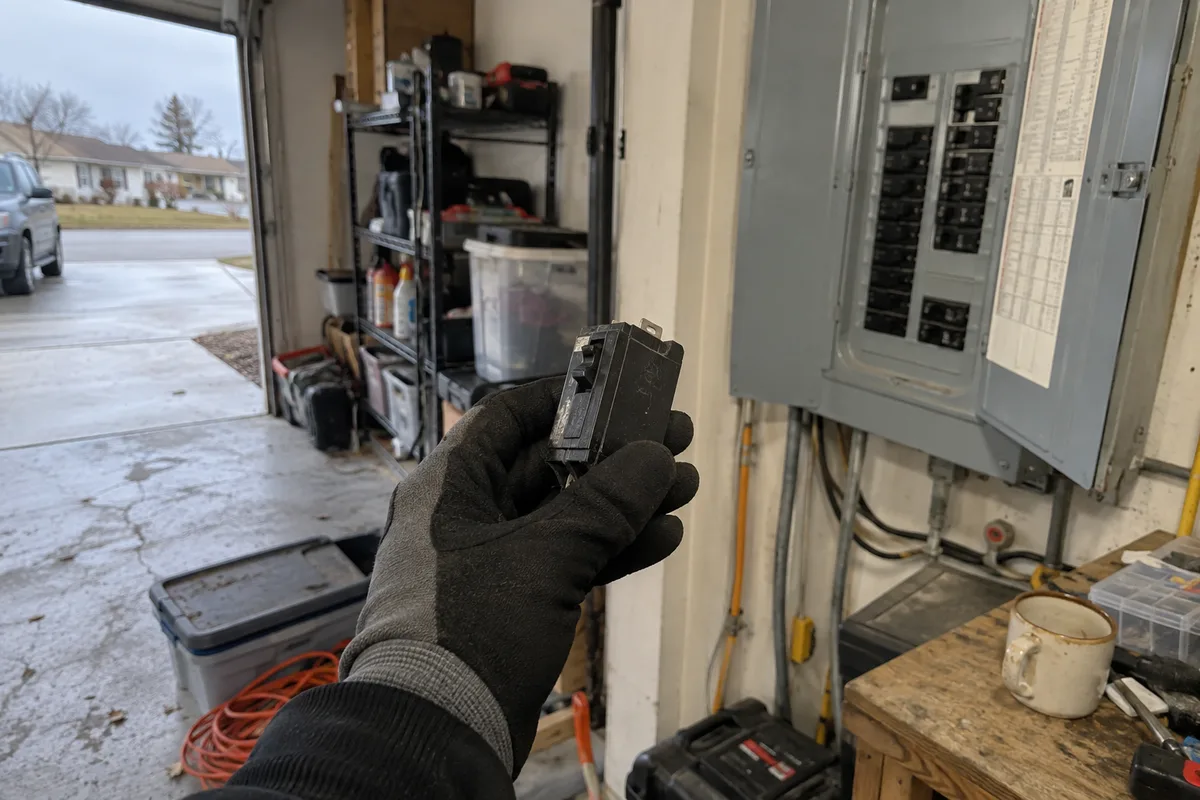
Under the 2025 California Residential Code, the electrical work exempt from a permit includes listed cord-and-plug connected temporary decorative lighting, reinstallation of attachment plug receptacles but not the outlets for them, replacing a branch circuit overcurrent device of the required capacity in the same location, electrical equipment operating at less than 25 volts and not capable of supplying more than 50 watts, and minor repair work such as replacing lamps or connecting approved portable equipment to approved permanently installed receptacles.
The 2025 California Building Code list is shorter still: minor repairs and maintenance, certain radio and television transmitting equipment, and temporary systems required to test or service electrical equipment.
That is the entire zone where the $1,000 figure can even come into play. New circuits, panel work, service changes, EV charger installations, adding or relocating outlets and switches, rewiring, and new fixtures on new wiring all fall outside it. Those jobs require a permit, and once a permit is required, the $1,000 figure does not help an unlicensed person.
Local jurisdictions can amend the permit exemption list, and many are stricter than the state baseline. Confirm the actual requirement with the building department having jurisdiction rather than assuming the state list is the final word. An EV charger permit has its own California statutory timeline, but the installation still starts with the permit requirement.
Advertising creates a separate problem
Section 7048 says the exemption does not apply to a person who advertises or uses a sign, card, or other device that might indicate the person is a contractor or qualified to engage in the contractor business.
Business and Professions Code section 7027.2 addresses advertising by an unlicensed person. The person may advertise construction work only if the aggregate contract price for labor, material, and all other items on the project is less than $1,000 and the advertisement states that the person is not licensed under the chapter.
That disclosure has to be affirmative. An ad that leaves out “not licensed” creates a separate problem, apart from whether the work itself required a permit.
Section 7048 also says the person cannot employ another person to perform or assist with the work. The exemption is not a way to send one unlicensed person out with a helper. The fourth condition means one person working alone.
Certification is separate from the contractor license
The exemption concerns the contractor licensing chapter. It does not erase the California Electrical Code, and it has nothing to do with electrician certification.
Electrician certification is a separate state requirement administered through the Department of Industrial Relations, not CSLB. Nobody can point to the $1,000 exemption as an answer to a certification requirement, which runs on its own renewal cycle and hour requirements.
The wrong answer can be a misdemeanor
Business and Professions Code section 7028 says it is a misdemeanor for a person to engage in the business of, or act in the capacity of, a contractor without a license unless an exemption applies.
A first conviction carries a fine not exceeding $5,000, county jail time not exceeding six months, or both. The exemption has to fit every condition. Missing the permit condition alone is enough to take the job outside it.
CSLB civil penalties for unlicensed activity also rose on July 1, 2026, and unlicensed activity now carries a $1,500 minimum under the penalty ranges SB 779 rewrote.
Use the permit question when a customer cites a handyman price
When a customer says a handyman quoted the job cheaper, do not answer with an immediate discount. Ask what the job actually involves and whether it needs a permit. That is the question that separates a lawful small exempt job from permit-required electrical work, and it is a better response than cutting your number, which is the same instinct that shows up in price-shopper calls and in jobs that get underbid before anyone has scoped them.
Whoever answers your phone should capture what the job actually involves before the call turns into a price objection. If the work needs a permit, an unlicensed person cannot legally take it at any price. That is a fact you can answer with, and it only helps if someone got the job details on the first call.