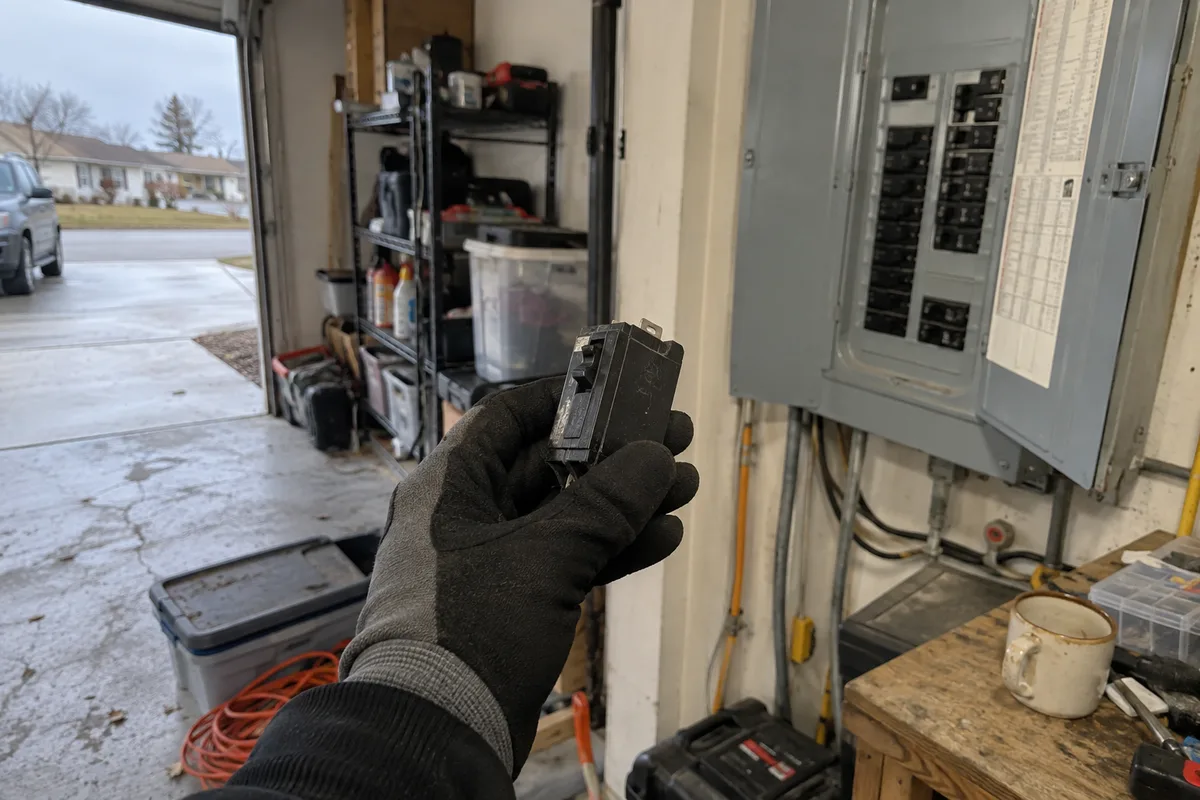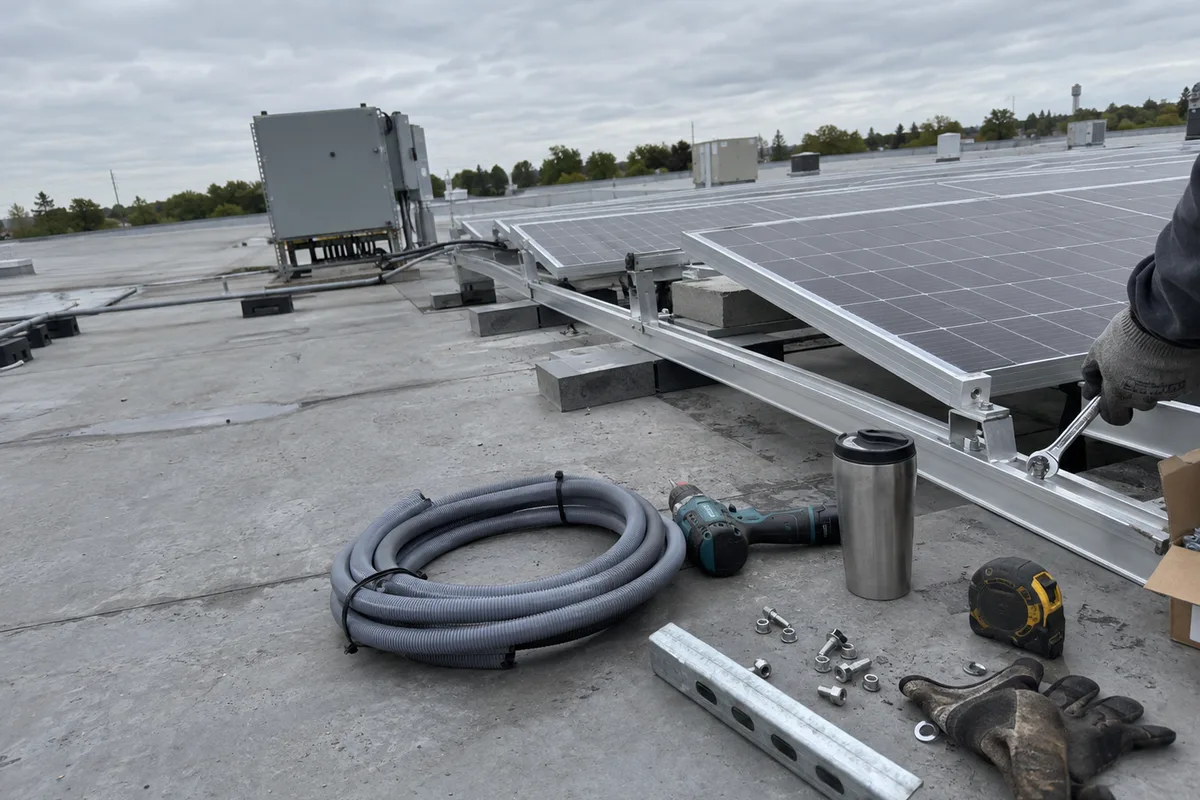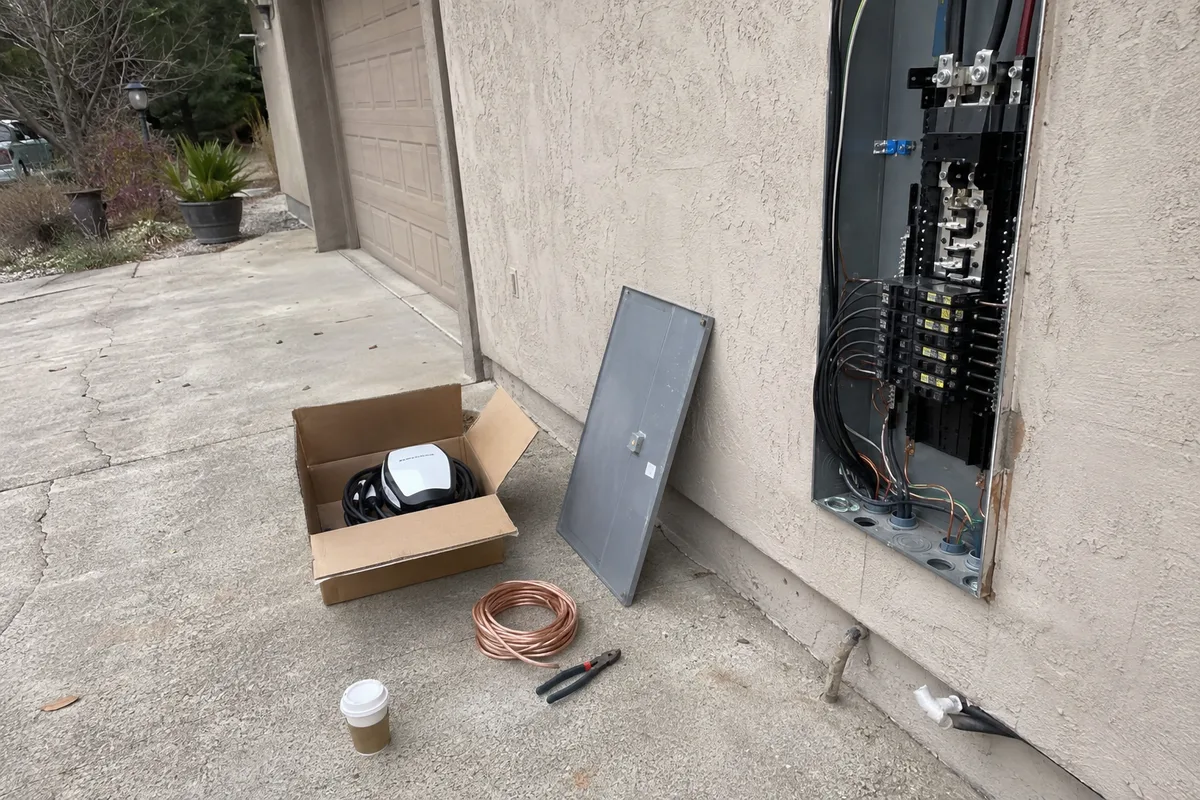
Short answer: if you are still telling people on the phone that they get 30 percent back, you are quoting law that has expired. Not “is phasing down,” not “changes next year.” Expired. The One Big Beautiful Bill Act, Public Law 119-21, signed July 4, 2025, terminated three different federal credits that your proposals almost certainly reference, and it gave each one a different end date. The last of the three ran out on June 30, 2026, about two months ago.
This matters more than the usual code update because it changes what you can say, not just what you install. A customer who buys a battery on the strength of a 30 percent credit that no longer exists finds out in April, from a tax preparer, and the person they call is you.
The three credits and the three dates
They are separate sections of the tax code and they died separately.
- Section 25C, the energy efficient home improvement credit. The statute now reads: “This section shall not apply with respect to any property placed in service after December 31, 2025.” This is the one with the $600 panelboard item. Read the date carefully. Property placed in service on December 31, 2025 is still inside.
- Section 25D, the residential clean energy credit. 30 percent of cost, no dollar cap, covering solar electric, battery storage, geothermal heat pumps, fuel cells, and small wind. The termination language is different: “The credit allowed under this section shall not apply with respect to any expenditures made after December 31, 2025.”
- Section 30C, the alternative fuel vehicle refueling property credit. The EV charger one. 30 percent up to $1,000 per item at a main home. It does not apply to property placed in service after June 30, 2026. Before the bill, this section was scheduled to run through 2032.
Three sections, two different trigger events, and one date that is still recent enough that people have not caught up to it.
The panel upgrade credit was never what the internet says it was
Search “panel upgrade tax credit” today and you will still find pages dated 2026 telling homeowners to claim $600 for a service upgrade. Those pages are wrong twice over: the credit is expired, and even while it was alive a standalone panel swap did not qualify.
Section 25C subsection (d)(2)(D) covered “any improvement to, or replacement of, a panelboard, sub-panelboard, branch circuits, or feeders” only where all of the following were true. The work was:
- “installed in a manner consistent with the National Electric Code,”
- of “a load capacity of not less than 200 amps,”
- “installed in conjunction with” either qualified energy efficiency improvements or qualified energy property that itself earned the credit, and
- work that “enables the installation and use of” that property.
Conditions three and four are the ones nobody quotes. The panel had to be enabling something else that qualified, and that something else had to be claimed too. Pull a permit, upsize a 100 amp service to 200 amp because the panel is full and the customer wants headroom, and there was no credit. Upsize the same service because you are landing a heat pump water heater on it, and there was, capped at $600 and sitting inside the $1,200 annual aggregate.
If your proposal template has a line about the $600 panel credit, it was probably overpromising even before it went stale. Delete the line rather than editing the year.
“Placed in service” and “expenditures made” are not the same test
This distinction decides whether a specific job made the cutoff, so it is worth being precise.
For 25C, the test is when the property was placed in service. Equipment sitting in the customer’s garage on December 31 did not count. Energized and in use did.
For 25D, the test is when the expenditure was made, and the statute defines that for you. Subsection (e)(8)(A): “an expenditure with respect to an item shall be treated as made when the original installation of the item is completed.” Not when the contract was signed. Not when the deposit cleared. Not when the panels showed up on a pallet. When you finished the install.
So a solar and storage job where the customer paid in full in November 2025 but you did not complete the installation until January 2026 is outside the credit, and the customer’s own bank statement will make it look like it should have qualified. That is an uncomfortable conversation you want to have found out about already. Interconnection and permission to operate are a separate question from installation completion, and if you have jobs sitting in that gap, the customer needs a tax professional and not your best guess.
Your 2025 jobs are still claimable and the window is open right now
This is the part with actual money in it, and it closes soon.
The credits are dead for new work, but they are alive for work you already completed. A customer whose install finished in 2025 claims it on the 2025 return. That return was due April 15, 2026, and anyone who filed Form 4868 has until October 15, 2026. That is roughly six weeks from now.
If you did panel work, solar, or storage in 2025, the useful thing you can do is make sure your customer has the paperwork:
- A final invoice showing the completion date of the installation, not just the payment date.
- Cost broken out by item, because 25C is capped per item and per category while 25D is not.
- For 25C property, the qualified manufacturer identification number. This is the trap. Starting with property placed in service in 2025, no 25C credit is allowed unless the item was produced by a qualified manufacturer and the taxpayer reports that QMID number on the return. If you installed a qualifying heat pump water heater in 2025 and never passed along the product identification number, your customer cannot claim it. Pull it off your purchase records and send it.
Reaching back to last year’s customers with the number they need is a cheap thing that generates referrals. It also costs you nothing to send.
30C had a geographic condition most people never checked
The EV charger credit is worth a separate note because a lot of installers quoted it to customers who were never eligible.
For property placed in service after 2022, the charger had to be installed in an eligible census tract, specifically a low-income community census tract or a non-urban census tract. For property placed in service from January 1, 2025, the IRS instructions require locating the address on the 2020 Census tract identifier, taking the 11 digit GEOID, and confirming it appears on the eligible list. If it does not appear, the property is not eligible, full stop. A charger in the middle of a built-up metro area frequently was not.
The commercial side had the same June 30, 2026 end date: 6 percent of cost up to $100,000 per item, or 30 percent up to $100,000 per item where prevailing wage and apprenticeship requirements were met.
If you sell EV charger installs, your Title 24 EV-ready wiring obligations did not change. Only the money did. The mandate stayed and the subsidy left, which is a harder sale and worth pricing honestly rather than papering over.
What is actually left
Not nothing, but nothing you should describe on the phone as “30 percent back.”
Third-party ownership. Where the homeowner leases the system or signs a power purchase agreement, the credit belongs to the company that owns the equipment, under Section 48E, and reaches the homeowner only as a lower monthly payment. Congress did add a leasing bar to 48E, but read what it points at: it denies the credit where the taxpayer rents or leases property described in paragraph (1) or (4) of Section 25D(d) to a third party. Those two paragraphs are solar water heating property and small wind energy property. Solar electric property is paragraph (2), and it is not in that list. 48E also carries its own placed-in-service deadline for solar and wind facilities. Get that date in writing from whichever finance partner you work with rather than from a blog, including this one, because it interacts with begin-construction rules and it is not a number to guess at in front of a customer.
California programs. The Self-Generation Incentive Program still exists and is still the main battery rebate in the state, but its budgets open, close, and go to waitlist by category and by utility, and the equity tiers pay very differently from the general market tier. Do not quote an SGIP figure from memory or from a summary page. Check the current status at the CPUC program page or with the program administrator for the customer’s utility before it goes in a proposal. Our earlier piece on NEM 3.0 and SGIP battery incentives explains why the export math, not the rebate, is what usually carries a storage sale in California now. That logic is more true today than when we wrote it, because the federal 30 percent is no longer sitting on the other side of the scale.
Utility and local rebates. Unchanged by any of this, and now a larger share of whatever incentive story you have.
What to change this week
- Grep your own website for “30%,” “tax credit,” and “$600.” Marketing pages, service pages, the solar landing page, the PDF proposal template, the email footer. Anything promising a federal credit is now a claim you cannot back up.
- Fix the phone answer before you fix the website. The website costs you a customer. The phone answer costs you a customer who already believed you.
- Give your whole team one sentence they can say. Something like: “The federal credits for that ended, the last one on June 30, so I am going to quote you the real number and not a number that depends on your taxes.” It is shorter than hedging and it does not get you into trouble.
- Send last year’s customers their documentation. Completion dates and manufacturer identification numbers, before October 15.
- Reprice the jobs that were carried by the credit. Batteries and heat pump conversions were often sold on the after-credit figure. If your close rate on those has dropped since January, this is why, and the fix is a different pitch rather than a discount.
- Stop letting anyone on your team improvise on tax questions. “I am not the person to answer that, and here is what the install costs” is a complete and safe answer.
Where the phone comes into this
Right now a large share of your incoming battery, solar, and charger calls open with some version of “is there still a rebate for this?” That question is the first thing out of the caller’s mouth, and it happens before anyone has taken down an address.
There are two bad answers. “Yes, thirty percent” is the expensive one, because you have now promised a number that does not exist and the customer will discover it after you have been paid. “Uh, I think some of that changed?” is the cheaper one, but it reads as not knowing your own business, on the exact call where the customer is deciding whether you are the professional in the conversation.
The answer you want is boring and immediate: the federal credits ended, state and utility programs are separate and get checked per address, and here is what the work costs. Then get on with taking the scope. Whoever answers your phone needs that answer loaded before the question arrives, because it now arrives on most of these calls, and because a caller who gets a confident straight answer to a money question tends to believe the rest of what you tell them.
None of this changes a single thing about how you install a panel, a battery, or a charger. It changes what the customer thinks the job costs, which means it changes the call.