TL;DR: During a PSPS, ask whether the neighbors are dark and whether the caller received a utility shutoff notice before treating full power loss as an electrical emergency. Book real electrical work after restoration, but escalate backfeeding, indoor generators, smoke, sparks, burning smells, and generator-related illness immediately.
During a PSPS, “no power” is not enough information
October wind turns “the whole property is dead” into your most common call and your least useful one.
Normally, complete loss of power to a property is a Level 2 property emergency that rings your on-call cell. During a Public Safety Power Shutoff, an entire neighborhood may be dark on purpose. You cannot repair a utility de-energization with a truck roll.
Your first question has to change for the season.
The utility may have already given the caller a restoration window
Under CPUC Decision D.19-05-042, Appendix A, investor-owned utilities should, whenever possible, notify public safety partners and priority notification entities 48 to 72 hours before anticipated de-energization.
Other affected customers should receive notice 24 to 48 hours before the shutoff. If possible, all affected customers receive another notice 1 to 4 hours before de-energization, a notice when the shutoff begins, a notice immediately before re-energization, and a notice when re-energization is complete.
That is the intended schedule. The language says “whenever possible.”
A customer may get less than a day of warning. A customer may also get a warning for a shutoff that never happens. In a June 24, 2025 CPUC citation, WSEB-1 W.25-06-001, San Diego Gas & Electric was fined $11,090 over an October 29 through 31, 2023 PSPS event. SDG&E’s first customer notification came October 28 at 19:13 for an estimated October 29 de-energization at 12:00, missing the 24 to 48 hour window for 1,109 customers. The utility ultimately did not cut power to anyone in that event.
That kind of compressed notice can create a sudden burst of calls.
The utility notice should communicate that a de-energization event is possible, the estimated start date and time, the estimated length, and the estimated restoration time. The length and restoration time may be stated as ranges.
Ask the caller to read the estimated restoration window from the text, call, or email. Do not make them guess.
Ask whether the neighbors are dark before sending a truck
Use this question first:
“Are your neighbors dark too, and did you receive a shutoff text, call, or email from the utility?”
If the neighbors are dark and the caller received a utility notice, treat it as the utility’s shutoff. Ask the caller to read the estimated restoration window to you. Do not send a truck for the outage itself.
Offer to book a visit after restoration if the caller wants anything checked or wants generator transfer equipment quoted.
If only the caller’s house is dark while the street is lit, the call is different. The normal emergency rules apply. The same is true for burning smell, sparking, or smoke at any time. Those are not explained away by the PSPS notice.
The existing three-level electrical emergency guide gives your team the normal triage framework. During a shutoff, the first question comes before the level assignment.
Backfeeding and indoor generators turn a shutoff call into a danger call
The most dangerous PSPS call may sound like a simple hookup question:
“How do I plug my generator into the house?”
The answer is no. Do not give wiring instructions over the phone.
The U.S. Consumer Product Safety Commission says, “NEVER try to power the house wiring by plugging the generator into a wall outlet, a practice known as ‘backfeeding.’” It is an electrocution risk to utility workers and neighbors served by the same utility transformer. It can also bypass some built-in household circuit protection devices.
Flag that call. Do not treat it as a routine lead.
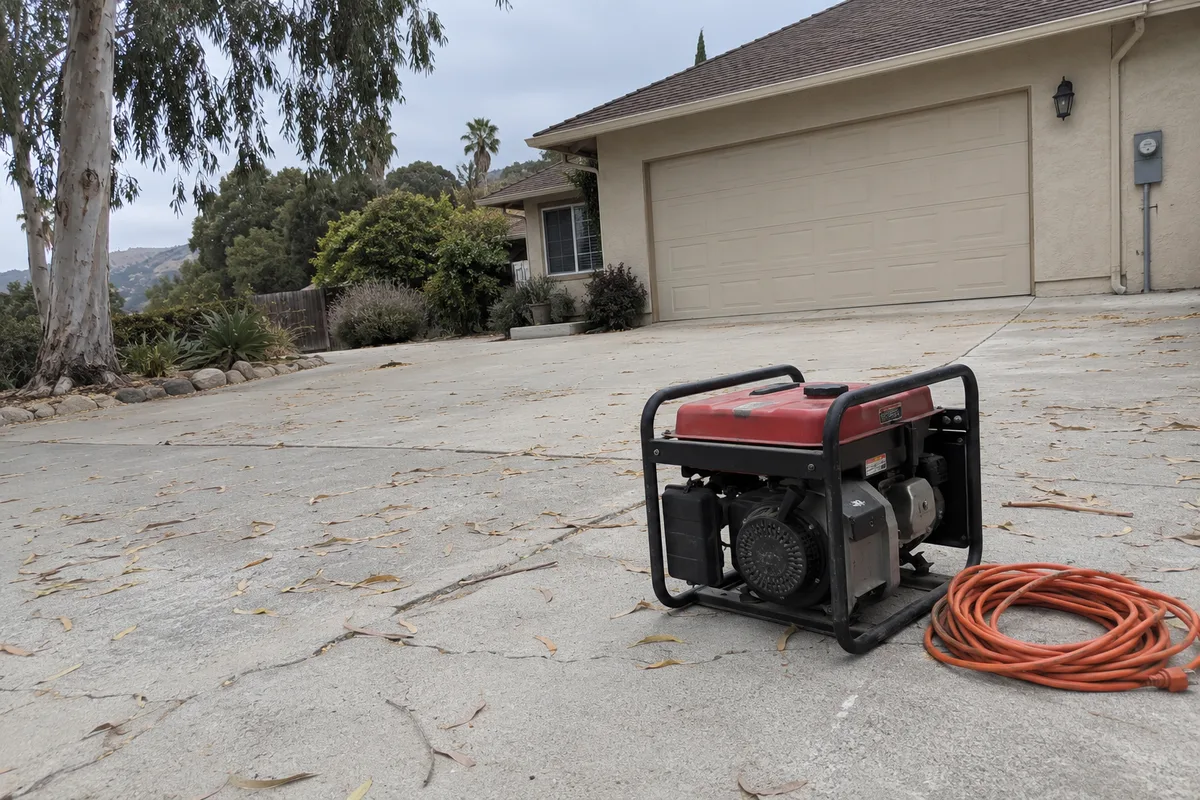
A generator running in a garage, home, crawlspace, shed, or similar area is also an immediate safety concern. The CPSC says never use a generator in those areas, even with fans or open doors and windows. Portable generators belong outside, at least 20 feet from doors, windows, and vents that could allow carbon monoxide indoors.
Most portable generator incidents reported to the CPSC involve carbon monoxide poisoning from generators used indoors or in partially enclosed spaces.
If someone feels sick, dizzy, or weak while using a generator, tell them to get to fresh air right away and call 911. Do not book that person for a routine visit.
For a caller asking about a proper inlet and transfer setup, say no to the wall-outlet connection, flag the call, and book a visit after the event. If generator calls spike after a PSPS, use the separate generator intake guide for the questions your shop already uses. Do not turn the emergency call into a generator sales conversation.
The real electrical work arrives after the restoration notice
The utility’s “power is back” message is not the end of the call volume. It changes the type of call.
After re-energization, customers may report that some circuits are dead, lights are getting brighter and dimmer, a burning smell started when power returned, or a breaker will not reset.
Those are real calls for your shop. They often arrive in a cluster immediately after the utility’s restoration notice.
Do not claim a specific cause for any symptom. Tell the caller that an electrician needs to inspect it on site.
Burning smell, sparks, and a breaker that will not reset belong on the escalation list. Book the other post-restoration calls quickly. A customer who says “the power came back and half the kitchen is dead” is describing a job, not just repeating the PSPS outage.
Read the caller’s words before you read the urgency level
Wirewoman’s SMS job summary always carries the same fields: the caller’s name, address, problem in the caller’s own words, how urgent it is, and the booked time.
During a shutoff week, the “problem in the caller’s words” line separates the utility outage from the work your shop can take.
A run of summaries from one or two neighborhoods that says some version of “whole street is out, got a text from the utility” is the shutoff. It is not your workload.
The summary from the same area that says “power came back and half the kitchen is dead” is the job.
Wirewoman does not automatically detect PSPS events, read utility outage maps, or know which areas are de-energized. She does not give wiring or generator hookup instructions. Your intake questions make the distinction.
Out of the box, Wirewoman treats sparking, smoke, burning smell, and full power loss as an emergency and rings your cell right away. You set the escalation rules for your shop. You tell her which keywords mean “call me now” and who to ring after hours, and she follows those rules every time.
Before shutoff season, decide whether a caller who confirms a utility notice but reports full power loss should still ring your cell or go straight to a post-restoration booking. Keep sparking, smoke, burning smell, and generator-in-the-garage on the ring-now list.
Wirewoman answers 24/7, sends the SMS within 30 seconds of hang-up, and logs every call to a dashboard. Your after-hours call policy should match those escalation choices.
Change the intake before the next wind event
Set the rule before Santa Ana or Diablo winds bring the next shutoff:
- Ask whether the neighbors are dark and whether the utility sent a notice.
- Ask the caller to read the estimated restoration window.
- Book utility-shutoff customers for after restoration if they want an inspection or transfer equipment quote.
- Escalate backfeeding, indoor or garage generators, smoke, sparks, burning smell, and generator-related illness correctly. Give the CPSC safety response for generator danger, and tell anyone feeling sick to get to fresh air and call 911.
- After the restoration notice, treat dead circuits, flickering or changing brightness, burning smell, and breakers that will not reset as new electrical calls.
That one first question keeps a PSPS outage from filling your emergency line while the post-restoration work reaches the shop that can actually handle it.