TL;DR: Book holiday-lighting installations in October and November, before December fills with trouble calls. On the phone, sort danger first: smoke, burning smells, scorching, heat, or sparks go to your urgent path, while a GFCI that trips without those signs is usually a routine booking.
Holiday-lighting calls start arriving in October and November, before most decorations are fully up. They come in two forms: planned installation work and trouble calls.
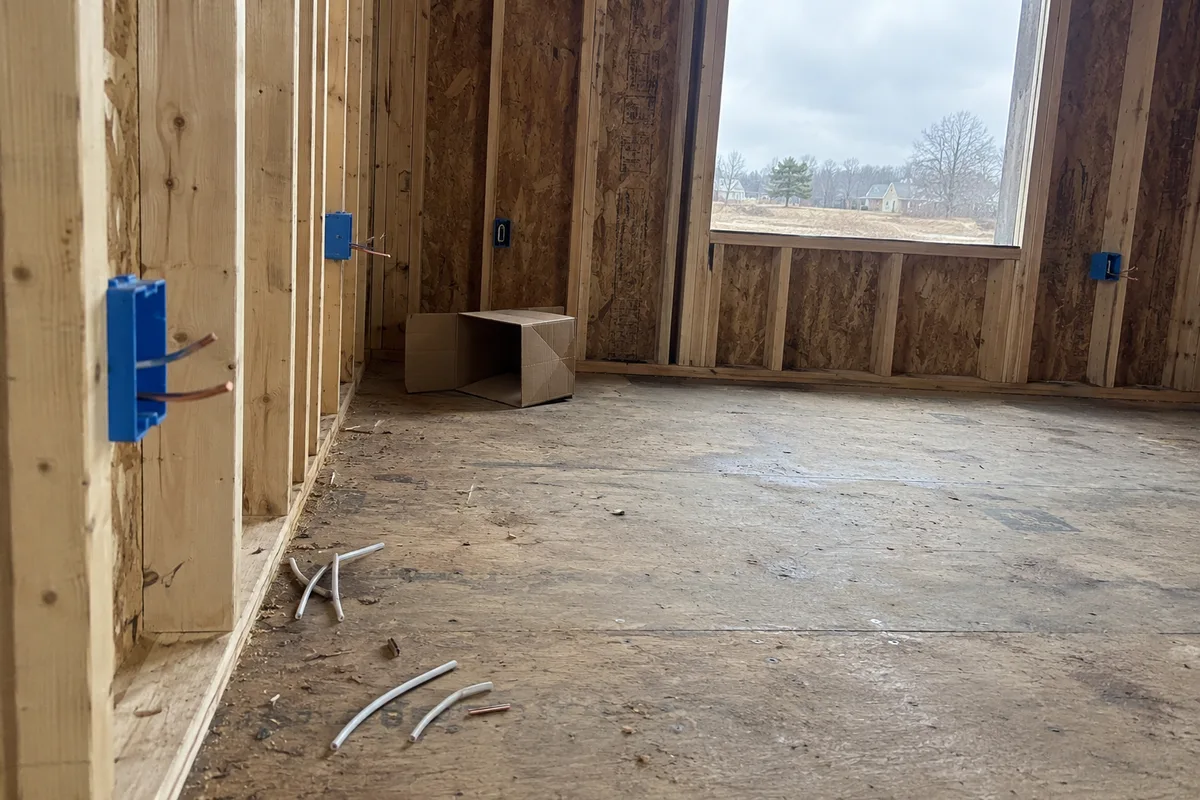
The installation caller wants power where the lights will actually go. That may mean a soffit or eave receptacle, an outlet near the yard or driveway, or a dedicated circuit. The trouble caller says the outdoor lights keep tripping the outlet, the lights went out and the outlet will not reset, or something feels hot.
Your first phone task is not diagnosis. It is sorting.
Burning smells and hot outlets go to the urgent path
Ask about danger before you ask about the light strings.
Burning smell, smoke, a scorched or melted outlet, plug, or cord, an outlet or cover that is hot to the touch, and sparking are urgent signs. Do not put those calls into next week’s calendar.
Tell the caller to unplug the decorations only if it is safe to do so without touching anything scorched. Tell them to stay away from the affected equipment. If there is smoke or fire, they should call 911.
Use the same sorting discipline described in what counts as an electrical emergency. A caller may describe a tripped outlet as a small inconvenience. A caller who mentions heat, smoke, or a burning smell is giving you a different call.
Your escalation rules should be specific. Wirewoman can send calls with a burning smell, smoke, or a scorched outlet to your escalation path by your own rules. You can put phrases such as “burning smell,” “melted plug,” and “outlet hot” on your ring-now list.
A tripped GFCI is usually a routine booking
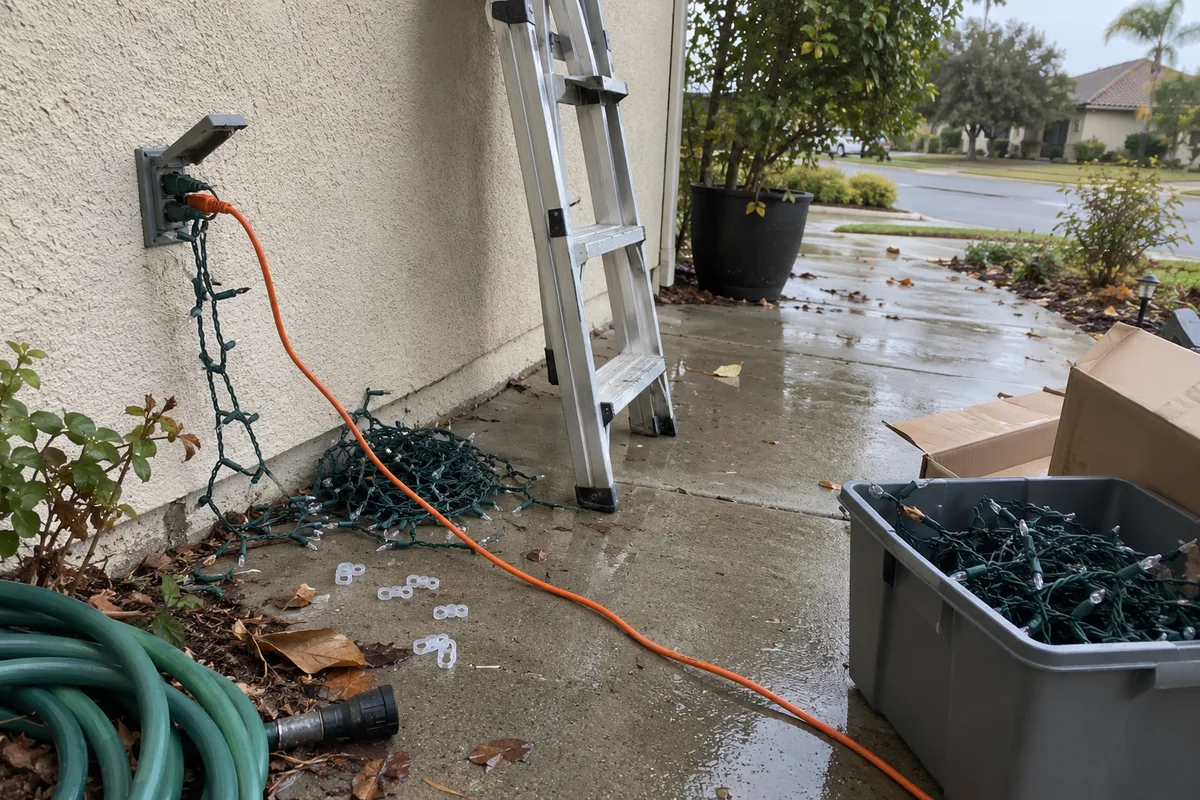
A GFCI that trips is usually the protection doing its job. Moisture may have reached an outdoor plug, connection, or light string. That is a routine electrical call unless the caller also reports one of the urgent signs.
Do not diagnose the cause on the phone. Book the visit and record what happened.
Ask when it trips. Does it happen the moment the lights are plugged in? Does everything work until rain, sprinklers, or overnight dew? Ask how many light strings are connected to that outlet. Ask whether they are old incandescent sets or LED.
Ask what else is on the outlet or circuit. It might be a garage freezer, fountain pump, or inflatables. Ask where the outlet is located: front porch, garage, or backyard.
The timing question does more work than most intake questions. When you review a batch of call summaries, “trips the second I plug the lights in” and “fine all day, dead every morning after the sprinklers run” are two different problems. Callers usually volunteer that detail when you ask, “When does it trip?”
That one line tells the technician what to bring and can save a second trip. Put it in the summary exactly as the caller said it.
Do not quote a trouble call price sight unseen. The phone call is for sorting, gathering facts, and booking the right visit. It is not a remote repair.
Ask where the installation power needs to be
An installation booking needs a different intake.
Ask where the customer wants power. Is it for a roofline or eave, front yard, driveway, or tree? Ask what they plan to plug in. Ask whether there is already an outdoor outlet nearby.
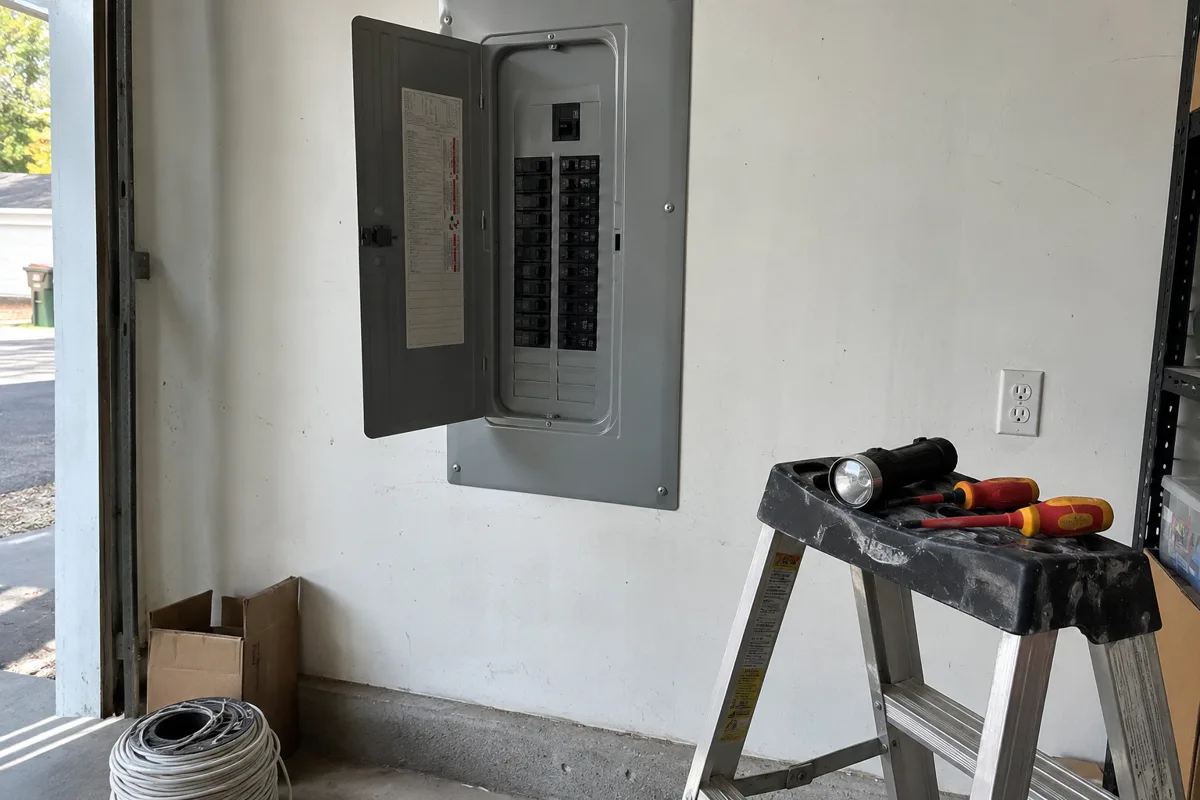
Get the panel location. Ask the caller to text photos ahead of the visit. You can look at the service location and the proposed outlet area before arriving, but quote after seeing it. The install visit is not a phone estimate.
The questions in questions to ask on every electrical call still apply. Add the holiday-lighting details so the technician is not walking into a vague “need an outlet for Christmas lights” appointment.
This is a real service, not an upsell. A homeowner trying to reach a roofline from the one outlet by the garage may be working from a ladder while running cords through a window or garage door. The CPSC reported about 160 Christmas decorating-related injuries each day during the holiday season in its November 2024 release. Nearly half involved falls.
The same release says about 14,900 people were treated in emergency rooms for holiday decorating-related injuries during the season from November 1, 2022, through January 31, 2023.
The CPSC also says to check outdoor lights for labels showing they are certified for outdoor use and to plug them only into a GFCI-protected receptacle or a portable GFCI. Its guidance says to use lights tested for safety by a nationally recognized testing laboratory and to check that each extension cord is rated for the intended use and in good condition.
You are not giving the homeowner repair instructions. You are identifying whether the customer needs a properly placed electrical service and booking a visit before the rush.
October and November are the installation window
Book installation work in October and November. December fills with trouble calls.
Trip calls cluster after the first rains and when customers put the lights up. Installation requests go cold after the holidays. That makes the early booking window matter.
Winter call volume, staffing, and stocking need the same advance attention discussed in why electrical calls spike in winter. If you wait until December to ask every caller whether they need a new outdoor receptacle, you are asking the calendar to solve a problem that should have been handled two months earlier.
When an installation caller is ready, gather the location, intended use, nearby outlet information, panel location, and photos. Book the visit. Quote after seeing the work.
When a trouble caller has no urgent signs, gather the trip timing, weather or sprinkler connection, light type, number of strings, extension-cord setup, other loads, and outlet location. Book the routine call. Do not mix that appointment with an emergency response.
After-hours holiday calls need a written handoff
Holiday calls do not stop when your office closes. They arrive at night, on weekends, and on holidays.
Your after-hours policy should say what gets booked, what gets escalated, and what gets held for the next available appointment. The policy discussed in the after-hours call policy every electrical shop needs is especially relevant during this season.
Wirewoman answers 24/7, including nights, weekends, and holidays, and books routine calls straight to your calendar. Within 30 seconds of hang-up, she texts you the job summary: the caller’s name, address, problem in the caller’s own words, urgency, and booked time.
That wording matters. “Lights trip every morning after the sprinklers” gives the technician more to work with than “outlet issue.”
Every call is logged to the dashboard. In January, you can see how many holiday-lighting installation requests came in and when. That gives you a record of whether your October and November booking process captured the work.
The fire risk is not abstract. NFPA research covering 2016 through 2020 found an estimated average of 160 home structure fires per year that began with Christmas trees. Those fires caused an annual average of two civilian deaths, 11 civilian injuries, and $12 million in direct property damage.
Electrical distribution or lighting equipment was involved in 44 percent of those fires. Electrical failure or malfunction was a factor in 34 percent. Three-quarters occurred in December or January, with 41 percent in December and 33 percent in January.
That is why a warm outlet, scorched plug, smoke, or burning smell does not belong in a routine holiday-lighting queue.
Set this up before the lights go up
- Put October and November installation slots on the calendar first.
- Add the trip timing, weather, light type, string count, other loads, cord setup, and outlet location to the intake.
- Put burning smell, smoke, scorched or melted equipment, heat, and sparks on your urgent escalation list.
- Tell callers to unplug only when it is safe, stay away from damaged equipment, and call 911 for smoke or fire.
- Require photos, panel location, intended power location, and planned loads for installation bookings. Quote after seeing the work.
- Set Wirewoman to book routine calls, send the summary within 30 seconds, and log every holiday-lighting call for January review.