TL;DR: Price per opening is a flat rate for each receptacle, switch, or light outlet. Use it only when the rate comes from your own detailed estimate and matches the wiring method and job conditions.
Price per opening starts with the box count
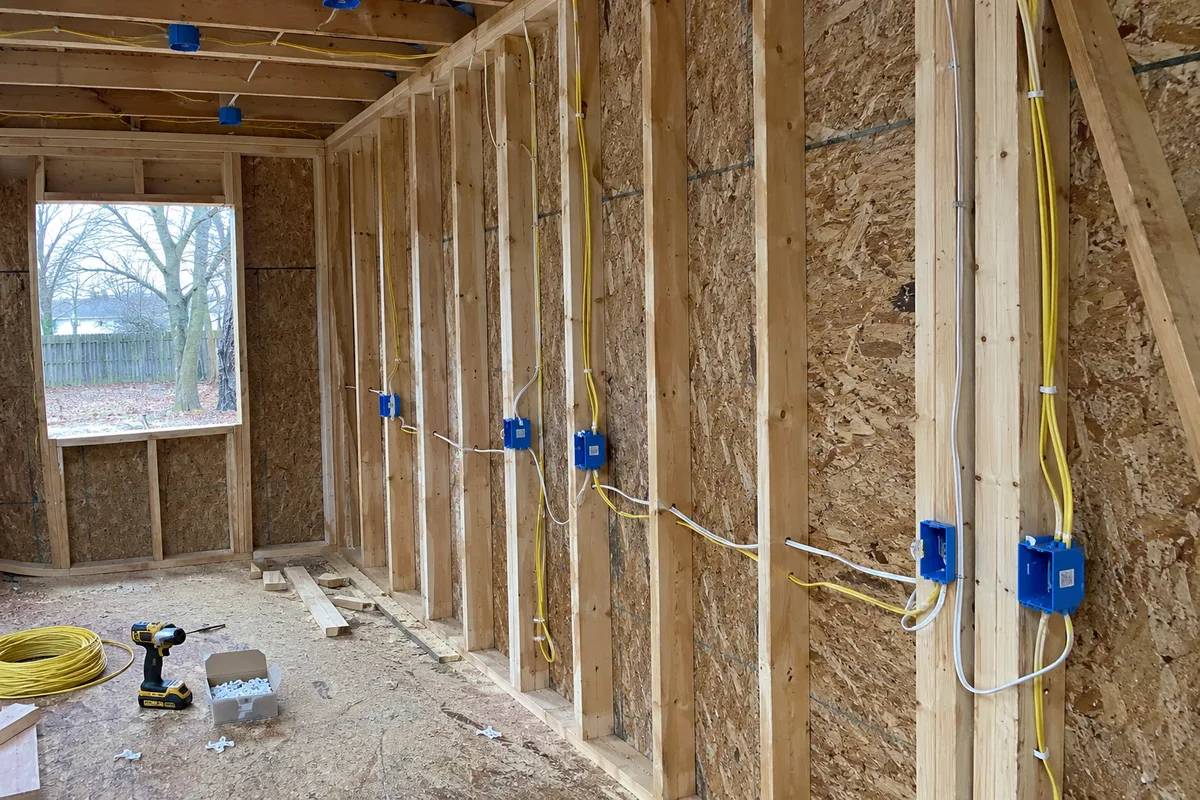
A per-opening price is a flat rate charged for each device box or opening. A receptacle is one opening. A switch is one opening. A light outlet is one opening. The wiring price is the opening count multiplied by the rate.
That makes it fast to bid. It does not make it safe to guess.
The only rate worth using is one built from your own numbers. Dollar figures posted in long-running electrician forum discussions are roughly 20 years old. There is no current, published industry benchmark rate per opening. Do not lift an old number from a forum and put it on a California bid.
Contractors who bid this way usually set separate rates for separate wiring methods. NM cable in wood framing gets one number. MC cable gets another. Steel studs get another. Conduit gets another. The labor and material are different, so the rate has to be different.
A common method is simple. Build the whole job cost, overhead, and profit. Then divide that total by the number of openings. That produces a per-opening number tied to a real job instead of a number copied from someone else.
Another common method is a hybrid. Build the base estimate by assemblies. Use a per-opening list price for add-ons and change requests after the original scope is clear.
The phone question does not contain enough information
Callers on remodel and addition jobs often ask, before anyone has seen the job, “What do you charge per outlet?”
That question does not tell you the conditions. A number given on that first call has no conditions attached.
Capture the conditions instead of quoting. Ask whether the work is new framing or finished walls. Ask roughly how many openings are involved. Ask about ceiling height. Ask whether there is attic or crawlspace access. Ask whether the panel has room.
Write those answers down. The estimator can then tell before the callback whether the per-opening price even applies. A remodel in open framing may fit the method. An old-work job in finished walls may need a site visit and an assembly estimate.
That is the same reason you should not treat every price shopper call as a bidding opportunity. The intake process described in how to handle price shopper calls helps separate a request for a real estimate from a request for a number without conditions.
The opening count leaves major parts of the job outside the price
A per-opening count does not cover everything that makes an electrical job expensive. List the exclusions before you use the number.
Price these separately:
- The service and panel
- Feeders and subpanels
- Dedicated circuits and appliance home runs
- HVAC loads
- EV chargers and similar loads
- Light fixtures and trim devices when the owner supplies or upgrades them
- Low-voltage work
- Permits and inspections
- Trips the job requires
Dedicated circuits and home runs can consume substantial labor and material without adding many device openings. A service change can change the job completely while leaving the opening count almost untouched.
The proposal needs to say what the opening price includes and what it does not. Otherwise, the opening count becomes a false measure of the work.
One opening price quietly assumes normal conditions
Estimating trainer Don Kiper, writing in EC&M, states that every item in an estimate is labored at a standard labor unit. That unit can go up or down based on labor adjustments.
The NECA Manual of Labor Units applies labor under three conditions: normal, difficult, and very difficult. Normal means the conditions permit maximum productivity. Difficult means one or more conditions permit less than maximum productivity. Very difficult means one or more conditions permit substantially less than maximum productivity.
Kiper writes that the labor increase from one column to the next is approximately 25%.
That matters because a single per-opening price silently assumes the normal column. High or vaulted ceilings can push the labor higher. Steel framing can push it higher. Finished walls, tight attics, tight crawlspaces, and conduit instead of NM can all change production.
Kiper defines factoring labor as applying adjustments to a labor unit based on the difficulty or ease of installation. The adjustment is handled in the takeoff.
His example makes the point. The same 1/2-inch EMT run in metal joists 40 feet above the floor of a warehouse takes more labor than the same run in a metal stud wall. The material cost is the same. The labor is not.
Labor factors are project conditions that affect productivity. The percentage adjustments are cumulative. They are addressed in the bid recap. Kiper lists 24 possible project conditions that can affect productivity and gives no fixed percentages because the correct adjustments vary by location and job market.
A flat opening price cannot see those conditions unless you put them into the number before you bid.
Build the rate from recent jobs you already know
Start with two or three recent jobs of a type you perform often. Build each one by assembly. Use your true hourly cost, not the wage alone. Add materials with markup, overhead, and profit. The method in how to price electrical jobs without underbidding covers the true-hourly-cost side of that calculation.
Then divide each completed job total by its opening count.
Do not combine every kind of work into one average. Keep separate numbers for each wiring method. Keep separate numbers for each condition. New construction with open framing is not the same work as old work in finished walls.
Your records should show what the price assumed. If the rate assumed NM cable in wood framing, standard heights, open access, and normal ceiling conditions, write that down. The next bid has to match those assumptions or receive an adjustment.
After each job, compare the actual hours with the hours the per-opening price assumed. If actual hours keep running over, the rate is wrong. Do not blame the crew for a number that underpriced the conditions.
Copper movement can make an old rate stale
Wire is baked into a per-opening price. That makes the rate sensitive to copper movement.
Re-check the number when copper moves. A rate built months ago can be stale even if the opening count and wiring method have not changed. The copper wire quote validity article addresses how material movement affects the life of a quote.
Your proposal should also state how long the price is valid when that matters to the job. The opening rate is not separate from the material market. It carries the wire cost inside it.
Define the opening before you sell it
Write on the proposal what one opening includes. That might be the box, device, cover plate, and cable from the previous box at a standard height and spacing. Use only the scope your own estimate supports.
Then list what is excluded. Include the separate items that require their own price, such as service work, feeders, dedicated circuits, fixtures, low-voltage work, permits, inspections, and extra trips.
This gives you a defined add-on rate when the owner requests another opening. It also gives you a written basis for a change request instead of an argument about whether the original price included it. Use the scope and exclusion approach in how to build an estimate that survives a change order.
Some jobs fit the method. Others need assemblies.
Per-opening pricing works best for repeat new-construction work in open framing with the same builder, the same plans, and the same wiring method. It also works well as an add-on price for extra openings after the main job has already been estimated by assembly.
Switch to assemblies and labor units for old work in finished walls. Switch for commercial and conduit work. Switch for steel framing, high ceilings, heavy feeders, service work, and any job you have not done before. Assembly and labor-unit estimating tools can help with that work, as discussed in best electrical estimating software for a small contractor.
Old-work homes deserve particular caution. Existing finished walls remove the easy access that makes a repeat opening rate predictable. When the job involves older wiring or uncertain existing conditions, the calls and site conditions discussed in knob-and-tube certification calls for electricians are a reminder that the opening count may be the smallest part of the risk.
Wirewoman can collect the conditions before the callback
Wirewoman answers your shop line 24/7, asks the intake questions your shop sets, sends the job summary by SMS within 30 seconds of the call, and logs every call to a dashboard.
Add the pricing questions to your intake: new framing or finished walls, opening count, ceiling height, attic or crawlspace access, and panel space. The answers arrive in the text summary next to the caller’s details. Your estimator can see which pricing method applies before calling back.
Wirewoman does not quote prices or build estimates. Your shop does.
Put conditions beside the rate before you use it
Build the rate from recent jobs. Divide real job totals by real opening counts. Separate NM, MC, steel stud, and conduit work. Separate open framing from old work. State the included scope and exclusions on every proposal.
When a caller asks for a price per outlet, capture the conditions first. If the job does not match the conditions behind your number, use an assembly estimate and labor units instead.