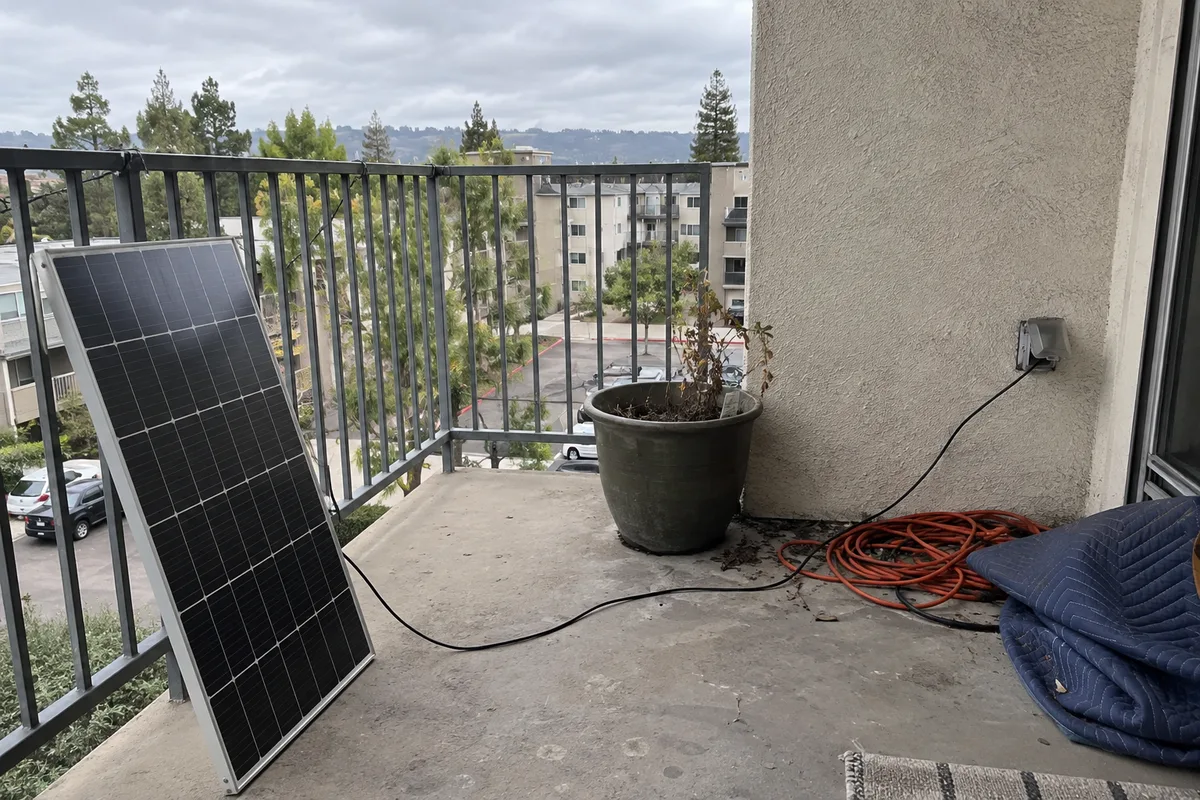
Short answer: SB 868 does not say “no permit required.” It exempts qualifying plug-in solar devices from utility interconnection requirements. It leaves local building department authority exactly where it was.
As of today, September 25, 2026, the bill is still pending. The Assembly passed it 73 to 0 on August 25. The Senate concurred in the Assembly amendments 36 to 4 on August 26. It was enrolled and presented to the Governor at 6 p.m. on August 31.
The Governor has until September 30, 2026 to sign or veto it. If he does neither, it becomes law without his signature. Either way, if it becomes law it takes effect January 1, 2027.
That status matters for what you tell a customer this week. SB 868 is not law today. It is a bill with five days left on the clock.
The exemption is from the utility, not from your building department
The bill would add Sections 8530, 8531, and 8532 to the Public Utilities Code. Section 8531(a) exempts a qualifying portable solar generation device from all interconnection requirements imposed by state law, the Public Utilities Commission, electrical corporation rules, or local publicly owned electric utility rules, including any requirement to enter into an interconnection agreement.
For a qualifying device, the utility could not require the customer to get approval before installing or using it. It could not charge a fee tied to the device or to the electricity the device feeds into the building. It could not require additional controls or equipment beyond what is already integrated into the device.
What the utility could still do is ask for notice. Section 8531(c) lets it require a simple online registration form listing the address, make, model, and size of the device. The statute is explicit that the notification cannot require the utility’s approval.
Now read the list of entities in that exemption again. The Public Utilities Commission. Electrical corporations. Local publicly owned electric utilities. A city or county building department is none of those.
The operative text does not use the word “permit.” It does not say “local ordinance,” “jurisdiction,” or “inspection,” and it does not mention the Health and Safety Code. Nothing in the bill tells a building department that a permit is unnecessary, cancels electrical inspection authority, or overrides landlord rules, fire rules, or balcony egress requirements.
This is the same shape as the small-job license exemption, where the headline dollar figure gets quoted and the permit condition is what actually decides the job. An exemption from one authority is not an exemption from all of them.
A device has to clear all six conditions before any of this applies
Section 8530(c) defines a “portable solar generation device,” and the definition is a six-part test. All six have to be met.
First, maximum aggregated AC output of no more than 1,200 watts per dwelling. Read “aggregated” and “per dwelling” carefully, because this is not a 1,200 watt allowance per device. Two 600 watt kits at the same address reach the ceiling together.
Second, it has to be designed to be connected to and disconnected from a building’s electrical system through a receptacle.
Third, it has to be intended to offset the customer’s onsite electricity consumption.
Fourth, it has to meet the standards of the most recent version of the National Electrical Code and the California Electrical Code, Part 3 of Title 24 of the California Code of Regulations.
Fifth, it has to be certified as a plug-in photovoltaic system by Underwriters Laboratories or an equivalent nationally recognized testing laboratory.
Sixth, it has to include a feature, certified by UL or an equivalent NRTL, that isolates the device from the building’s electrical system to prevent it from backfeeding electricity to the grid during an outage.
Miss one and the whole thing falls. Section 8531(d) states that a device failing any condition in Section 8530(c) does not qualify as a portable solar generation device and therefore does not qualify for the exemptions. That subdivision is doing more work than any other sentence in the bill.
The UL condition is the gate most online kits will not pass
UL Solutions launched its plug-in solar testing and certification program on January 8, 2026. The evaluation basis is UL 3700, the Outline of Investigation for Interactive Plug-In Photovoltaic Equipment and Systems, which sets construction, performance, and labeling criteria for plug-in solar systems, also called balcony solar.
UL 3700 is an Outline of Investigation rather than a finalized ANSI standard. A certification program exists and products can be evaluated against it, but the document has not been through the consensus process that produces a finished standard, so expect its details to keep moving.
The practical point is narrower. Condition five requires certification as a plug-in photovoltaic system by UL or an equivalent NRTL. A panel-and-inverter kit ordered online without that certification does not qualify, and under Section 8531(d) it gets none of the interconnection exemption. Most of what a homeowner can buy today is not a certified plug-in photovoltaic system. A product listing, a marketing claim, or the fact that the thing ends in a plug is not the same as the certification the statute names.
Utah already allows plug-in systems up to 1.2 kW without utility approval, which is where a lot of the “it’s legal now” chatter originates. A different state’s rule does not turn an uncertified kit in California into a qualifying device.
The two-code requirement is a question nobody has answered yet
Condition four asks for compliance with the most recent version of the NEC and the California Electrical Code. Those are two different documents running on two different clocks.
The most recent NEC is the 2026 edition. The most recent California Electrical Code is the 2025 CEC, Title 24 Part 3, which adopts the 2023 NEC with California amendments. It was filed with the Secretary of State on January 10, 2025 and took effect January 1, 2026.
So California enforces a 2023-based code while the most recent NEC is three years ahead of it. A device built to the newest NEC is not automatically built to the code your inspector actually enforces, and condition four appears to ask for both. That gap is not something this bill resolves, and it is a good reason not to tell a customer a product is code compliant on the strength of a listing alone.
None of that is unique to plug-in solar. It is the ordinary state of California electrical code right now, covered in more detail in why the 2026 NEC does not reach your work yet, and AB 130’s freeze on residential building standards through June 1, 2031 means the residential side is not on a normal update cycle either.
The isolation feature in condition six deserves the same skepticism. The statute wants a certified feature, not an inverter setting someone describes as anti-islanding in a product blurb. Anyone who has tracked how the same backfeed rule got renamed across three code editions knows how quickly a confident claim about a control function turns out to be describing a different edition than the one you are inspected against.
The utility exemption settles none of the installation questions you will be asked
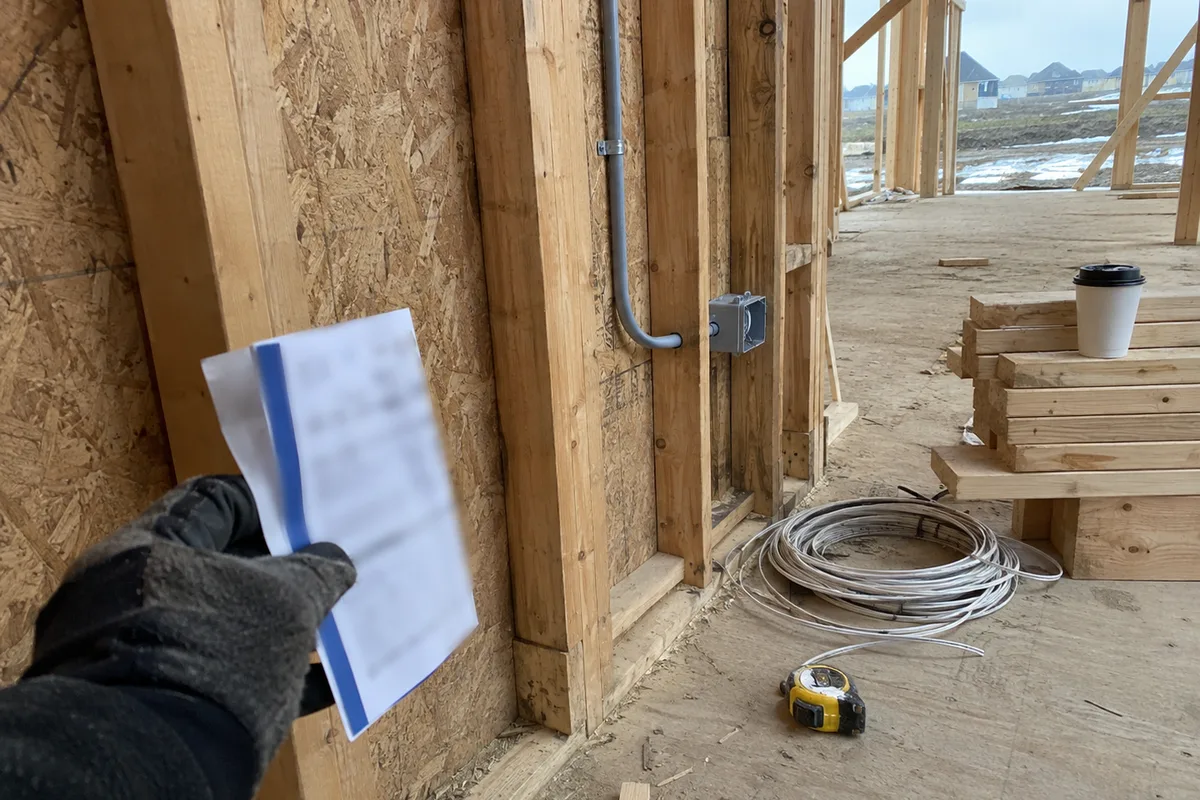
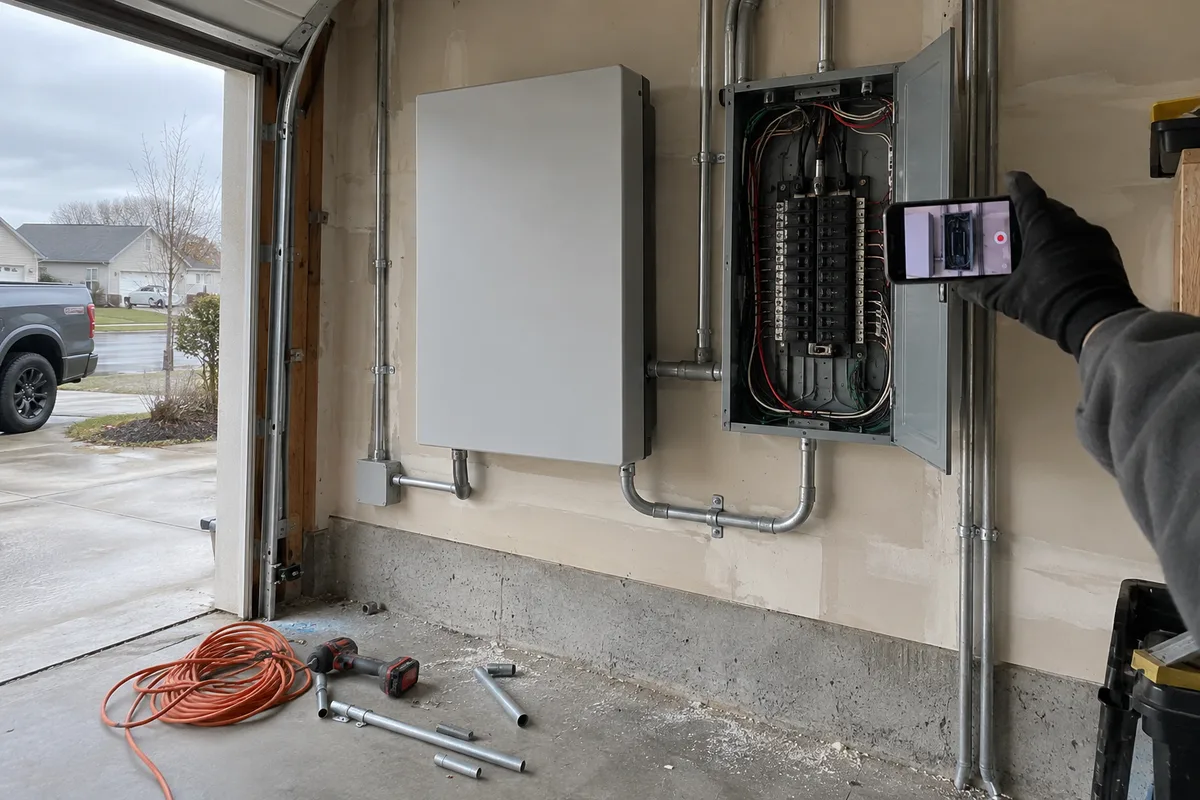
Taking the utility out of the transaction does not take out the building department, the electrical code, the landlord, or balcony fire and egress rules. That leaves real work for a C-10.
You may need to verify the branch circuit can take it, determine whether the receptacle is on a shared or dedicated circuit, check GFCI and AFCI interaction, look at the actual isolation feature, label the panel and circuit, and confirm with the local building department whether a permit is required for that specific install. The 1,200 watt cap also turns into a dwelling-level question you have to ask out loud: how many kits are already installed or planned at that address.
Here is how these calls tend to arrive. The caller files it as a solar question, because that is what they bought. “I put in a balcony solar kit and now the breaker keeps tripping” is a branch-circuit capacity problem wearing a solar label, and if it gets logged as a solar lead you lose the part that tells you what to bring. What you need is the panel and power situation, the breaker behavior, the outlet and GFCI details, and whether the device is connected right now. That is the same intake discipline behind the questions worth asking before you book a solar or battery call: the product name is not the diagnosis.
The 2030 sales rule outlives the exemption itself
Section 8531(e) says the interconnection exemption remains in effect only until January 1, 2030, and is repealed on that date.
Section 8532 does not expire with it. Beginning January 1, 2030, a portable photovoltaic device designed to connect to and disconnect from a building’s electrical system through a receptacle cannot be sold or offered for sale in California unless it meets conditions four through six of Section 8530(c): the code requirement, the UL or equivalent NRTL certification, and the certified isolation feature.
So the exemption is a four-year window, and what survives it is a product rule. After January 2030 the uncertified kit is not merely unqualified for an exemption. It is not legal to sell here.
Your intake should separate a code question from an emergency
This is a small-dollar job category. It is also a first-contact job, and the customer calling about a plug-in kit has a panel, a service, and eventually something bigger. Nothing in the statute establishes that contractors will lose work to this or gain much from it. It creates a narrow utility exemption with six conditions attached.
Wirewoman answers 24/7 and asks the electrical questions you would ask: panel or power, breaker behavior, outlet or GFCI, lighting, EV charger, and the caller’s preferred time. Routine work books straight into your calendar. Sparking, smoke, a burning smell, or full power loss rings your cell instead, by your shop’s own escalation rules. Within 30 seconds of hang-up you get an SMS with the caller’s name, address, the problem in their own words, the urgency, and the booked time.
That record is what makes this topic manageable. “Solar kit” tells you nothing. “Plug-in solar kit, breaker trips when connected, outlet is GFCI” tells you whether to drive out tonight or answer a code question on the phone tomorrow. Because every call lands on the dashboard, including the ones that never became jobs, the ones that were really code questions stay visible instead of disappearing into a callback you never made.
Before you quote this bill to anyone, check which outcome happened. A veto and the exemption never exists. A signature, or no action by September 30, and it is law on January 1, 2027.
Then change four things about how you answer the question. Do not call it a no-permit installation. Verify all six conditions, especially the certification and the isolation feature, rather than the wattage alone. Treat 1,200 watts as an aggregate ceiling for the dwelling. And ask the building department about the specific install, because that is the authority this bill never touched.