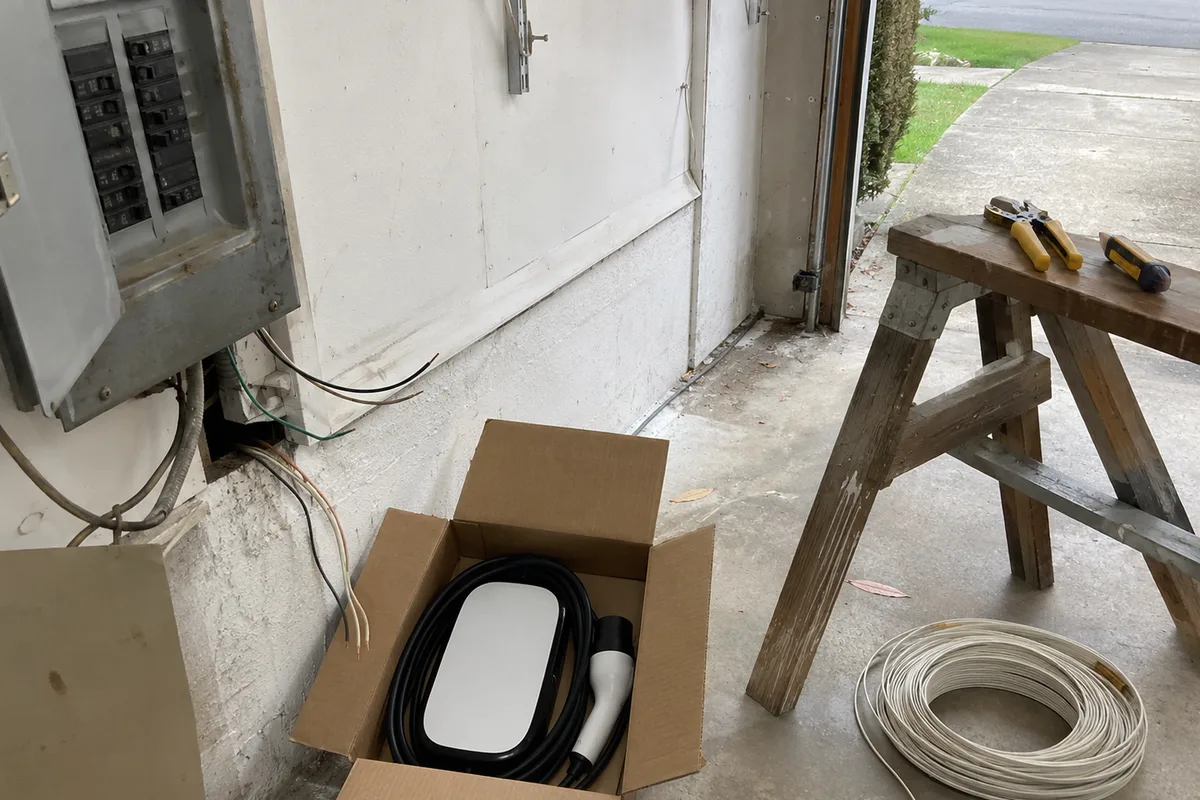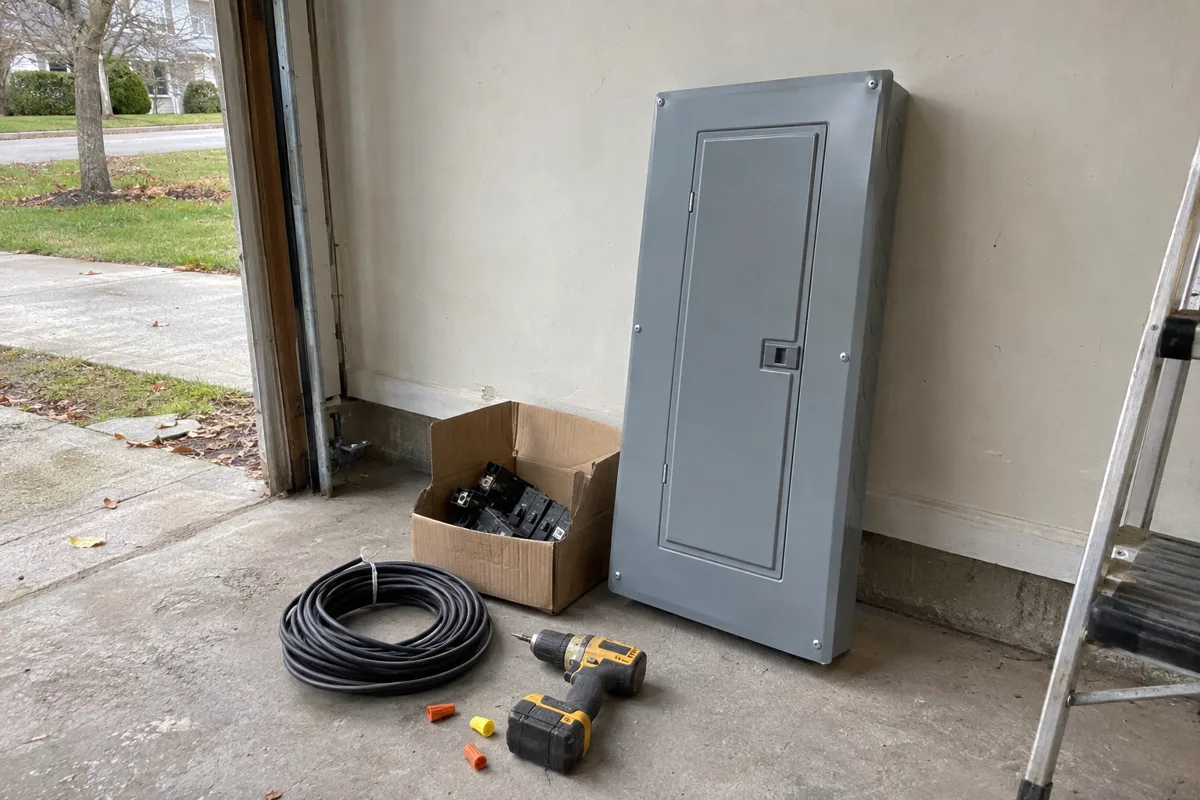
TL;DR: In California, a residential home improvement down payment is capped at the lesser of $1,000 or 10 percent of the contract price. After that, you can bill only for work completed or materials and equipment delivered.
California caps the down payment at $1,000 or 10 percent
The cap is the lesser of $1,000 or 10 percent of the contract price. It is not one-third up front. It is not half to order the panel. It is not whatever amount the customer offers to pay at signing.
Business and Professions Code section 7159 sets the required contents for home improvement contracts. Section 7159.5 contains the down payment and progress payment restrictions.
If you charge a down payment, the contract must use the heading “Downpayment.” It must provide a space for the actual amount. It must also include this statement in at least 12-point boldface type:
THE DOWNPAYMENT MAY NOT EXCEED $1,000 OR 10 PERCENT OF THE CONTRACT PRICE, WHICHEVER IS LESS.
That limit applies whether the customer pays by card or check. The payment method does not change the amount you may take at signing.
The contract also has to be signed and handed over to the customer before work starts. Section 7159(d)(4) requires a 12-point boldface statement that the customer is entitled to a completely filled in copy of the agreement, signed by both parties, before any work may begin.
This guide is about residential home improvement contracts. Commercial contracts follow different rules.
The 10 percent figure stops controlling at $10,000
The rule gets simple once you run the math.
This is an example based on the cap:
- A $4,000 job caps the down payment at $400.
- A $7,500 job caps the down payment at $750.
- A $10,000 job caps the down payment at $1,000.
- An $18,000 job caps the down payment at $1,000, not $1,800.
The 10 percent figure controls only below $10,000. At $10,000 and above, the $1,000 limit is lower.
That is why a large panel upgrade can create a cash flow problem. The panel, meter-main, breakers, and related equipment may cost far more than the amount you can collect at signing. The customer does not fund the full material purchase through a larger deposit.
Plan for that before you send the contract. You may need to carry the initial material cost, order materials in stages, use your supplier account terms, or price the job so the first phase covers the first materials. Those are business choices. They do not change the cap.
For pricing work around the first phase, see how to price electrical jobs without underbidding.
After the down payment, every early invoice needs a finished phase or delivered material
A payment collected before the project is finished, other than the down payment, is a progress payment under section 7159(d)(9).
Progress payments must follow a schedule under the heading “Schedule of Progress Payments.” Each payment must be stated in dollars and cents. Each line must specifically identify the amount of work or services to be performed and the materials and equipment to be supplied.
The schedule cannot say only “50 percent due at rough.” It needs to identify the phase and the amount. For example, a line might identify rough-in work as the phase, describe the work included, and state the exact dollar amount due when that phase is complete.
The contract must also include these two sentences in at least 12-point boldface:
IT IS AGAINST THE LAW FOR A CONTRACTOR TO COLLECT PAYMENT FOR WORK NOT YET COMPLETED, OR FOR MATERIALS NOT YET DELIVERED. HOWEVER, A CONTRACTOR MAY REQUIRE A DOWNPAYMENT.
That rule controls what you can bill after signing. If the work is not finished, do not collect for it. If the material has not been delivered, do not collect for it as a delivered-material phase.
Do not call the second payment a “deposit” or a “material deposit.” The label does not fix the problem. Anything collected before work, beyond the permitted down payment, must qualify as a progress payment tied to completed work or materials actually delivered.
If the customer offers to pay more up front to help you buy equipment, the cap and the not-yet-completed rule still apply.
A qualifying service call has no deposit
Section 7159 does not apply to service and repair contracts that qualify under section 7159.10 and comply with sections 7159.10 to 7159.14.
The service and repair lane requires all of the following: the contract amount is $750 or less, the buyer contacted you to request the work, you do not sell goods or services beyond what is reasonably necessary for the particular problem that caused the call, and no payment is due or accepted until the work is completed.
So on a qualifying service call, there is no deposit at all.
That is different from a larger electrical job. A $400 service call may fall into the service and repair lane. A larger panel upgrade needs the residential contract structure, including the down payment language and a schedule of progress payments.
The invoice details for this service lane are covered in what goes on an electrician invoice in California.
A panel upgrade needs named phases and exact dollar amounts
A panel upgrade is the classic trap because the equipment cost arrives early. The panel and meter-main may be expensive, but the down payment cap still applies.
Write the payment schedule by phase. A schedule can identify phases such as:
- Rough-in complete.
- Equipment set.
- Final payment after inspection.
Each line needs the work or services covered and the exact dollar amount. If you use an equipment phase, describe the equipment and tie payment to materials actually delivered to the jobsite. The amount must be stated in dollars and cents.
“Equipment delivered” does not mean “equipment ordered.” It means the materials have been delivered. The payment must match the materials and work described in the schedule.
A payment schedule also depends on a clear scope. The contract should say what work belongs in each phase, what equipment is included, and what the customer is paying for at that point. Scope on paper matters when the work changes later. See how to write an estimate that survives a change order for that part of the process.
Progress payments also connect to lien releases. Under section 7159(c)(4), after satisfactory payment for any portion of the work performed, and before any further payment, you must furnish a full and unconditional release from any lien claim for the portion paid.
If a customer stops paying in the middle of the job, the payment schedule and the completed phases give you a clearer record of what was performed and what remains unpaid. See what to do about a stop-work notice on an unpaid electrical job and mechanics lien deadlines for electricians.
Other home improvement contract rules apply too, including cancellation requirements. See the 2026 home improvement contract cancellation email guide.
CSLB treats an unlawful payment as a licensing problem
The Contractors State License Board addressed these restrictions in industry bulletin #22-14, dated November 22, 2022. The bulletin says the Business and Professions Code limits home improvement contracts to a maximum $1,000 down payment and says later payments cannot exceed the value of materials and work performed.
The contract-language rule remains the lesser of $1,000 or 10 percent. Use that rule in your contract.
The 2022 bulletin says contractors who violate the restrictions are subject to disciplinary action from the CSLB. It also says violations may result in inclusion on the Public Utilities Commission Watch List. A violation of section 7159.5 and its down payment and progress payment restrictions is punishable as a misdemeanor.
The cap has been stable. The statute text shown on FindLaw is current as of January 1, 2026, and no later amendment to the down payment cap was found. Before relying on the rule, confirm the current code at leginfo.legislature.ca.gov.
Check your contract forms with a construction attorney.
Your first call should tell you which payment structure the job needs
The payment structure starts before the estimate. It starts with knowing the job size.
When Wirewoman answers a panel upgrade or EV charger call, she asks the shop’s intake questions in order and records what the caller described in their own words: the equipment involved, what they think the problem is, and what they asked for. You see that summary before quoting. From the first call, you can tell whether this may be a $400 service call or a larger job that needs a schedule of progress payments.
Wirewoman answers 24/7, sends the job summary to the shop by SMS within 30 seconds, and logs every call to a dashboard. The scope the caller described is in your phone within 30 seconds of hanging up and stays in the dashboard. That gives you a written starting point for the phases and payment amounts you put into the contract.
Wirewoman does not quote prices, write estimates, take payments, or sign anything.
This week, change your residential forms so the down payment line uses the lesser-of-$1,000-or-10-percent rule, remove “deposit” from later payment lines, and write each progress payment against a named phase or materials actually delivered.