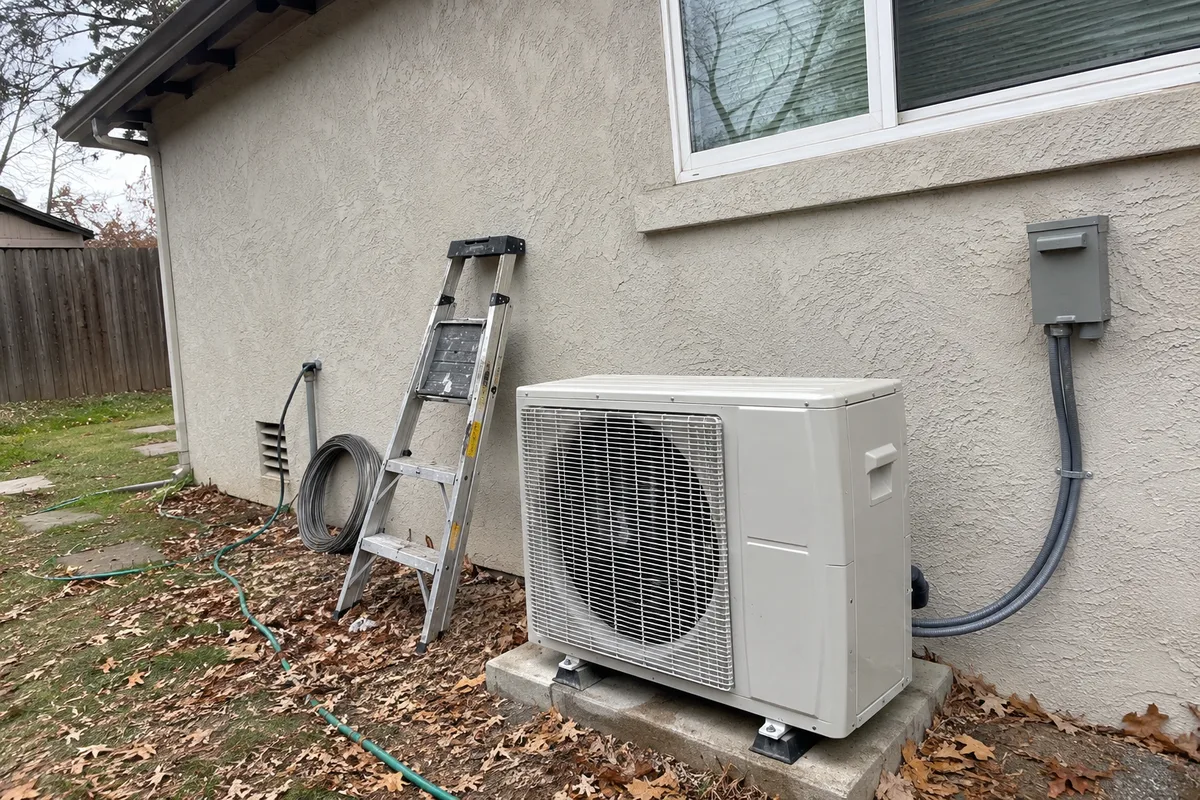
TL;DR: HEEHRA single-family rebates are fully reserved statewide as of February 24, 2026. Do not quote the $8,000 rebate as available money, and do not start rebate-driven work without an approved reservation.
HEEHRA single-family rebates are fully reserved statewide
As of February 24, 2026, HEEHRA single-family rebates are fully reserved for projects statewide. Central and Southern California filled January 7, 2026. Northern California filled February 24, 2026.
HEEHRA means Home Electrification and Appliance Rebates. It is federal Inflation Reduction Act money administered in California by the California Energy Commission through TECH Clean California.
When the single-family money was open, the heat pump HVAC rebate was up to $8,000 for a low-income household under 80 percent of area median income. It was up to $4,000 for a moderate-income household between 80 and 150 percent of area median income.
That money applied to a heat pump HVAC unit replacing an existing primary heating source. The single-family pages do not list a panel rebate or a wiring rebate.
Single-family means a building with four or fewer units. It also includes condos, manufactured homes, and mobile homes.
If a caller says, “I heard there’s an $8,000 rebate,” the answer is not “maybe.” The answer is that the single-family rebates are fully reserved statewide.
The $4,000 panel rebate was for multifamily projects
The panel and wiring amounts belonged to the multifamily program.
Multifamily HEEHRA listed up to $4,000 for an electric panel, also called an electric load service center. Electric wiring was listed at up to $2,500. The cap was $14,000 per unit.
Multifamily rebates were fully reserved statewide in late August and by September 1, 2026. TECH says the program is no longer accepting new reservations. The CEC status line says Phase I was fully reserved August 31, 2026, and that no additional reservations will be issued for HEEHRA Phase I.
The CEC says Phase I continues to process and finalize rebate applications for completed projects with approved reservations. That is the distinction your caller needs to hear.
A project with an approved reservation can still move through processing. A new project without an approved reservation does not have rebate money waiting for it.
Phase II has no announced opening date
HEEHRA Phase II rebate availability will be announced at a later date.
That is all the current information provides. There is no announced date to give a caller. Do not predict a reopening. Do not tell a customer to wait until next month. Do not put future HEEHRA money into a proposal as if it already exists.
Your short phone answer can be:
“HEEHRA rebates are fully reserved right now. Phase II has not been announced. Check the TECH Clean California and California Energy Commission pages for the current status before relying on any rebate.”
That answer is short enough to use from a truck. It also keeps you from making a promise based on an old web page, a stale sales script, or another contractor’s quote.
Ask for the reservation before you price around it
If a customer says another contractor or a website told them they have a reservation, ask for the reservation confirmation before you build the price around a rebate.
No approved reservation means no rebate.
The program required the reservation to be approved before the heat pump was installed. A waitlisted project qualified only if the equipment was installed after the reservation was approved.
Do not install first and apply afterward. The reservation rule runs in the other direction.
The program warns that misrepresenting HEEHRA or skipping the reservation could result in the contractor’s removal from the program. That is a serious risk for a small shop. A rebate promise can affect your estimate, the customer’s financing decision, and the work you schedule before anyone checks whether money is reserved.
Retire the old $8,000 language everywhere
Remove any proposal line, website sentence, voicemail prompt, or phone script that says a customer “can get up to $8,000 back.”
Remove “$4,000 for a panel” from any single-family sales material. That amount was listed for multifamily projects, not single-family homes.
The call log matters here. Wirewoman logs every call to a dashboard, so you can read the caller’s own words afterward. When someone opens with “I heard there’s an $8,000 rebate,” the log shows the exact phrase and what they said they wanted done. Before you call back, you already know you are walking into a rebate question.
Wirewoman answers 24/7 and sends the job summary by SMS within 30 seconds of the call. A rebate question that comes in at 7 p.m. reaches your phone before you are back at the shop. She does not quote rebates or decide whether a project qualifies. She gives you the information you need to lead with the honest answer.
For the intake itself, use the questions in panel upgrade calls: what to ask before you book. Ask what equipment the customer wants installed, whether the project is single-family or multifamily, and whether they have an approved reservation.
Price the job so it works without HEEHRA
A customer who was counting on $8,000 will call the person who quoted the job when that money does not show up.
Price the work without the rebate. If the customer later produces an approved reservation, you can review the project against the program rules. Until then, the estimate has to stand on its own.
Keep the quote valid for the period you actually intend to honor. The guidance in how long a quote should stay good when copper moves applies here too. A rebate question does not protect you from material price changes.
The rest of the federal money picture is separate. The federal 30 percent credits known as 25C, 25D, and 30C also expired by June 30, 2026. The three federal energy credits that have already expired are explained in their own article, including the fact that the panel credit never covered a standalone panel swap.
Do not combine expired tax credits with fully reserved rebates in one sales promise.
Contractor enrollment does not create funding
HEEHRA participation required a contractor to be TECH Clean California-certified and complete HEEHRA rebate training to receive a badge. Rebates were available only through HEEHRA-trained, TECH Clean California-certified contractors.
Participating contractors provided project quotes, reserved incentive funds, performed installations, and guided customers through the rebate process. Customer income was verified through a state portal. The contractor needed the income eligibility verification code or approval PDF. Customers were told not to hand financial statements to the contractor.
The pages do not publish the training length, enrollment fee, or how and when the program reimburses the contractor. Do not guess at those details.
You can find the contractor enrollment route through the Switch Is On TECH page. The listed contractor support email is [email protected].
Training now only matters if funding reopens. The pages give no date. Do not spend a week on enrollment for a job that has no approved reservation.
Give callers one honest answer this week
Change your scripts, proposals, and website copy now.
Tell callers that HEEHRA is fully reserved, Phase II has not been announced, and current status should be checked on the TECH Clean California and CEC pages. Ask for an approved reservation before pricing around rebate money. Do not begin heat pump work on a rebate promise.
Then move the conversation to work that can be quoted honestly. Panel and EV work may help fill the winter calendar, as covered in filling the winter calendar with panel and EV work. The AB 2313 gas service line electrification incentive is another incentive program to keep separate from HEEHRA.
Your change this week is simple: stop selling the $8,000 as available money, require reservation proof, and price every job so it still works when the rebate does not.