TL;DR: No, a personal auto policy often is not enough for an electrician’s work van. Check this week whether your policy allows business use, then get the agent’s answer in writing.
A personal auto policy may not cover the way you use your van
Many electrical shops insure the work van on the same personal auto policy as the family car. The problem is not the label on the vehicle. The problem is how you use it.
Personal auto policies commonly restrict or exclude business use. Policy wording varies by insurer. A van used regularly to carry tools and drive between job sites usually needs a commercial or business auto policy. Commuting and occasional errands can be treated differently.
Your policy wording controls. Your agent’s written answer matters. Ask before the crash, not after it.
Read the section of your policy that describes covered use, excluded use, business use, commercial use, and who may drive the vehicle. Do not assume that paying the premium means every trip is covered. Ask the agent to confirm how the policy treats your actual work: carrying tools, carrying wire and stock, driving between customer properties, responding to service calls, and taking the van home.
If you regularly use the van for the shop, say that plainly. Do not describe it only as a vehicle you use to commute. The agent needs the real use to identify the right policy.
General liability does not replace auto liability
Your shop’s general liability policy and your van policy cover different risks.
General liability covers the work you do at the customer’s property. That can include the business liability connected to your electrical work. Auto liability covers the vehicle on the road.
Those policies are not interchangeable. A general liability policy does not turn a personal auto policy into business auto coverage. The van still needs the right auto policy for the way it is used.
That distinction matters on the drive to the job. If the van is involved in a crash while you are carrying ladders, wire, tools, or stock, the vehicle policy is the policy that addresses the auto liability claim. Your general liability policy does not solve a gap in the van’s coverage.
The broader question of the insurance a small shop needs depends on the difference between your license and the job itself. Wirewoman has a separate guide on the insurance a small shop needs: license vs job. Keep that question separate from the question of whether the van itself is insured for business use.
California’s new minimums are still only a floor
Beginning January 1, 2025, California standard auto insurance policies carry higher minimum liability limits as each policy comes up for renewal during the year.
The new minimums are:
- $30,000 for bodily injury or death per person, up from $15,000.
- $60,000 for bodily injury or death per accident, up from $30,000.
- $15,000 for property damage per accident, up from $5,000.
The limits do not arrive for every policy on one day. They apply as each policy renews throughout the year, according to the California Department of Insurance.
Those limits apply to standard policies. They are minimums, not a plan for every work van.
A loaded work van with ladders, wire, tools, and other equipment can do far more than $15,000 of property damage in a crash. That makes the minimum a floor. It does not tell you whether the limits fit the vehicle, the work, or the exposure created by your business.
Ask the agent to quote your current liability limits and a higher limit. Get both answers by email. You need the number that applies today and the number you could choose before the next renewal.
Business use includes the work you do between jobs
A work van does not stop being a business vehicle because it is parked at your home overnight.
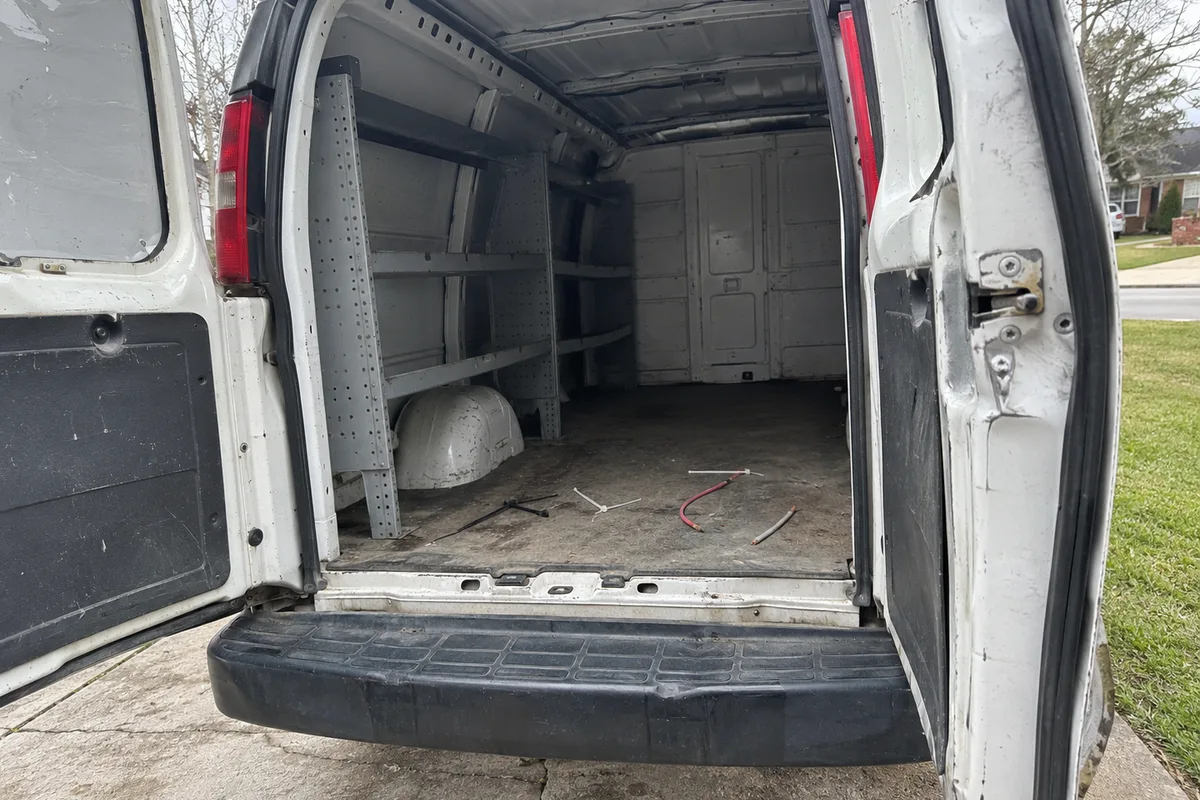
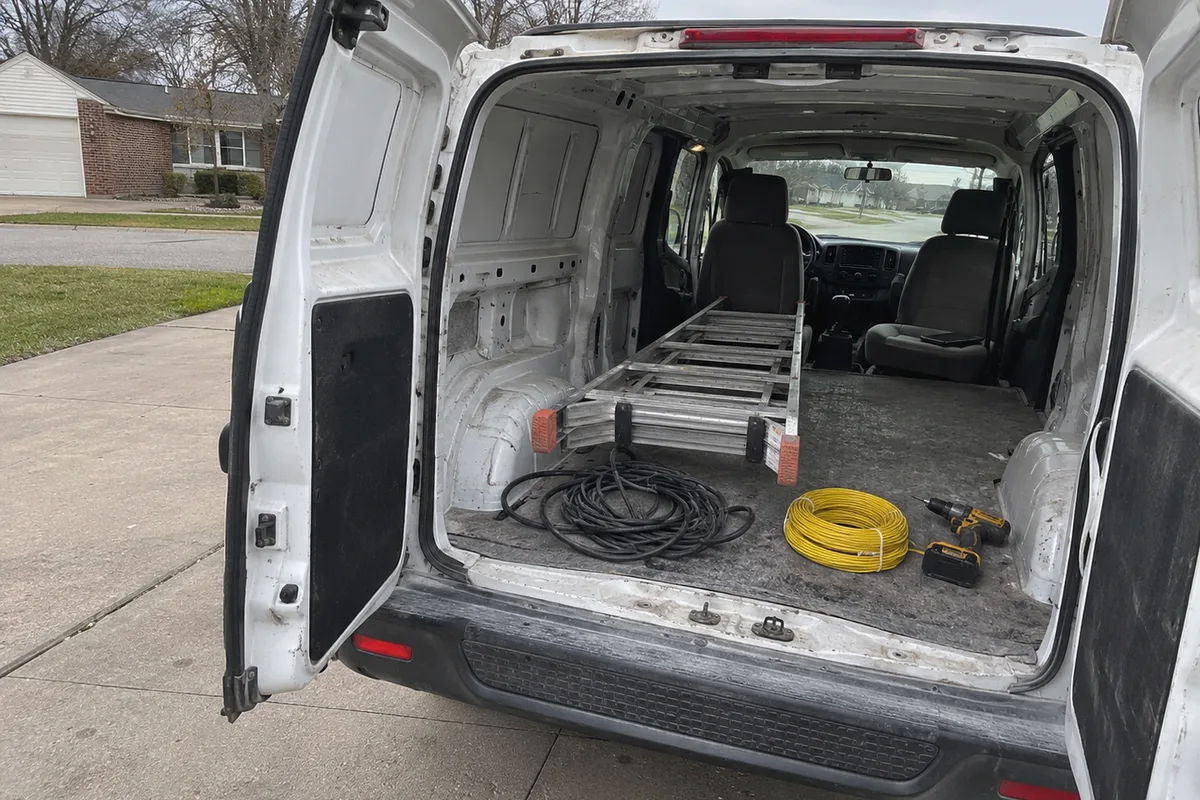
The practical question is what the van does during the workweek. Do you carry tools to customer properties? Do you drive from one job site to another? Do you keep wire or service stock inside? Do you answer calls and head to urgent jobs? Do helpers or employees drive it?
Those details are why insurer and agent guides commonly point regular tool transport and job-site driving toward commercial or business auto coverage. Your own policy wording and your agent’s answer control the result for your van.
Ask whether the van is rated for business use today. If it is not, ask what needs to change. Ask for the answer in writing and keep it with the policy documents.
The same check applies to what is inside the van. Some commercial auto insurers also sell tool and equipment coverage for items kept inside the vehicle. That is separate coverage. Ask whether tools and stock are covered, and for how much.
Auto coverage and tool coverage are not the same question. A policy can address the vehicle while leaving you with a separate question about tools, wire, and other property inside it. For the tool-specific issue, see what to check when tools are stolen from an electrician van.
Van stock creates another practical question. If you carry materials for service calls, ask how the policy treats that stock. Your return trips and inventory habits may also affect how much property is inside the van at any time. Wirewoman’s guide to electrician service van stock and return trips covers that operating issue separately.
Put these five questions in an email to the agent
Send the questions in writing. Ask the agent to answer each one for the specific van and the specific business.
- Is this van rated for business use today, and if not, what changes?
- What are the liability limits, and what would a higher limit cost to quote?
- Who is a listed driver, and does a helper or employee driving it count?
- Are tools and stock inside the van covered, and for how much?
- If I carry a trailer or tow a job trailer, is it covered?
The driver question matters if your shop has employees or helpers. Ask who is listed as a driver and what happens if a helper drives. Do not rely on a casual verbal answer.
Ask the trailer question even if towing is occasional. If you carry a trailer or tow a job trailer, the agent needs to address that use directly.
Ask for the policy form, endorsements, declarations page, or other written material the agent is relying on. You do not need a general explanation that your business is covered. You need an answer tied to this van, this use, these drivers, and any trailer.
Your certificate may need auto liability too
Customers and general contractors often ask for a certificate of insurance. The certificate normally shows general liability and workers compensation.
Ask the agent whether auto liability also needs to appear on the certificate for the job. That is a separate request from deciding whether your van has the right coverage. The job may require proof of auto liability even when the customer’s certificate request normally focuses on general liability and workers compensation.
Wirewoman’s guide to electrician certificate of insurance requests covers the certificate question. Keep the certificate request tied to the actual contract or job requirement.
Do not assume a certificate changes the policy. It is evidence of coverage shown on the document. The policy wording still controls what the van policy covers.
The safest call from the truck is no call while moving
Many small-shop owners answer customer calls while driving between jobs. The phone sits in the cupholder. The next call comes in. You reach for it because the customer may need an answer, a time window, or an urgent dispatch.
The practical fix is simple. Stop taking calls while the van is moving. Read the job summary at the next stop. Call back from a parked truck.
Wirewoman answers the shop’s phone 24/7, so nobody has to pick up while driving. After each call, she sends the owner a job summary by SMS within 30 seconds. Every call is logged to a dashboard. You can read the details at the next stop and call back from a parked truck. She books to the calendar and routes urgent calls by the shop’s own escalation rules.
That changes the phone habit without changing who runs the shop. The call gets answered. The details wait for you at the next stop.
Check the policy before the van leaves for another job
This week, open the van policy and ask the agent the five questions above by email. Confirm business use, liability limits, listed drivers, tools and stock, and trailer coverage. Save the written answers with the policy.
Then stop answering calls while the van is moving. Let the phone service take the call, read the job summary when you park, and call back from a stopped truck.