TL;DR: A plain GPS unit, telematics box, or ordinary camera on an electrical service van is not banned by AB 1331 or AB 1883. Before January 1, 2027, check whether any camera can capture a bathroom and whether any software uses AI to infer an employee’s emotional state or collect neural data.
January 1, 2027 is the date your shop needs on its checklist
AB 1331 and AB 1883 were signed on September 30, 2026. Both take effect January 1, 2027.
Neither law has an employee-count threshold. Neither has a small-business exemption in the text. If you run a two-person electrical shop, you are still dealing with these rules.
AB 1331 adds Part 5.8, beginning with Section 1560, to Division 2 of the Labor Code. AB 1883 adds another Part 5.8, beginning with Section 1580, titled “Workplace Surveillance Tools.”
These are employer-side laws in the same practical category as the rules covered in this piece on 1099 helpers and small electrical shops. Put the effective date on your calendar now. Then audit what your shop already uses.
Your van GPS and regular dash cam are not the target
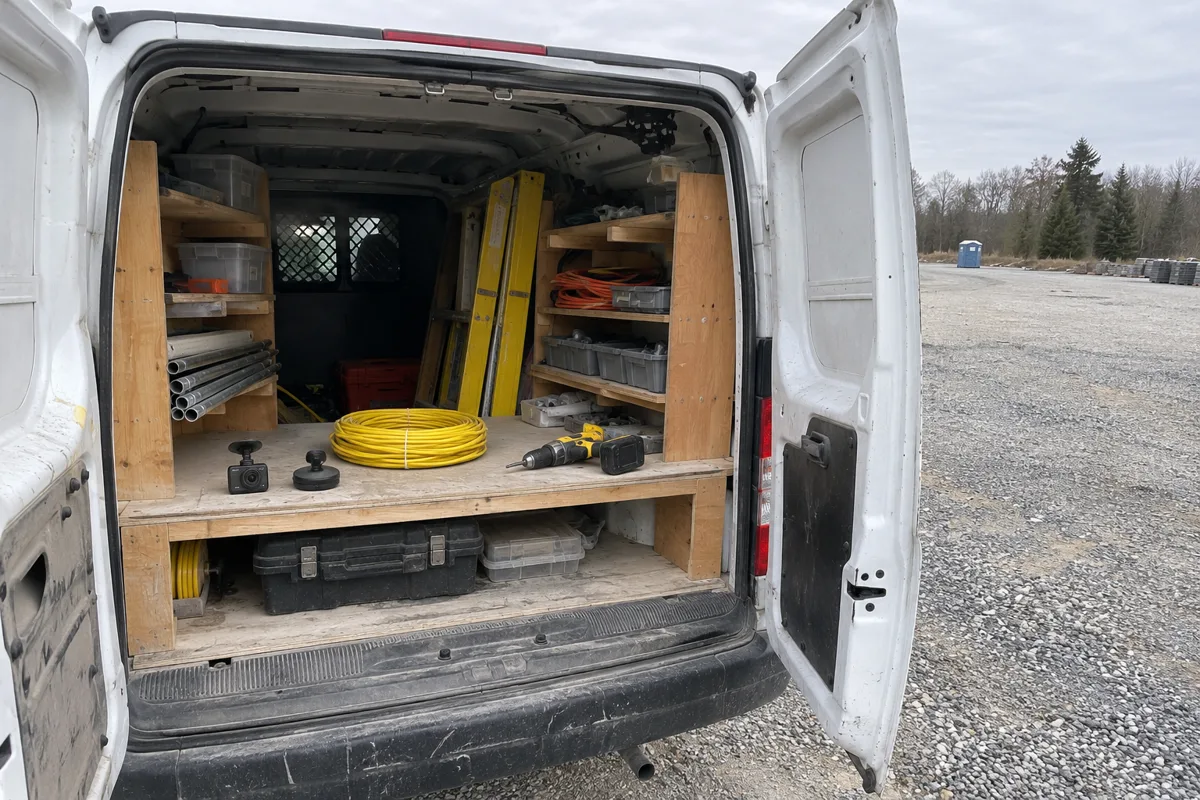
The short answer for most service fleets is simple. A plain GPS unit, a truck telematics box, or an ordinary camera is not banned by either law just because it tracks location or records video.
Both laws define a workplace surveillance tool broadly. The definition covers “a system, application, instrument, or device that collects or facilitates the collection of employee data, activities, communications, actions, biometrics, or behaviors by means other than direct observation by a person.”
The list includes video or audio surveillance, continuous incremental time tracking, geolocation, electromagnetic tracking, photoelectronic tracking, and photo-optical systems.
That definition tells you what can be covered. It does not mean every tool on the list is illegal.
AB 1331’s actual ban is narrower. Unless a court order directs it, an employer may not use a workplace surveillance tool to monitor or surveil employees in a bathroom located in the workplace.
The final AB 1331 text contains no vehicle, truck, or telematics rule. Its only location-related wording is “geolocation” in the definition of a workplace surveillance tool.
AB 1883 is narrower in a different way. It prohibits an employer from using a workplace surveillance tool that uses artificial intelligence on employees for either of two purposes:
- Recognizing, or making inferences or predictions about, an individual’s emotional state.
- Collecting neural data.
A camera that flags a phone in a driver’s hand is a different question from software that claims to detect whether the driver is stressed, engaged, angry, or emotionally distracted.
The first feature is not the target described in Section 1581. The second is.
The bathroom rule reaches tools you may have forgotten
The first audit is physical. Walk the shop. Walk the yard. Open every van.
List every fixed camera, dash cam, GPS unit, telematics device, time clock app, tracking app, and related software. Write down where each one points, what it records, and who can see the information.
Then ask the uncomfortable question: could any tool capture an employee in a bathroom?
That includes a camera inside a shop with a restroom off the work floor. It includes a yard camera aimed at a portable toilet.
AB 1331 defines a workplace surveillance tool to include devices that collect employee data by means other than direct observation. It excludes smoke detectors, carbon monoxide detectors, and weapon detection systems.
The Labor Commissioner may enforce the law through citations and civil actions. A public prosecutor may also enforce it. A court may issue injunctive relief, including attorneys fees and costs. The statute allows a penalty of up to $500 for each violation.
The chaptered text does not provide an employee private right of action.
That does not make the camera issue harmless. A camera nobody remembered, aimed the wrong way, is the kind of problem a simple physical audit can find before January 1.
An employee can leave a tracking device outside the bathroom
AB 1331 also gives an employee the right to leave behind workplace surveillance tools that are on the employee’s person or in the employee’s possession when entering a bathroom.
That can matter to an electrical shop using a phone app for timekeeping, dispatch, location tracking, or job status.
The right has an exception. It does not apply when the employee is required to remain available during a meal or rest period.
The law also permits an employer to check a tool for the one-time entry and exit of a bathroom. There is no violation when an employee voluntarily brings a tool into the bathroom.
There is also no violation when the employee brings in a badge or personal alarm that the employer requires for identification or safety, as long as the device does not detect or record audio or video and has no physically embedded or attached artificial intelligence.
If your shop uses a tool as required by federal law or an existing state law or regulation, Section 1564(c) says AB 1331 does not prohibit that use.
Treat the phone issue as a rule to settle in writing, not as a gotcha. Tell the employee what happens when the tracking app is running, when the phone may be left outside, and whether the employee must remain available during a meal or rest period.
Your written plans and records already matter in other parts of shop operations, as the workplace violence plan requirements for electrical contractors show. Add this device rule to the same habit of keeping a clear record.
The on-call phone is where the rule gets real
Look at your own call dashboard.
Wirewoman answers calls 24/7, books jobs to the calendar, texts the job summary by SMS within 30 seconds, logs every call she answers to a dashboard, and routes urgent calls by the shop’s own escalation rules. Those logs record customer calls she handled.
When an urgent call comes in and the shop’s escalation rules route it, the call ends up ringing one specific person’s cell phone. The owner can see on the call-log dashboard which number it went to and when.
That cell phone is the one device in the shop that is both a work tool and a personal object. It is where AB 1331’s leave-behind right and the meal or rest period availability exception can collide.
Look at the dashboard. See whose phone the urgent calls go to. Then check whether a tracking app, time app, or other workplace surveillance tool runs on that phone.
If the person can leave the phone outside a bathroom, say so clearly. If the person is required to remain available during a meal or rest period, document that rule and have the employee acknowledge it.
The separate after-hours call policy for electrical shops is the natural place to check how the phone is assigned and how urgent calls are routed. Do not assume the answer is obvious because the phone belongs to the employee.
Ask every software vendor whether AI reads emotion
AB 1883 targets workplace surveillance tools that use artificial intelligence to recognize, infer, or predict an employee’s emotional state, or to collect neural data.
“Neural data” means information generated by measuring activity in an employee’s central or peripheral nervous system, when the information is not inferred from nonneural information.
Ask each camera, dash cam, fleet software, timekeeping, and monitoring vendor in writing whether any feature uses AI to score or infer:
- Driver mood
- Stress
- Fatigue as an emotional condition
- Engagement
- Sentiment
- Any other emotional state
Ask whether the product collects neural data through a headband, wearable, or similar device.
If the answer is yes, turn that feature off for employees before January 1, 2027. Put the vendor’s written answer in a file.
AB 1883 does not ban every camera, recording system, or GPS tool. Call recording and security cameras are not named exceptions. They stay outside this specific ban only when they do not use AI for either of the two prohibited purposes.
The statute also says the section does not prohibit using a workplace surveillance tool to ensure safety, or otherwise using it when it does not meet the specifications in subdivision (a).
That safety language matters. A dash cam that identifies a rolling stop is not the same product feature as one that predicts a driver’s emotional state. Ask the vendor to explain the difference in writing.
This is also separate from the customer-facing chatbot rules discussed in the AB 1609 article for electrical contractors. If you add a tool that listens to your own people’s calls or watches your techs, ask the vendor the AI emotion question before you switch it on.
The penalty is $500 per violation, and the tool must still be checked
AB 1883 allows enforcement by the Labor Commissioner or a public prosecutor. The penalty is up to $500 for each violation.
The penalty may be recovered as a statutory penalty paid to the employee or as a civil penalty, but not both for the same violation. The law does not preempt a city or county ordinance that provides equal or greater protection.
The chaptered text does not provide an employee civil-action provision.
That exposure is specific. It is not a reason to treat every GPS unit as illegal. It is a reason to identify the tools you have, confirm what they do, and remove the features that fall inside the two bans.
The same filing habit can help with other employer laws taking effect in this period, including the issue discussed in the AB 2321 coverage of Cal OSHA criminal referrals. Keep the vendor responses, the camera map, and the written phone rule together.
Finish the audit before the law takes effect
Before January 1, 2027, make one list for the shop, yard, vans, phones, apps, and software.
Mark every camera that could capture a bathroom. Reposition or disable anything that can. Identify every phone carried by an on-call tech and document the leave-behind rule. Ask every vendor whether its AI scores emotion, engagement, stress, sentiment, or fatigue as emotion, or collects neural data. Save each answer.
Keep the van and its tracking records in context. The van mileage and log rules are a separate issue from these surveillance bans.
These are practical checks, not a substitute for legal advice. Ask a California employment lawyer about your specific tools, availability rules, and local ordinances.
Then make the changes before the effective date, not after a camera, phone app, or software setting creates the problem.