When an electrician finds aluminum branch circuit wiring, the answer is to quote one of the three permanent repairs recognized by CPSC and address every affected connection, since the repair scope must cover them all.
That guidance comes from U.S. Consumer Product Safety Commission Publication 516, “Repairing Aluminum Wiring,” dated June 2011. Because the publication is not new, contractors should check CPSC for the current version before establishing company policy or specifying a remediation method.
The three recognized approaches are complete replacement with copper cable, a COPALUM repair, and an AlumiConn repair. The right proposal depends on the building, access, local availability, and the electrician’s qualifications. Whatever method is proposed, the inspection and estimate must account for the full system rather than only the first damaged receptacle.
How to know what you are actually looking at
Start by confirming the conductor material instead of relying on the cable’s appearance. Virtually all aluminum branch wiring was installed as plastic-sheathed type NM cable, often called “Romex,” and its exterior is not readily distinguishable from copper cable.
Look for “AL” or “Aluminum” printed on one side of the cable jacket every few feet. Where the jacket can be examined safely, that marking gives the contractor a much firmer basis for identifying the wiring and explaining the finding to the customer.
Read the entire marking. A cable marked “CU-clad” or “Copper-clad” in addition to “AL” or “Aluminum” contains copper-coated aluminum conductors. CPSC’s repair recommendations in Publication 516 do not cover that wiring. Do not quote the branch wiring remediation described here until you have distinguished solid aluminum from copper-clad aluminum.
Conductor size also helps frame the investigation. Aluminum and copper-clad aluminum conductors are sized No. 10 AWG for 20-ampere circuits and No. 12 AWG for 15-ampere circuits. Copper conductors are No. 12 and No. 14 AWG for those respective ratings.
The age of the work provides context, but it does not replace identification. A copper shortage in the mid 1960s led builders to expand aluminum’s use from a few large-power circuits into general purpose 15- and 20-ampere circuits. Homes built before 1965 are unlikely to contain aluminum branch circuit wiring. Cable installed from 1965 through the mid 1970s may contain aluminum, whether installed during original construction, in an addition, or as part of rewired or new circuits.
Keep the scope distinction clear. These recommendations concern No. 10 and No. 12 AWG aluminum branch circuit wiring. They do not apply to larger gauge aluminum circuits and connections serving service entrance cables, electric clothes dryers, or cooking ranges.
Why these connections fail without warning
CPSC warns that failing aluminum-wired connections seldom provide easily detected warning signs. Connections have been reported to fail and overheat without prior indications or problems. That makes a visual spot check or a customer’s lack of complaints a poor basis for declaring the remaining connections sound.
When symptoms do appear, they can include receptacle or switch face plates that are hot to the touch, flickering lights, circuits that do not work, and the smell of burning plastic at outlets or switches. These reports should shape dispatch questions and job urgency, but their absence does not establish that the system is safe. A consistent intake process, such as the one outlined in questions to ask on every electrical call, can help the shop capture relevant observations before the electrician arrives.
The Franklin Research Institute conducted a national survey for CPSC that found homes built before 1972 and wired with aluminum were 55 times more likely than copper-wired homes to have one or more outlet wire connections reach “Fire Hazard Conditions.” The survey used that term when receptacle cover plate mounting screws reached 149C (300F), sparks came from the receptacle, or surrounding materials were charred.
State the limits whenever citing that figure. The survey covered only wire connections at outlets. It did not address other aluminum connections and splices, which are also prone to fail. It also developed no information for aluminum-wired homes built after 1972.
The three repairs CPSC recognizes
CPSC recommends a method or product only when it finds satisfactory documented evidence that the method is Safe, Effective, and Permanent. Its definition of Permanent excludes temporary or emergency repairs that may fail over time. Publication 516 recognizes only three methods as permanent repairs.
Complete replacement with copper cable is what CPSC calls “the best method available.” The electrician replaces the aluminum branch circuit cable with copper cable and may abandon the existing aluminum wiring inside the walls. CPSC also acknowledges that complete rewiring is impractical or prohibitively expensive for many homes. A proposal should therefore distinguish the technical preference from the access and feasibility issues that determine whether it is workable.
The COPALUM method attaches a short copper pigtail to the aluminum conductor with a COPALUM connector. A dedicated power tool and crimping die compress the metal sleeve and conductors with upwards of 10,000 pounds of force, creating what is effectively a cold weld. CPSC staff considers this a safe and permanent repair.
Only electricians trained by the manufacturer and authorized to use the tool may install COPALUM connectors. CPSC emphasizes that training is necessary because careful, professional workmanship and thoroughness are essential to a safe, permanent result. Availability should be checked locally, since the publication acknowledges that COPALUM repair may be unavailable in a locality.
AlumiConn is the acceptable alternative identified by CPSC. If COPALUM is unavailable, CPSC says AlumiConn may be considered the next best alternative for a permanent repair. It uses a setscrew type connector to pigtail the aluminum conductor to copper.
CPSC says AlumiConn “has performed well in initial tests, but is too new to have developed a significant long-term safe performance history as the COPALUM repair.” The agency says a qualified electrician should perform the repair because it also demands careful, professional workmanship and thoroughness.
Anything outside these three methods is not among CPSC’s approved permanent repairs. Whichever method is selected, workmanship details still matter. Contractors should maintain a disciplined process for conductor preparation, device installation, documentation, and specified tightening requirements. The broader principles in electrical termination torque and NEC 110.14(D) can help shops reinforce that culture.
Why a partial repair does not count
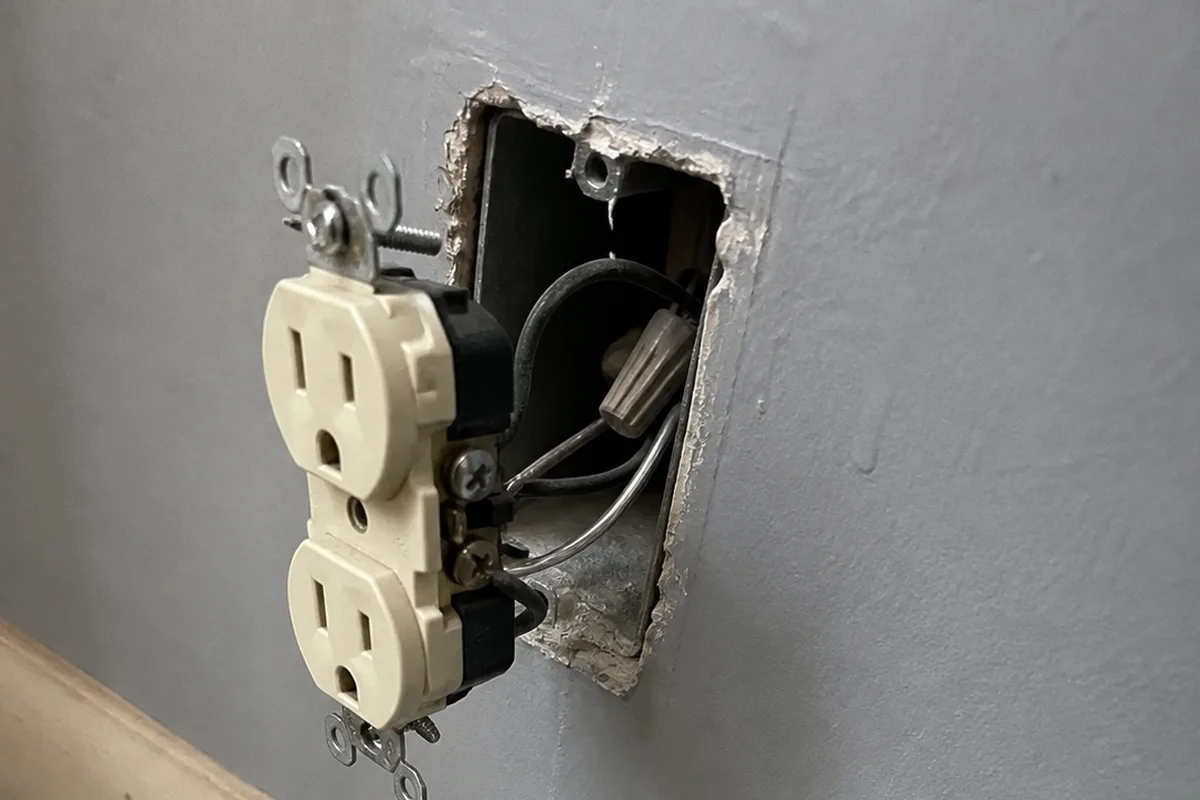
Finding one overheated receptacle does not make that receptacle the full scope of the job. CPSC says a proper repair should include every connection or splice involving aluminum wire in the home, including outlets, dimmers, switches, fixtures, appliances, junction boxes, and panel boxes.
Directly connected appliances on No. 12 or No. 10 AWG aluminum branch circuits must also be included. CPSC specifically identifies dishwashers, cooling equipment, heaters, air conditioners, and light fixtures, in addition to wall outlets, switches, junction boxes, and panel boxes.
Every aluminum-to-aluminum and aluminum-to-copper connection should be repaired to obtain the maximum benefit. That is why a contractor’s estimate needs a connection inventory, not merely a device count from the rooms where symptoms appeared.
With short copper extensions installed at every termination, the repaired system permits the use of standard wiring devices, including receptacles and switches. The pigtails solve the termination interface only when the remediation reaches every affected connection and splice.
What to tell the customer
Tell the customer what was identified, how it was identified, and which portions of the electrical system fall within the CPSC guidance. Explain that the absence of heat, odor, flickering, or outages does not prove that all connections are sound.
Present the three recognized permanent repairs clearly. If complete copper replacement is feasible, explain why CPSC calls it the best available method. If a pigtail repair is being considered, explain the qualifications, workmanship, access, and local availability that affect the proposal. CPSC highly recommends using a qualified electrician for this remediation.
Set expectations before opening walls or devices. A conversation modeled on what to ask before booking a panel upgrade call can help separate known conditions from assumptions about access, circuit routing, panel terminations, connected equipment, and the eventual repair scope.
Most importantly, do not sell a partial device swap as system remediation. Describe any immediate work accurately, document what remains unexamined, and quote the complete scope needed to address every applicable aluminum connection.
Quick answers
What should an electrician do after finding aluminum branch circuit wiring? Confirm the conductor type, identify the full connection scope, and quote one of CPSC’s three recognized permanent repairs.
What permanent repairs does CPSC recognize? Complete copper cable replacement, COPALUM pigtailing, and AlumiConn pigtailing.
Does repairing only a damaged receptacle complete the remediation? No. CPSC says every applicable aluminum-to-aluminum and aluminum-to-copper connection should be repaired for maximum benefit.
Does a lack of warning signs mean the connections are safe? No. CPSC reports that aluminum connections can fail and overheat without prior indications.
Do these recommendations cover every aluminum conductor in a building? No. They address No. 10 and No. 12 AWG aluminum branch wiring, not the larger gauge circuits and connections identified by CPSC.