TL;DR: A failed electrical inspection is not automatically a reinspection fee. In Sonoma County’s 2003 policy, the first rejection for code violations does not require a fee, while San Ramon charges when the same correction item fails at two or more separate inspections or when the inspection cannot proceed because the site is not ready.
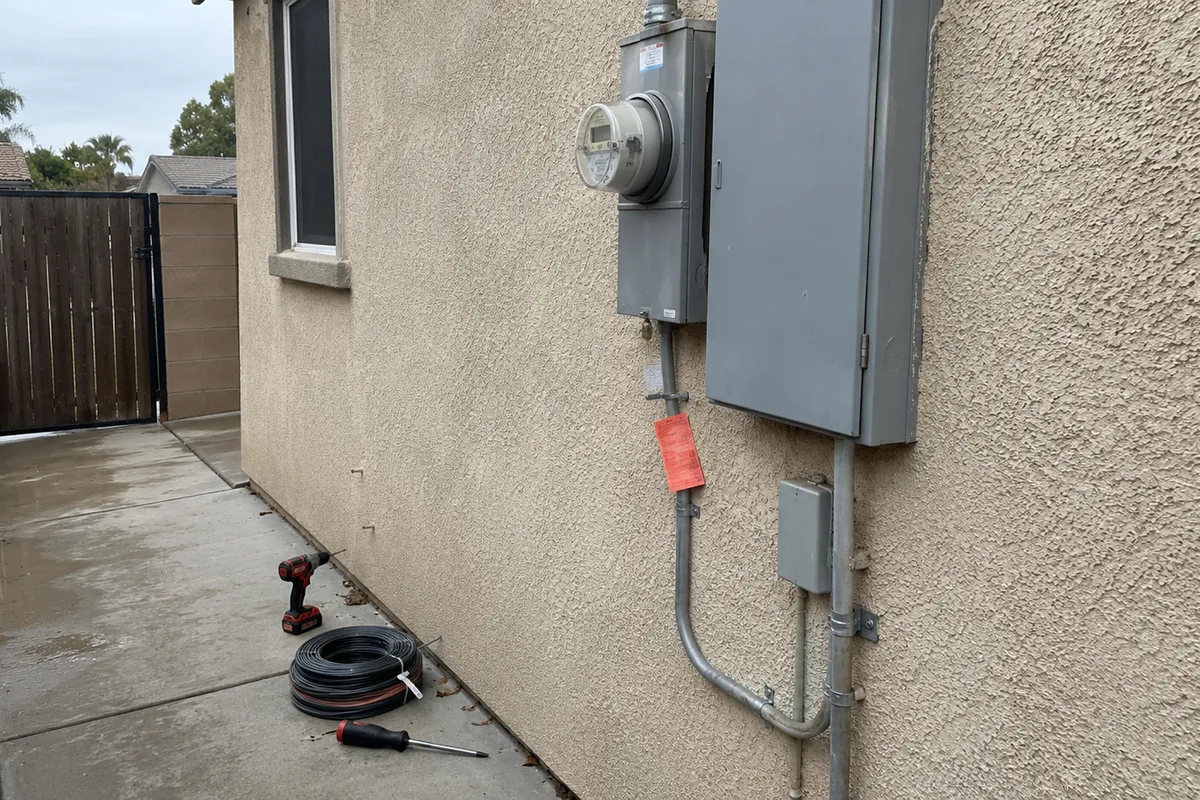
The first call is often a homeowner or GC asking when someone is coming back because the inspector left a correction notice. Before you promise a return date, ask what the notice lists in the caller’s own words. Then ask whether someone will be on site, whether the gate will be open, whether the address is posted, and whether the electrician will have the tools needed for the inspection. Those details can decide whether the next visit is productive or becomes a wasted trip.
The first rejection is not automatically a fee
Sonoma County Permit and Resource Management Department Policy and Procedure 9-3-4, “Building Permit Reinspection Fee Requirements,” took effect on June 14, 2003. It quotes California Building Code section 108.8 as that code section read when the policy was written:
“A reinspection fee may be assessed for each inspection or reinspection when such portion of work for which inspection is called is not complete or when corrections called for are not made. This section is not to be interpreted as requiring reinspection fees the first time a job is rejected for failure to comply with the requirements of this code, but as controlling the practice of calling for inspections before the job is ready for such inspection or reinspection.”
That policy is not a current code edition. The section number quoted in it should not be treated as the section number in today’s California Building Code. The point from the policy is still plain: a first rejection for failure to comply with code is not, by itself, a reinspection fee under that policy.
The fee is tied to the inspection process. The policy says inspectors are expected to act reasonably to recover the cost of “wasted” inspections. That is different from charging simply because the inspector found a correction.
Local policy controls the details. San Ramon’s current building page uses different wording from Sonoma County’s policy. Do not assume one city’s fee rule applies in another city or county.
These site problems can turn a visit into a fee
Sonoma County’s 2003 policy lists situations in which an inspector may assess a reinspection fee. The inspection can become chargeable when:
- The street address is not posted and the job cannot be located.
- Approved plans or the job card are not available at the site when the inspection is called.
- The job is not ready when the inspector arrives.
- Corrections from a previous inspection were not made, and the area needing correction would be covered up at the next routine inspection stage.
- Required special inspections were not completed or the reports are unavailable.
- The work substantially deviates from approved plans without approval.
- A locked gate prevents access.
- A dog prevents access.
- The area is hazardous or unsuitable for access.
- The driveway or roadway cannot be accessed.
The list is operational. A correction notice does not make the next inspection ready by itself. The work still has to be complete, accessible, and available for review.
Sonoma County’s policy also gives a specific protection. “A previous correction notice where not all items were addressed is not justification for reinspection fee” under the policy’s “job is not ready” case. If the situation is clearly outside the permit holder’s control, the policy says fees should not be assessed.
That does not mean every dispute disappears. It means you should read the local policy before treating a fee as automatic.
San Ramon uses a repeat-failure rule
The City of San Ramon’s current building page says reinspection fees are assessed for “Failing your inspection for the same correction item(s) at two or more separate inspections.” It also lists “Failing to show up to the inspection when the inspection was requested.”
San Ramon lists other preparation problems too:
- Work not started.
- Work in progress.
- No show.
- Contractor not being onsite.
- Inadequate tools for inspection.
For new electrical connections, the page states that torque tests are required to be witnessed by inspectors. Have the tools needed to show the torque test when the inspection is called.
San Ramon says reinspection fees are “not a source of revenue for the City, they are a fine to ensure compliance with inspection processes.” The page does not state the dollar amount. Call the building division for the amount.
The difference matters. San Ramon describes a fee for the same correction item failing at two or more separate inspections. Sonoma County’s policy lists circumstances that create a wasted inspection, including access failures and incomplete preparation. Your city or county may use different wording, different triggers, and a different fee schedule.
Use the correction notice as the work list
Read every item on the correction notice. Fix every listed item, including the one you think is wrong, before requesting the next inspection. In San Ramon, the same correction item failing again is specifically listed as a fee trigger.
Take photographs of the fixes. Keep the correction notice with the job records. The photographs do not replace the inspection, but they give your shop a record of what was addressed before the return visit.
Then confirm the physical conditions at the site:
- The address is posted.
- Approved plans and the job card are available.
- The gate is unlocked.
- The dog is secured.
- The inspection area is accessible.
- Someone will be present.
- The electrician has the tools needed for the inspection, including the tools needed to show required torque tests where applicable.
- Special inspection reports are available if they are required.
- The work is complete and not still in progress.
Do this before the inspection request, not after the inspector arrives. A return visit that finds an inaccessible area or unfinished work can create the exact fee problem you were trying to avoid.
If the rejected work is a callback situation, keep the inspection correction separate from the customer communication about the original job. Your office process for callback calls can help keep the correction, scheduling, and billing records together. See How Warranty Callback Calls Affect Electricians.
A reinspection can delay the schedule even without a fee
Tell the customer that a reinspection means another inspection appointment and can delay the schedule. Do not promise that the inspector will return immediately.
Tell the customer who pays or does not pay the reinspection fee under your shop’s contract. Decide that in advance. The available facts do not establish a general rule about whether the permit holder, contractor, or customer must pay the fee under every contract or jurisdiction.
If your shop bills or passes through a government reinspection fee, describe that charge clearly on the invoice. The invoice should identify what the charge is for rather than burying it in a general service line. For related invoice wording, see What Goes on an Electrician Invoice in California.
A rejected inspection also creates an after-hours problem when the customer calls at night and wants an immediate return visit. Your shop should have a written call policy for those requests, including what information the office collects and when the electrician is contacted. See The After-Hours Call Policy Every Electrical Shop Needs.
Sonoma requires payment before the next request
Under Sonoma County’s 2003 policy, the inspector notes the reinspection fee on the correction notice. The fee must be paid before the next inspection request. Payment can be made in person or by credit card over the phone.
That timing affects your office workflow. Do not request the next inspection and plan to resolve the fee later if the local policy requires payment first. Read the correction notice, check the local procedure, and confirm whether a fee has been assessed before submitting the request.
Do not state a dollar amount unless the local building department gives you the amount. San Ramon’s current page does not list one. The fee is local.
Dispute the fee through the local review path
If you believe the rejection or fee is wrong, start with the inspector’s supervisor. Sonoma County’s policy sends appeals first to the Building Inspection Supervisor. After review by the Division Manager, the matter goes to the Building Official.
Use the local policy when you raise the issue. Point to the actual condition. For example, Sonoma’s policy says that an earlier correction notice with unaddressed items is not, by itself, justification for a reinspection fee under the “job is not ready” case. It also says fees should not be assessed when the situation is clearly outside the permit holder’s control.
Keep the appeal factual. State what the notice says, what was completed, what access was available, who was present, and why the fee does not fit the local policy. Do not turn the appeal into a general argument about whether the inspection was fair.
Put reinspection details in front of the electrician
A useful reinspection intake call has four direct questions:
- What does the correction notice list?
- Who will be on site?
- Is the access open, including the gate?
- Is the address posted and are the plans and required tools available?
Wirewoman answers 24/7 and asks those questions on a reinspection call. It records what the caller says, books the appointment to the shop calendar, sends the electrician an SMS job summary within 30 seconds, and logs every call to a dashboard. That puts the reinspection-ready details in front of the electrician before the inspection is requested.
Wirewoman does not decide whether the correction is complete. The electrician makes that decision. The office record should tell the electrician what the caller reported so the electrician can check the work and the site conditions.
Your process should change in one specific way: do not treat a failed inspection as an automatic fee, and do not call for reinspection until every correction is addressed and the site is ready. Check your city or county policy, verify the local fee trigger, confirm access and tools, and pay any assessed fee before requesting the next inspection when the local rule requires it.